Serbia opposition wins parliament majority after youth protests over rail disaster
Serbia's student-backed opposition secured a parliamentary majority following years of demonstrations sparked by a fatal railway disaster in Novi Sad.

Serbia’s student-backed opposition has secured a parliamentary majority following years of demonstrations originally sparked by a fatal railway disaster, shifting the political landscape as similar youth-led movements sweep across Europe amid a broader housing crisis and escalating living costs.
The turning point in Belgrade followed a tragedy that occurred on 1 November 2024, when a canopy collapsed at the Novi Sad railway station, ultimately claiming 16 lives. What began as demands for transparency, documents, and criminal accountability quickly broadened into a sustained campaign against alleged official secrecy, corruption, and the concentration of political power under Aleksandar Vučić. Students maintained the momentum, carrying the campaign beyond university campuses and ultimately organizing an alternative electoral list for voters.
Media additions
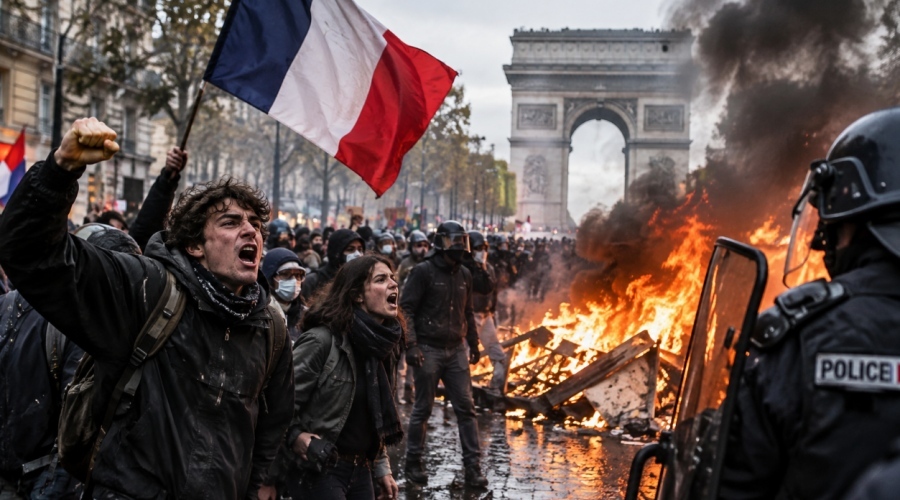
By the parliamentary election held on 25 October 2026, the student-backed coalition gathered enough support to challenge the governing bloc decisively. Final results announced on 5 November gave the student-backed movement 140 of the National Assembly’s 250 seats, leaving the Vučić-associated bloc with 103 seats, according to reporting outlined by Eurasia Review. While the ballot box successfully recorded a transfer of parliamentary power, observers note that uncertainty remains regarding how the new leadership will govern, given that the diverse factions united primarily by a common demand for accountability may diverge on future spending, foreign policy, and administrative appointments.
This electoral breakthrough in the Balkans stands in stark contrast to outcomes elsewhere, highlighting how varied political systems absorb youth-led uprisings. In Bangladesh, where student-led protests forced the departure of the prime minister in July–August 2024, subsequent elections in February 2026 saw the protest-linked National Citizen Party secure only six seats in the 300-member parliament, with the established Bangladesh Nationalist Party emerging as the principal winner. Conversely, in Nepal, following a leadership resignation triggered by anti-corruption demonstrations in September 2025, voters handed a sweeping majority to the newer Rastriya Swatantra Party in March 2026, though that majority did not extend to the upper chamber.
| Country | Triggering Catalyst | Electoral Outcome | Primary Beneficiary |
|---|---|---|---|
| Serbia | Novi Sad railway station canopy collapse (1 Nov 2024) | 140 of 250 National Assembly seats (25 Oct 2026 vote) | Student-backed electoral list |
| Bangladesh | Public-employment quota protests (July–August 2024) | 6 of 300 parliamentary seats (12 Feb 2026 vote) | Established Bangladesh Nationalist Party |
| Nepal | Corruption and social media ban anger (8 Sept 2025) | 182 of 275 lower-house seats (5 Mar 2026 vote) | Rastriya Swatantra Party |
Across the wider continent, the unrest is deeply intertwined with economic pressures, mirroring grievances examined in broader Cost of Living reports. According to data from Bankingnews, Eurostat figures show eurozone youth unemployment under the age of 25 standing at 15.4 percent, with the broader European Union rate reaching 15.5 percent. Real GDP growth in the eurozone limped to 1.4 percent in 2025 according to World Bank figures, trailing behind the United States, while heavy public debts—such as 115.7 percent of GDP in France and 136.7 percent in Italy—restrict governments from adequately funding social services, housing support, and education.
Protesters in France, Germany, Spain, Italy, and Greece have taken to the streets to denounce the erosion of purchasing power, high energy bills driven by the loss of cheap Russian gas supplies, and housing markets where soaring rents trap young adults in their family homes. Eurostat records show that the average age for leaving the parental home in the European Union hovered around 26.3 years, though young people in Southern and Southeastern Europe face even longer delays before achieving residential independence.
In Germany, student initiatives organized under banners like Gen Z regelt
have confronted education cuts and proposed military conscription, though turnout figures in cities like Berlin, Frankfurt, and Munich occasionally fell short of organizers' ambitious expectations amid simultaneous reports of isolated rioting and property damage. Meanwhile, in Italy and France, student groups have forged alliances with trade unions during general strikes to demand higher wages, better public services, and opposition to increased military spending.
The immediate political trajectory remains fluid as new administrations take office and traditional parties confront mounting public rage. Institutional reforms, alterations to public administration, and the handling of state finances in Serbia will require long-term observation, while governments across Europe grapple with the fiscal trade-offs between swelling security expenditures and the welfare of a younger generation determined not to accept permanent economic austerity.