US Creative Industries Lose 200000 Jobs Amid Generative AI Growth
US creative industries have shed over 200,000 jobs since generative AI went mainstream in late 2022, heavily impacting film, publishing, and streaming.
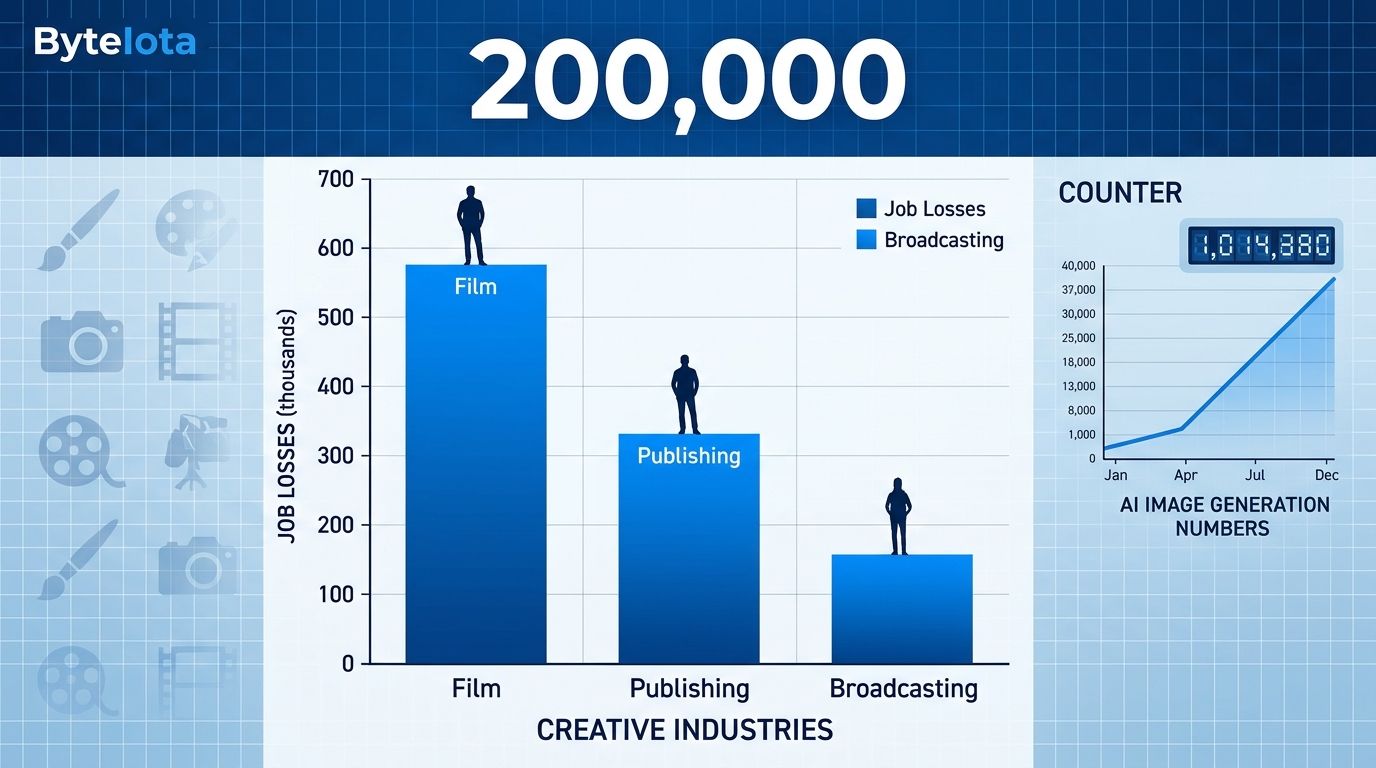
- Core Development: US creative industries have shed over 200,000 jobs since generative AI went mainstream in late 2022, heavily impacting film, publishing, and streaming.
- Beat Context: Categorized under Culture with independent corroboration.
- Reporting Depth: 3 minute analytical read synthesized from verified newsroom sources.
The United States creative industries have shed more than 200,000 jobs over a four-year period since generative artificial intelligence went mainstream in late 2022, according to data analyzed by economist Joseph Politano. This sharp contraction places the downturn in media and arts employment in the same severity tier as historical downturns like the dot-com crash and the Great Recession. Unlike those historical downturns, however, the broader economy has remained stable, making the cultural sector's disruption appear surgical and concentrated.
The employment losses are distributed unevenly across sectors. Film and sound recording absorbed the heaviest blow, shedding 120,000 jobs over four years—representing a 27% decline and accounting for nearly half of all media job losses. Publishing lost more than 70,000 positions, while broadcasting and streaming providers cut 29,000. In stark contrast, in-person creative work has held firm. Performing arts employment and museums continue to register growth, pointing to a pattern where digital assets face automation while live presence remains resilient.
Media additions



| Sector / Metric | Reported Figures | Context |
|---|---|---|
| Total Creative Job Losses | More than 200,000 jobs lost over four years | Analysed from Bureau of Labor Statistics data by economist Joseph Politano |
| Film and Sound Recording | 120,000 jobs shed (27% decline) | Nearly half of all media job losses concentrated in this area |
| Publishing | More than 70,000 positions lost | Continues longstanding industry pressures alongside tech displacement |
| Broadcasting and Streaming | 29,000 jobs cut | Contributes to the bulk of total digital sector decline |
Market-level indicators mirror the labor data. Getty Images saw its subscriber base fall 25% in a year, and Shutterstock reported a 17% drop in revenue year-over-year. These financial pressures prompted the two companies to attempt a $3.7 billion merger, which was ultimately terminated by UK regulators in July 2026. Meanwhile, generative platforms scaled rapidly, with Adobe Firefly generating 22 billion creative assets in its first two years and ChatGPT users producing 700 million images in a single week.
Proving direct causation between generative AI tools and individual job cuts remains challenging. Media consolidation, offshoring, and shifts toward social media creators were already pressuring cultural industries before late 2022. Urbanist Richard Florida notes that artificial intelligence is primarily targeting repetitive production work rather than high-judgment creative direction. However, analysts point to a pipeline problem: entry-level production roles serve as the foundational training ground where junior talent develops the discernment required for senior creative work.
Historical debates over technological unemployment stretch back centuries, with roots in ancient philosophy, the mechanization of the Industrial Revolution, and warnings from economists such as John Maynard Keynes in the 1930s. McKinsey’s September 2026 report estimated that 11 million Americans may need to change occupations by 2035 at a pace three to four times the historical average, with only one in seven displaced workers having a direct path to a growing occupation without retraining. Stanford data from earlier in the year showed entry-level hiring for developers aged 22 to 25 declining as AI absorbs tasks previously used to learn the trade.
As tech executives continue to deploy automation tools across industries, legislative bodies and labor markets face ongoing debates over how to navigate the transition. Observers point to ongoing discussions around robotic taxes and unconditional financial support as societies grapple with the long-term trajectory of automation.
How significant is this development?
Contribute your assessment to the aggregated reader sentiment ledger.
Frequently Asked Questions
Key questions answered in this reportWhat is the key development in: US Creative Industries Lose 200000 Jobs Amid Generative AI Growth?
US creative industries have shed over 200,000 jobs since generative AI went mainstream in late 2022, heavily impacting film, publishing, and streaming.
Why is this Culture development significant for the UK?
This report covers critical events in our Culture beat. Independent reporting monitors related UK statements, regulatory shifts, and public responses as further verified details emerge.
How was this reporting corroborated and verified?
Newsarchy UK compiles and cross-references reporting from primary reporting from braindetox.kr and cross-checked wire reports. All coverage adheres to published editorial standards.
When was this report published?
This briefing was published on October 25, 2026 and is permanently cataloged in the Newsarchy UK Culture archives.