UK's BAE Systems to cut 1,000 jobs from head office, air sector
British aerospace giant BAE Systems is cutting up to 1,070 jobs across its head office and air division, sparking union criticism over defence procurement delays.

British aerospace and defence giant BAE Systems announced plans to cut up to 1,070 jobs on Wednesday, targeting its corporate head office and air division. The restructuring initiative was disclosed by corporate statements and reported by outlets including Anadolu Ajansı and Yahoo News Singapore, aiming to streamline operations and enhance corporate competitiveness. According to the company, the reductions are designed to maximize the value of client investments in defence and satisfy growing demands for speed in an increasingly volatile global security environment.
The company intends to manage the downsizing through a voluntary redundancy programme, while explicitly protecting shopfloor manufacturing personnel and aircraft maintenance staff stationed at Royal Air Force bases, as reported by The Telegraph and other sources. BAE maintains a vast domestic footprint that has expanded significantly over recent years, growing its national workforce considerably as geopolitical tensions escalated following international conflicts such as Russia's invasion of Ukraine in 2022. The reductions will disproportionately impact its corporate core and primary aviation engineering hubs, particularly affecting approximately 940 roles within the air business.
Media additions

| Metric / Location | Figure or Detail |
|---|---|
| Total Planned Redundancies | Up to 1,070 roles |
| Air Division Redundancies (Estimated) | Approx. 940 roles |
| Total UK Workforce | 50,000 employees (up from 35,000 six years ago) |
| Head Office Staff (London) | 1,000 employees |
| Air Sector Personnel (Nationwide) | 18,500 employees |
| Lancashire Workforce (Warton/Samlesbury) | 13,700 employees |
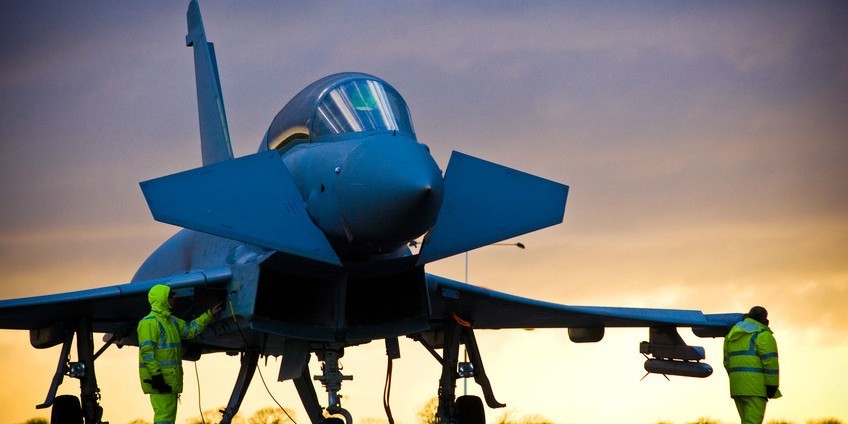
The announcement arrives during an era of significant financial expansion for the aerospace conglomerate. Reporting by Lancashire Business View notes that the firm secured £33bn in orders so far in the year, including substantial funding tied to the Global Combat Air Programme such as £1.6bn in second-half awards. Major manufacturing facilities in Lancashire, specifically at Warton and Samlesbury, remain central to developing next-generation uncrewed and crewed platforms, alongside ongoing work on a multi-billion-pound jet export agreement to supply 20 Eurofighter Typhoon jets to Turkey, with front fuselage manufacturing already underway at Samlesbury.
Staff were informed of the looming layoffs via corporate email correspondence, according to The Telegraph. The company maintains that streamlining decision-making and eliminating bureaucratic layers will modernise its operating model through digital integration and advanced technology. BAE also forecast this month that its underlying operating profit would rise by between 10% and 12% in 2026, alongside upward revisions to its free cash flow expectations.
Labour’s leading union backer, Unite, sharply condemned the layoffs, linking the corporate restructuring directly to governmental policy inertia. General Secretary Sharon Graham argued that ongoing delays in formalising defence procurement contracts are actively jeopardising skilled British engineering jobs. We won't have a manufacturing industry left if the government doesn't start making critical decisions,
Graham stated, as cited by This is the Coast and other reporting.
Unite has pressed Westminster to immediately expedite production agreements for domestic fighter jets and Collaborative Combat Aircraft. Furthermore, union leadership warned that manufacturing vulnerabilities extend beyond BAE. Concerns were raised regarding broader industrial supply chains, with calls for the government to award upcoming military satellite contracts, specifically the Skynet 6 contract, to Airbus rather than American competitors to preserve high-tech capabilities in regions like Portsmouth and Stevenage.
Local political figures have also mobilised in response to the news. Fylde MP Andrew Snowden stated that the government needs to invest in sovereign defence capabilities and support British defence jobs, pledging to work with staff, unions, and BAE to support affected constituents while demanding that national authorities accelerate investment, according to Lancashire Business View.
What to Watch Next
- Formal consultations between BAE Systems management, employee representatives, and trade unions regarding the voluntary redundancy framework.
- Further developments surrounding the UK government's upcoming spending reviews, budget announcements, and procurement timelines for major aerospace contracts.
- Decisions regarding upcoming satellite and military manufacturing awards, including Skynet 6, that threaten additional high-skilled positions across the supply chain.