UK bans imports from illegal West Bank settlements and tightens arms rules
Foreign Secretary Ed Miliband announced a ban on goods from illegal West Bank settlements and stricter arms regulations, triggering swift pushback from Israel.

The United Kingdom has banned the import of goods produced in illegal West Bank settlements and tightened regulations on arms sales, marking a major policy shift that prompted swift retaliation from Israeli officials and fierce debate across international diplomatic circles.
According to Al Jazeera reporting, Foreign Secretary Ed Miliband announced the measures during an address to Parliament, accusing Israel of carrying out ethnic cleansing in Palestine. Miliband stated that the expanding West Bank settlements are unlawful and that the British public should not support the occupation through consumer purchases. The trade ban targets illegal settlements and their expansion rather than the state of Israel itself, according to the Foreign Secretary, who also announced extensions to global human rights sanctions to deter settlement growth and prevent the development of the E1 zone.
Media additions


The announcement follows sustained pressure from human rights groups and coincides with wider European and international reactions. Following the parliamentary address, twelve nations issued a joint statement supporting a two-state solution and signaling their own restrictions on settlement trade. Palestine's Ambassador to the UK, Husam Zomlot, described the decision as a turning point in bilateral relations, while organizations such as Amnesty International UK and Human Rights Watch welcomed the shift. Conversely, the Jewish Leadership Council and the UK's Chief Rabbi Ephraim Mirvis strongly criticized the government, warning that the policy increases risks for British Jews.
The Israeli government reacted rapidly to the announcement. Foreign Minister Gideon Saar announced counter-measures, accusing the UK of attempting to interfere in impending elections, while National Security Minister Itamar Ben-Gvir urged Prime Minister Benjamin Netanyahu to recognise Argentina's sovereignty over the Falklands in retaliation. Finance Minister Bezalel Smotrich called for the expulsion of the British ambassador. International responses were similarly polarized; US Ambassador to Israel Mike Huckabee condemned the move as discrimination against Jewish people, and US Secretary of State Marco Rubio noted potential implications for regional diplomatic plans involving Gaza.
These geopolitical developments unfold as the UK navigates broader economic pressures and shifting transatlantic dynamics. Media broadcasts such as Good Morning Britain have frequently interrupted regular schedules to report on compounding domestic challenges, including rising inflation and energy price cap increases announced by regulator Ofgem. At the same time, European leaders continue to adjust to changing US foreign policies under President Donald Trump, as discussed at international defence forums covering European security independence and NATO restructuring.
The inflation figures announced on Wednesday, November 18, showed the rate rising to 3.6% in October from 3.5% in September, according to the Office for National Statistics. This marked the fourth successive increase, creating what hosts described as a significant blow for the government. Ed Balls explained the upward trajectory by pointing to the impact of the war in Hormuz, with the straits being closed, oil prices rising, transport costs going up, and food prices rising. He predicted economists think inflation will stay high for a while. Susanna Reid noted the official figure is well above the Bank of England's 2% target. Balls added that the Bank raised interest rates last month because of worries about inflation getting locked in, and financial markets expect further mortgage rate increases.
Overall inflation has been rising over the summer, fuelled by the Middle East energy shock, which has pushed up the price of fuel and household energy. The inflation rate has moved further away from the Bank of England's 2% target, with the central bank warning earlier this month that it is not likely to return to target until the third quarter of 2028. The Bank said, as it hiked interest rates to 4%, that it expects inflation to keep rising in the coming months and peak at around 5% next year. UK economists for Pantheon, Rob Wood and Elliott Jordan-Doak, indicated that tobacco prices are set to jump 8.3% in October compared with the previous month, after tobacco duty was increased. The duty rise would add around £1.21 to an average pack of 20 cigarettes, according to HMRC. Ofgem's 4% utility-price-cap hike should add three basis points to inflation compared to September, but weaker food inflation will, they assume, cut four basis points. Energy regulator Ofgem increased its quarterly price cap by 4% at the start of October, taking the energy bill for the average household in England, Scotland and Wales paying by direct debit for gas and electricity up by around £60 to £1,723 a year.
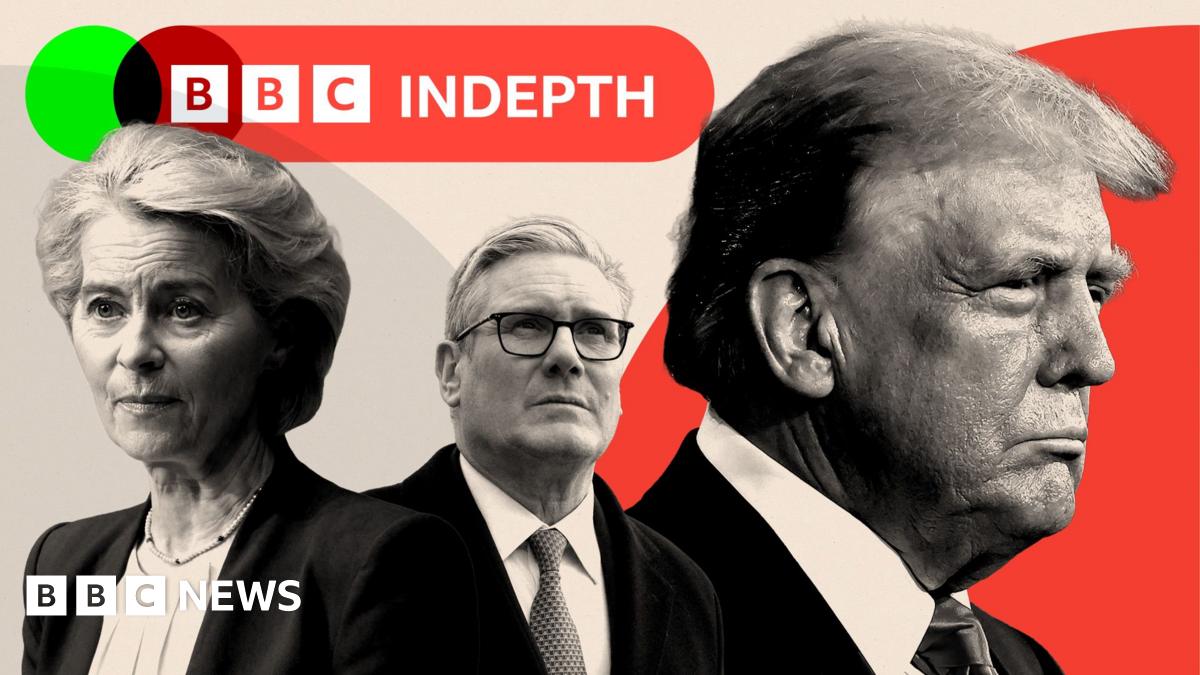
Meanwhile, the Munich Security Conference highlighted the precarious state of transatlantic relations. According to BBC reporting, European leaders and top diplomats were seriously on edge ahead of US Secretary of State Marco Rubio's address, the most eagerly anticipated speech at the conference. Europe-US relations have never been so frayed over the last 80 years since World War Two. In the just over 12 months since Trump returned to the White House, he has at times insulted and undermined European leaders, slapped big tariffs on their exports, and threatened Danish sovereignty over Greenland. Germany's defence minister, Boris Pistorius, said: "We got used to the strong support from the US; we got used to our comfort zone in which we used to live. This time is over, definitely over. Washington was right."
Rubio's speech was loyal to themes close to the Trump administration: anti climate action, sceptical of globalisation, multilateralism, migration and pro the building of a new era of Christian western civilisation. He was clear that the US wasn't interested in allies clinging to the old status quo. One European diplomat described it as "a bit like a (psychologically) abusive partner," reminding Europe how wonderful the transatlantic relationship used to be, then switching to coercion. Another diplomat noted that of all European countries Rubio could have visited after Germany, he chose Slovakia and Hungary — viewed by Brussels as two of the EU's most problematic members. Ursula von der Leyen, President of the European Commission, underlined a now fragile relationship: "Some lines have been crossed that cannot be uncrossed anymore. Europeans have suffered shock therapy."
Last week, U.S. Undersecretary of Defence Elbridge Colby delivered stark messaging at a meeting of NATO defence ministers in Brussels: Europe was no longer a US priority, the Indo-Pacific was. While emphasising the US remained committed to NATO's mutual defence clause, Colby insisted the US would be reducing its capabilities in Europe, becoming "a more limited and focused" presence. Europe had to become a partner, rather than a dependent, he said, calling for a new "NATO 3.0." In contrast, Sir Keir Starmer spoke in favour of greater integration between the UK and Europe on defence — to cut re-armament costs, though he emphasised this did not mean the UK turning its back on the United States. Sophia Gaston, national security expert at Kings College London, said Starmer was able to better articulate the nuance of Britain's strategic outlook: "Other allies in Europe may be more willing to speak of divergence from Washington, but for Britain it remains a strategic imperative to triangulate within the Transatlantic relationship."
| Metric / Category | Reported Figure or Status | Source / Context |
|---|---|---|
| UK-Israel Total Trade | £6bn ($8.1bn) | House of Commons data via Al Jazeera |
| West Bank Settlement Imports | £38m ($51.4m) | Parliamentary records via Al Jazeera |
| UK Inflation Rate (October) | 3.6% (rising from 3.5%) | Office for National Statistics via Aol |
What to Watch Next
- Implementation of the UK's expanded human rights sanctions and enforcement mechanisms by customs authorities regarding settlement goods labelling.
- Further diplomatic communications between London and international partners regarding the two-state solution and Middle East stability frameworks.
- Domestic parliamentary debates concerning the broader strategic alignment of British foreign policy and defence expenditure.