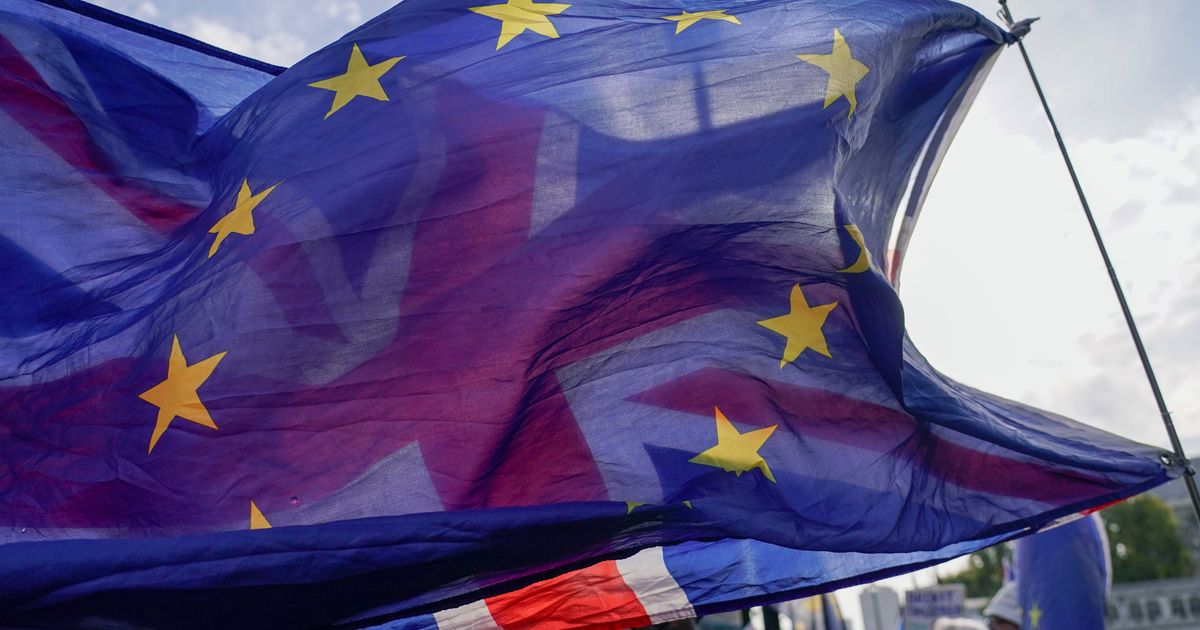
UK and EU strike trade and travel deals to rebuild post-Brexit ties
Prime Minister Andy Burnham and European Commission President Ursula von der Leyen announced a sweeping agreement in Brussels to scrap food border checks, link carbon emissions systems, and launch a youth mobility scheme.
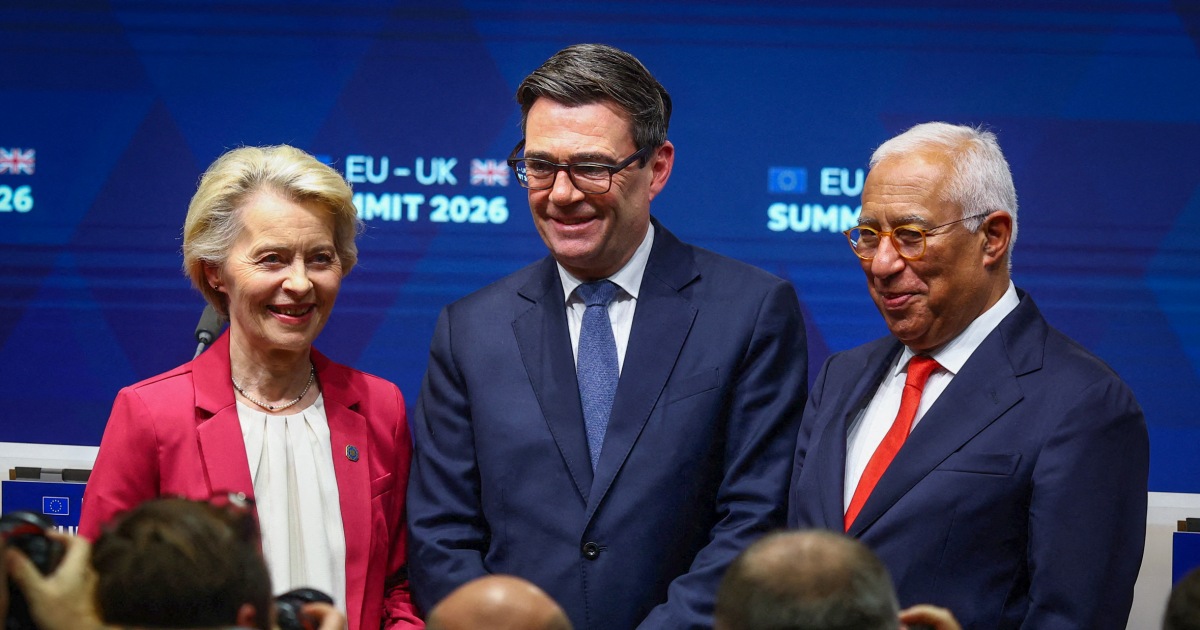
Britain and the European Union have agreed to remove border checks on food and agricultural products, link their carbon emissions trading systems, and allow 100,000 young adults from each side to live and work in the other’s countries for up to three years, in an agreement announced at a Brussels summit on Friday that both sides described as a step toward repairing relations a decade after Brexit.
The package, confirmed in a joint statement after talks between Prime Minister Andy Burnham and European Commission President Ursula von der Leyen, represents the most substantial reset of UK-EU relations since Britain left the bloc in 2020. Von der Leyen called it “a turning point,” while Burnham described it as “a historic moment” and “a good day for Britain, and this is a good day for Europe.”
Media additions


The summit was only the second EU-UK meeting since Britain became the first country to leave the world’s biggest trading bloc. It took place ten years after the 2016 referendum and six years after the divorce became final in 2020.
What the agreements cover
The deals scrap border checks and veterinary certificates on plant and animal products, a move British retailers say will cut costs and paperwork for exporters. Alex Freudmann, managing director of food at Marks and Spencer, described sending food from Lincolnshire to Dublin as currently requiring “hundreds of extra miles, mountains of paperwork, a vet’s signature and even the Latin name of a cow,” and called Friday’s announcement “a major step forward.”
The two sides also agreed to link their emissions trading schemes, meaning carbon allowances will be recognised across the Channel and traded goods will be exempt from additional carbon border taxes.
A youth experience scheme will allow 100,000 people under 30 from each side to reside for up to three years in the other’s territory for work, study or travel without existing visa requirements. Burnham said the deal was made with young people in mind, stating “Brexit took opportunities from young people,” and that they must “open up new opportunities.”
Security and defence cooperation also featured, with pledges for stronger collaboration and a “structured dialogue on migration” covering engagement with third countries and returns to third countries. The two sides will launch formal talks on economic security, export controls and supply chains.
| Measure | Detail | Source |
|---|---|---|
| Youth mobility scheme | 100,000 young adults from each side, up to three years | NBC News, DW |
| UK economic boost estimate | 0.5% of output (Burnham) | NBC News |
| Tuition fee negotiations deadline | Six months to reach agreement | NBC News, Business Standard |
| Next summit | Probably a year from now | NBC News |
| Next UK national election deadline | Must be held by 2029 | Killeen Daily Herald |
Tuition fees remain unresolved
One significant issue was left open. EU negotiators want European students to pay domestic fees if they study in Britain rather than the higher fees charged to foreign students, something the UK has resisted. The two sides have given themselves six months to reach an agreement on the level of university fees for EU students in the UK and vice versa.
An unnamed EU official, designated to brief reporters on condition of anonymity, said negotiations had not been easy but that there was good will to resolve the issue. Burnham walked into what the Daily Mail described as an “EU trap” on the topic, according to the BBC’s press review, though the UK government later disputed that any deal was contingent on a fees cut. The Guardian reported that Burnham insisted the “deal is done,” while von der Leyen said she was “confident we are going to find a solution.”
Brexit reversal remains off the table for now
Burnham has said all options should be on the table for future UK-EU relations, including rejoining the now 27-nation bloc, but he has stressed that reversing Brexit is just one possible outcome and is far from imminent. It would need the backing not just of British voters but the unanimous support of a mistrustful EU.
He remains bound by the pledge made by Keir Starmer, his predecessor as Labour Party leader and prime minister, not to rejoin the bloc’s tariff-free customs union or frictionless single market, or to restore free movement for EU nationals to the UK. He acknowledged that Friday’s agreements are “the limit of what we can achieve” before a national election, which must be held by 2029.
Burnham said he wants the two sides to brainstorm the wider picture of future ties before their next summit, probably a year from now. He told Sky News on Tuesday that “there’s no rush” and that “the red lines in the Labour manifesto will stand. And the British public will be in charge of whatever comes next.”
Some in Labour are pushing further. Lawmaker David Lammy, who served as foreign secretary and deputy prime minister under Starmer, said the government should make rejoining the EU part of its platform for the next election. Lammy said “the position of the United Kingdom was diminished” when it cut ties with its European neighbours, and told a meeting at the Chatham House think tank that “it just doesn’t make sense” for the UK to go it alone.
Reform UK leader Nigel Farage told reporters in Brussels that Burnham had taken “the first step, incrementally, to take us back into membership of the European Union.” The Daily Telegraph reported that Farage accused Burnham of “betraying” Labour’s 2024 general election manifesto, while the Daily Express wrote that Farage “vowed to defend the 2016 referendum vote to leave.”
Public opinion and political sensitivities
EU officials have been reluctant to encourage talk of the UK rejoining, weary from the shifting demands of seven British prime ministers over the last decade. European Council President António Costa said the bloc respected the British decision to leave and would respect its choice to strengthen ties in the post-Brexit era.
Ireland’s ambassador in London, Sonja Hyland, said that when Britain voted for Brexit, “there was a lack of clarity as to exactly what that meant,” and that if Britain wants to reopen negotiations it must “make a clear decision as to what it wants.”
Simon Usherwood, professor of politics and international studies at the Open University, doubts British politics is ready for a grown-up discussion about refashioning the relationship. “All of this requires an informed and educated debate about what is involved, what the EU might want and accept, what the costs and benefits will be of any option,” he said. “And I’m not yet sure that we’re at that point. Actually, I’m pretty sure we’re not at that point.”
Geopolitical context
The war in Ukraine and the UK’s military strength are drawing the two sides back together, and the summit produced pledges of stronger cooperation on security and defence, as well as efforts to restrict irregular migration. Von der Leyen said a lot has changed in relations since the Brexit vote, including the pandemic and Russia’s war on Ukraine, and that the EU is “totally open to do the necessary brainstorming for the wider picture, the bigger picture” of what ties could look like in the future.
What happens next
- The UK and EU have six months to reach an agreement on university tuition fees for EU students in Britain and British students in the EU.
- Formal talks on economic security, export controls and supply chains will launch.
- Burnham plans to set out options for the long-term UK-EU relationship later this year.
- The next UK-EU summit is expected in about a year.
- The next UK national election must be held by 2029, and Burnham has said he will not go beyond Starmer’s boundaries before then.
For now, the agreements represent what Burnham called “probably the limit of what we can achieve in this Parliament.” Whether Britain moves closer still — or whether the debate over rejoining reopens fully — will depend on negotiations over the coming months and the political climate ahead of the next national election.