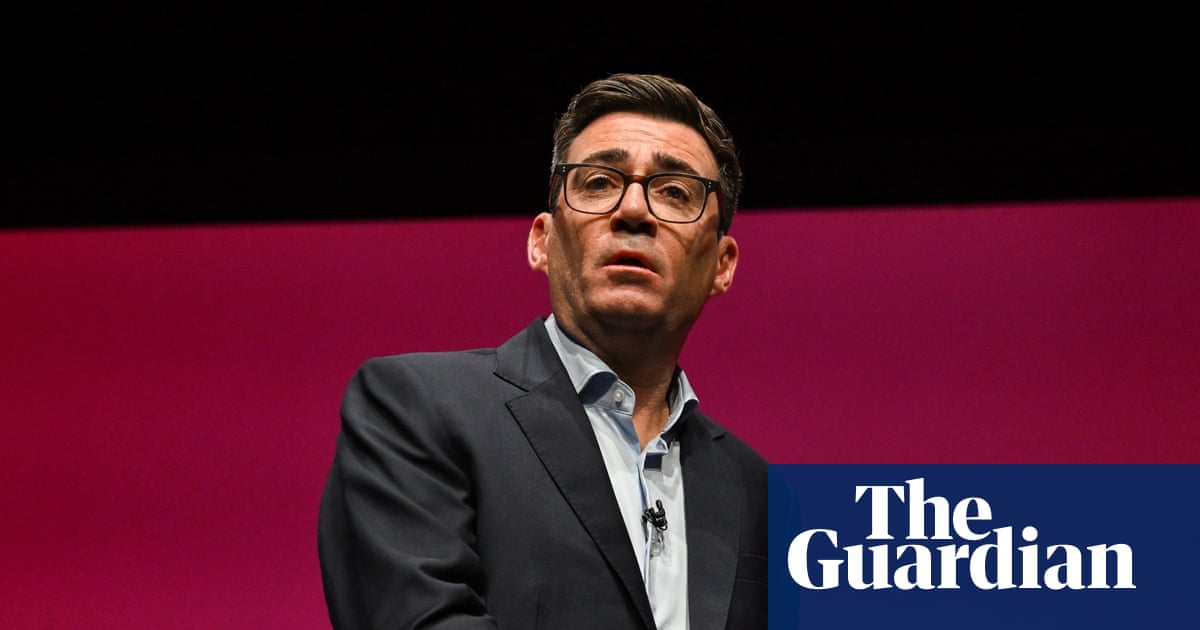
Andy Burnham unveils major UK reforms while omitting economic growth plan
Prime Minister Andy Burnham unveiled sweeping domestic reforms at the Labour Party conference, introducing a pension double lock and public energy grid while omitting a growth strategy.

- Core Development: Prime Minister Andy Burnham unveiled sweeping domestic reforms at the Labour Party conference, introducing a pension double lock and public energy grid while omitting a growth strategy.
- Beat Context: Categorized under Politics with independent corroboration.
- Reporting Depth: 4 minute analytical read synthesized from verified newsroom sources.
Prime Minister Andy Burnham has used his address to the annual Labour Party conference to outline a sweeping package of domestic reforms, seeking to define a new direction for the country following a decade of political instability. Speaking to party faithful, the Prime Minister acknowledged past governance failures while setting out a series of major policy interventions spanning housing, water utilities, energy networks, social care, pensions, and electoral reform.
The headline-grabbing announcement of the address was a major overhaul of retirement finances. Confirming that the government will honour its manifesto commitment to maintain the state pension triple lock for the duration of the current Parliament, Burnham revealed that the mechanism will be adjusted starting in April 2030. The arrangement, which currently guarantees that pensions rise by inflation, average wage growth, or 2.5 per cent—whichever is highest—will be stripped of its annual earnings link. Instead, the state pension will rise by inflation or 2.5 per cent annually, with earnings growth reflected over time. According to reporting by the BBC, the move is designed to generate significant savings for the Treasury.
Media additions


The savings generated from the pension adjustment are earmarked to fund a newly proposed National Care Service. Burnham pledged that the service would be free at the point of use, offering person-centred care starting in the home so that older individuals do not have to pay care charges out of their basic state pension. While think-tanks such as the Institute for Fiscal Studies welcomed the modification of the triple lock as a sensible structural change, critics speaking via the World Socialist Web Site warned that the reforms would impose financial pain on pensioners years before any new care system materialises.
Energy policy also featured prominently in the conference address, highlighted by the announcement of a new publicly owned entity dubbed the Great British Grid, or GB Grid. According to Inews reporting, GB Grid will sit within Great British Energy and act as the first publicly owned player in electricity networks since privatization under Margaret Thatcher. Rather than taking over existing private operators like National Grid Electricity Transmission, Scottish and Southern Energy, and Scottish Power, the new body will compete directly against them to expand and connect the high-voltage network. Ministers stated the initiative requires no new spending, as it will be funded from existing Great British Energy budgets.
Water infrastructure is slated for a similar overhaul. Burnham announced plans to introduce a strengthened Water Bill to Parliament aimed at repealing the post-Thatcher ban on public ownership of water utilities, allowing regional city mayors greater powers to hold private operators accountable. This follows severe public scrutiny of private operators such as Thames Water, which faced heavy debt loads and financial strain. In housing, the Prime Minister promised to ramp up local council powers to drive new construction and penalize absentee landlords who leave rental properties in disrepair.
On the political front, Burnham signalled an intent to overhaul the electoral system. Criticising the existing "first past the post" voting arrangement, he pledged to establish a National Commission for Electoral Reform to recommend an alternative voting system, which would subsequently be put to voters at a future election. This follows broader discussions surrounding UK voting reform and efforts to reshape governance structures akin to England devolution plans.
Despite the breadth of these structural proposals, commentators highlighted a notable absence in the Prime Minister's vision. Reporting by the Sydney Morning Herald noted that while Burnham touched upon the challenges facing younger generations and economic inequality, the address contained a glaring omission: no specific plan or strategy to drive economic growth or repair the national budget, where public sector net debt sits at high levels relative to GDP. Chancellor John Healey is scheduled to outline the government's fiscal plans during the upcoming autumn budget.
| Policy Area | Current Mechanism / Status | Proposed Reform | Timeline |
|---|---|---|---|
| State Pension | Triple lock (inflation, wages, or 2.5%) | Double lock (inflation or 2.5%), removing annual wage link | April 2030 |
| Energy Networks | Private operators (National Grid, SSE, Scottish Power) | Creation of public rival GB Grid to compete on projects | Immediate implementation via existing budgets |
| Electoral System | First past the post | National Commission for Electoral Reform to recommend changes | To be put to voters at a future election |
| Social Care | Fragmented, means-tested, council-administered | National Care Service, free at point of use | Next Parliament |
As the political fallout from the conference settles, attention turns toward the forthcoming autumn fiscal statements and legislative drafting. Stakeholders across local government, energy markets, and pensioner advocacy groups will be closely monitoring how ministers balance the competing demands of funding ambitious public services against the realities of national debt and economic constraints.
How significant is this development?
Contribute your assessment to the aggregated reader sentiment ledger.
Frequently Asked Questions
Key questions answered in this reportWhat is the key development in: Andy Burnham unveils major UK reforms while omitting economic growth plan?
Prime Minister Andy Burnham unveiled sweeping domestic reforms at the Labour Party conference, introducing a pension double lock and public energy grid while omitting a growth strategy.
Why is this Politics development significant for the UK?
This report covers critical events in our Politics beat. Independent reporting monitors related UK statements, regulatory shifts, and public responses as further verified details emerge.
How was this reporting corroborated and verified?
Newsarchy UK compiles and cross-references reporting from primary reporting from End Fuel Poverty Coalition and cross-checked wire reports. All coverage adheres to published editorial standards.
When was this report published?
This briefing was published on September 30, 2026 and is permanently cataloged in the Newsarchy UK Politics archives.