Manchester mayoral election heads to second round after delays
The Greater Manchester mayoral election moves to a second round of voting between Labour candidate Bev Craig and Reform UK's Sian Astley.

- Core Development: The Greater Manchester mayoral election moves to a second round of voting between Labour candidate Bev Craig and Reform UK's Sian Astley.
- Beat Context: Categorized under Politics with independent corroboration.
- Reporting Depth: 3 minute analytical read synthesized from verified newsroom sources.
The Greater Manchester mayoral election is heading to a second round of voting after a marathon count at the Co-op Live arena, according to reporting by the Mirror. With no candidate securing the percent threshold required to win outright under the supplementary vote system, Labour candidate Bev Craig and Reform UK's Sian Astley will face off in the run-off. Manchester returning officer Tom Stannard instructed counters to prioritise accuracy over speed as delays mounted, compounded by ongoing verification processes across outer boroughs such as Wigan.
The contest represents the largest by-election in British electoral history, with over two million eligible voters. Luke Tryl, UK director of the non-profit political research agency More In Common, attributed the depressed turnout to the timing at the start of the summer holidays alongside voter fatigue. Ahead of the second-preference count, Liberal Democrat candidate Richard Kilpatrick conceded he did not expect to advance, telling reporters that his party’s focus would shift to holding the incoming mayor to account on key doorstep issues like affordability. Meanwhile, Andrew Western, Labour MP for Stretford and Urmston, expressed confidence to the BBC that the opening round looked positive for Ms Craig, despite earlier local election successes for Reform UK.
Media additions

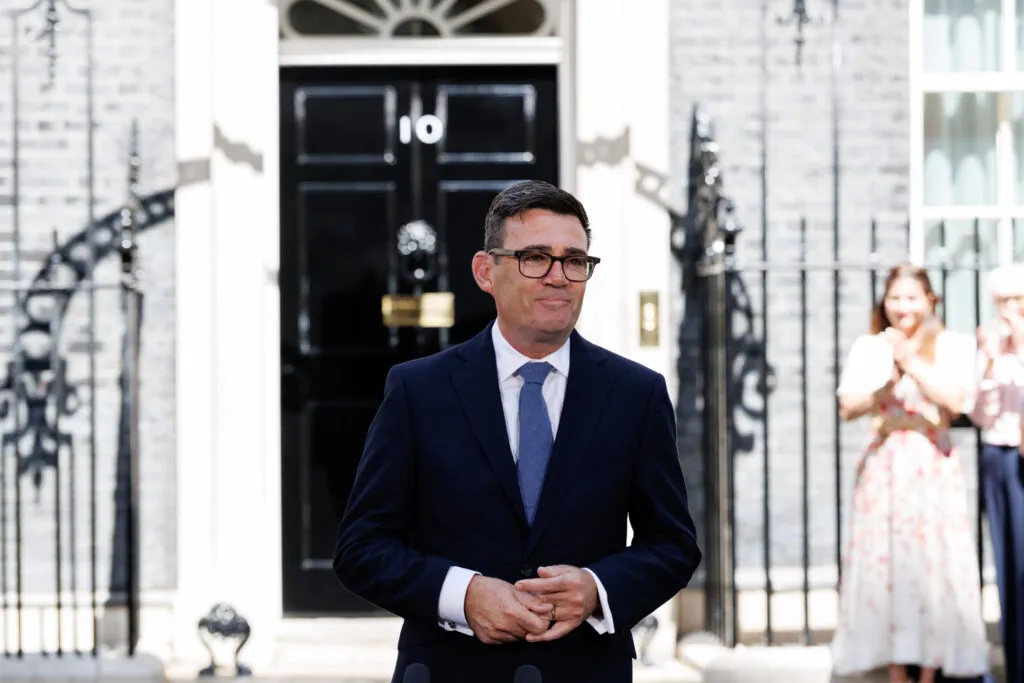

The ballot count coincides with a national policy earthquake engineered by Prime Minister Andy Burnham. Visiting South Yorkshire alongside Mayor Oliver Coppard, the Prime Minister unveiled what is being billed as the biggest transfer of power from Westminster in a generation, according to the Newark Advertiser. Under the sweeping Devolution Revolution, elected mayors and newly created strategic authorities will retain a greater share of locally generated revenues starting with business rates from next spring. Crucially, regional leaders will also receive a slice of income tax receipts for the first time, enabling them to reinvest directly into public services, transport, and local economies, as reported by the Mirror.
Housing Secretary Angela Rayner lauded the package as the first step in rewiring the country and ending a culture where power and funding are hoarded in Whitehall. East Midlands Mayor Claire Ward welcomed the financial package, stating that local retention of tax growth gives leaders the tools to build social housing and upgrade high streets, per the Newark Advertiser. Vanessa Hale, chief executive of Real Estate:UK, noted that the strategy incentivises local leaders to take a more strategic role in economic development, while Pocket Living chief executive Paul Rickard emphasised the opportunity to align housing delivery with regional industrial needs, according to Property Week.
However, the fiscal plans have exposed sharp political divisions over how devolved funds should be deployed. Conservative Tees Valley Mayor Lord Ben Houchen suggested he would use the new income tax powers to offer local tax rebates so families could keep more of their earnings. That proposal met immediate resistance from senior government figures. First Secretary of State Louise Haigh told Times Radio that setting up such rebate schemes is currently unfeasible because HM Revenue and Customs lacks the necessary frameworks, insisting the funds are strictly intended for reinvestment into public services, as noted by the Mirror.
A Guardian editorial warned against turning regional settlements into rightwing tax-cutting auctions, cautioning that cash giveaways today would lead to severe underinvestment tomorrow unless national equalisation measures protect poorer areas from widening disparities. The analysis noted that without statutory protections ensuring comparable public services nationwide, wealthier regions like London would vastly outpace post-industrial areas.
What to watch next
- The conclusion of the Greater Manchester mayoral second-preference count at the Co-op Live arena, determining whether Bev Craig or Sian Astley secures the post, according to the Mirror.
- Further roadmap details regarding income tax retention and regional spending powers, due to be unveiled at the Autumn Budget on Wednesday 28 October, as reported by the Mirror.
- The rollout of strategic authorities and upcoming mayoral votes in Cumbria, Cheshire, and Warrington scheduled for 2027, followed by southern and eastern regions in 2028, according to The Guardian.
How significant is this development?
Contribute your assessment to the aggregated reader sentiment ledger.
Frequently Asked Questions
Key questions answered in this reportWhat is the key development in: Manchester mayoral election heads to second round after delays?
The Greater Manchester mayoral election moves to a second round of voting between Labour candidate Bev Craig and Reform UK's Sian Astley.
Why is this Politics development significant for the UK?
This report covers critical events in our Politics beat. Independent reporting monitors related UK statements, regulatory shifts, and public responses as further verified details emerge.
How was this reporting corroborated and verified?
Newsarchy UK compiles and cross-references reporting from primary reporting from mirror.co.uk and cross-checked wire reports. All coverage adheres to published editorial standards.
When was this report published?
This briefing was published on July 31, 2026 and is permanently cataloged in the Newsarchy UK Politics archives.