MOD Bicester approved by Angela Rayner to house 1,256 asylum seekers
Housing Secretary Angela Rayner has granted planning permission to convert a former MoD base in Oxfordshire into an asylum centre, overriding thousands of local objections.
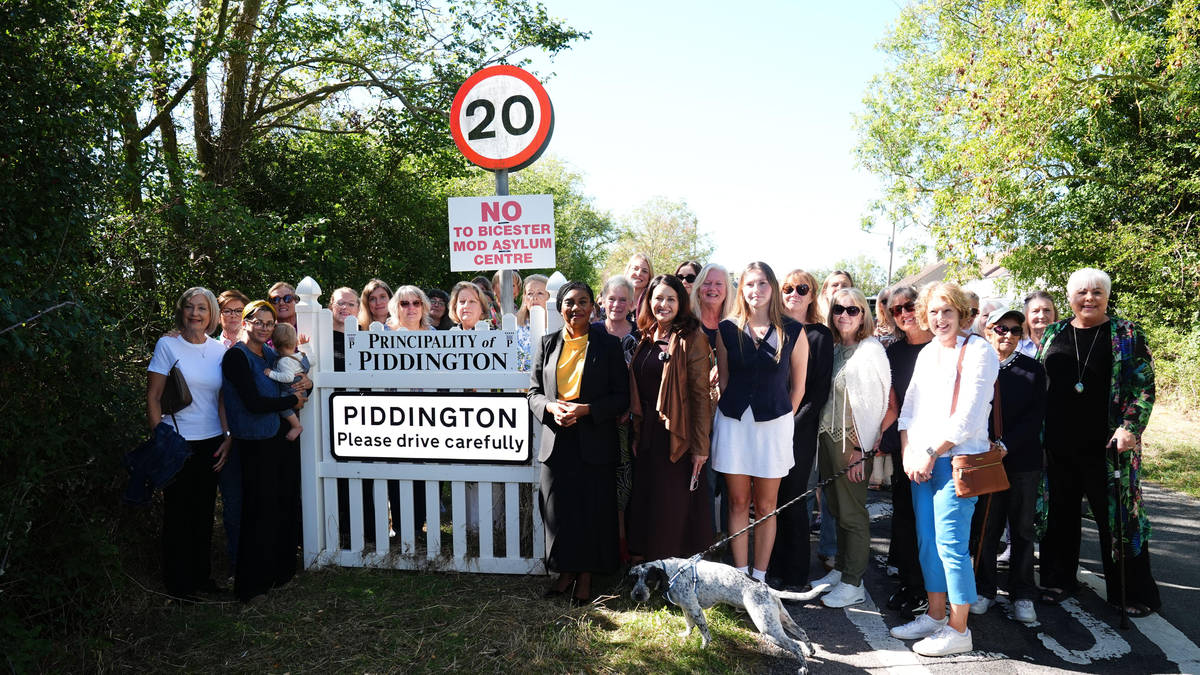
Housing Secretary Angela Rayner has granted full planning permission to convert a former Ministry of Defence installation into an asylum centre, overriding intense local opposition and triggering fierce political condemnation across the political spectrum.
The decision paves the way for the Home Office to progress proposals at MOD Bicester in Oxfordshire. If the development clears remaining hurdles, the former military base will accommodate up to 1,256 single male asylum seekers. The site was previously used as an MoD equipment storage facility and is situated next to a field where children play football and locals walk their dogs, on the edge of the local village.
Media additions



Rayner utilised an Urgent Crown Development application to push the scheme through, citing sustained national demand for asylum accommodation. A government report noted that the public consultation drew 3,177 objections against just a single expression of support. Local representatives maintain that the decision rides roughshod over the community, the National Health Service, and local authorities.
Opposition to the plans has dominated local life in nearby Piddington. In a symbolic referendum, residents voted overwhelmingly to secede from the UK and pursue self-determination rather than live alongside the proposed facility. Campaigners from the group Wrong Plan Wrong Site previously pursued legal avenues in the High Court, challenging the government's earlier decision to bypass environmental surveys regarding local wildlife populations.
Residents have expressed deep distress over the announcement. Piddington resident Christina Gower told Lbc that the approval has fundamentally altered the community. Angela Rayner has signed off these plans and changed our lives forever,
she said, adding that homeowners feel trapped with properties they can no longer sell.
Piddington parish councillor Joe Marshall criticized the government's intervention during an appearance on BBC Newsnight, noting that officials had imposed the facility against thousands of objections while overruling local police and health structures. Local MP Greg Smith echoed these frustrations, stating that the move places the safety of rural constituents at risk and vowing to explore further legal challenges.
Conservative figures lined up to condemn the Communities Secretary. Shadow Housing Secretary Katie Lam accused the government of ignoring public sentiment, while Shadow Home Secretary Chris Philp described the decision as a betrayal of local residents and argued that the administration should instead focus on leaving the European Convention on Human Rights to enable rapid deportations. Reform UK home affairs spokesperson Zia Yusuf similarly denounced the project.
Conversely, defending the strategy, the government maintains that utilizing former military sites is essential to phasing out expensive contingency hotels. Officials point out that hotel usage has dropped significantly since the previous year, saving substantial public funds.
| Metric / Detail | Government / Official Position | Local / Opposition Perspective |
|---|---|---|
| Site Capacity | Up to 1,256 single male asylum seekers | Imposition of over 1,000 men onto a village of 350 residents |
| Consultation Response | 1 letter of support recorded in official reporting | 3,177 formal objections lodged against the proposal |
| Planning Mechanism | Urgent Crown Development application using emergency powers | Described by critics as steamrolling and ignoring local democracy |
The Home Office has stressed that planning permission only allows the department to continue progressing the site, and a final decision to proceed with the facility has not yet been formally taken. The scheme will require further consultation with local authorities, police forces, and the surrounding community.
What to watch next
- Opponents and local campaign groups face a strict six-week window to apply to the High Court for a judicial review based on legal flaws in approaching the planning decision.
- The Home Office must complete further consultations with local police, community partners, and local authorities before any final operational decision is reached.