Jersey to legalise assisted dying after receiving Royal Assent
The Assisted Dying (Jersey) Law 2026 has been granted Royal Assent, paving the way for a clinical service to launch on the island by late 2027.
- Core Development: The Assisted Dying (Jersey) Law 2026 has been granted Royal Assent, paving the way for a clinical service to launch on the island by late 2027.
- Beat Context: Categorized under Politics with independent corroboration.
- Reporting Depth: 3 minute analytical read synthesized from verified newsroom sources.
Jersey has secured its position as the first jurisdiction in the British Isles to legalise assisted dying after the Assisted Dying (Jersey) Law 2026 was granted Royal Assent. The milestone represents the final constitutional hurdle for the legislation, which is now expected to come into force following its formal registration at the Royal Court in the coming days. The government of Jersey has stated that this approval is a critical step toward the scheduled launch of an assisted dying service in late 2027, allowing for an implementation period to establish governance, clinical systems, and staff recruitment.
The legislative journey began in November 2021, when the States Assembly first decided in principle to permit assisted dying. Following a formal vote in May 2024 to draft the legislation, the law was approved by 32 votes to 16 in February 2026. As a Crown Dependency, the legislation required the approval of the Privy Council, facilitated by a recommendation from the UK Lord Chancellor, David Lammy, to ensure consistency with international rules and fundamental rights.
Media additions


Under the new statute, eligibility is restricted to adults who have been resident in the island for at least 12 months. Applicants must demonstrate a voluntary, settled, and informed wish to end their lives. Medically, the law applies to those with a terminal physical illness expected to result in death within six months, or 12 months for individuals with a neurodegenerative condition. A capacity test requires a doctor to verify that the patient can receive, understand, and retain relevant information, as well as weigh the implications of their decision, with communication support permitted where necessary. A distinction in the Jersey legislation compared to proposals in the UK is the provision for medical involvement; the Jersey law allows a doctor or registered nurse to administer the life-ending medication.
Jersey’s successful receipt of Royal Assent stands in contrast to the Isle of Man, which remains in a period of legislative uncertainty. While the Isle of Man’s parliament, Tynwald, passed its own framework in March 2025, the UK Ministry of Justice has thus far withheld Royal Assent, citing concerns over safeguards against coercion. In response, Tynwald approved additional amendments in June 2026—including an explicit right for a patient to withdraw their request at any time—in an effort to address these human rights concerns before the island's general election in September.
Meanwhile, the debate continues in the UK Parliament. Labour MP Lauren Edwards reintroduced the Terminally Ill Adults (End of Life) Bill in the House of Commons in June 2026. The legislation is scheduled for further debate on 11 September 2026.
The news has drawn polarized reactions. Andrew Copson, chief executive of Humanists UK, welcomed the development:
"Royal Assent marks a historic moment for Jersey and a major milestone for care and choice at the end of life."
Andrew Copson, Humanists UK, via BBC
Conversely, the campaign group Care Not Killing expressed deep disappointment, arguing that the legislation risks the safety of vulnerable populations. Dr Gordon Macdonald, representing the group, stated:
"This legislation will fundamentally alter health and palliative care on Jersey and put the lives of vulnerable people at risk, exactly as we have seen in those places that have introduced assisted suicide or euthanasia."
Dr Gordon Macdonald, Care Not Killing, via BBC
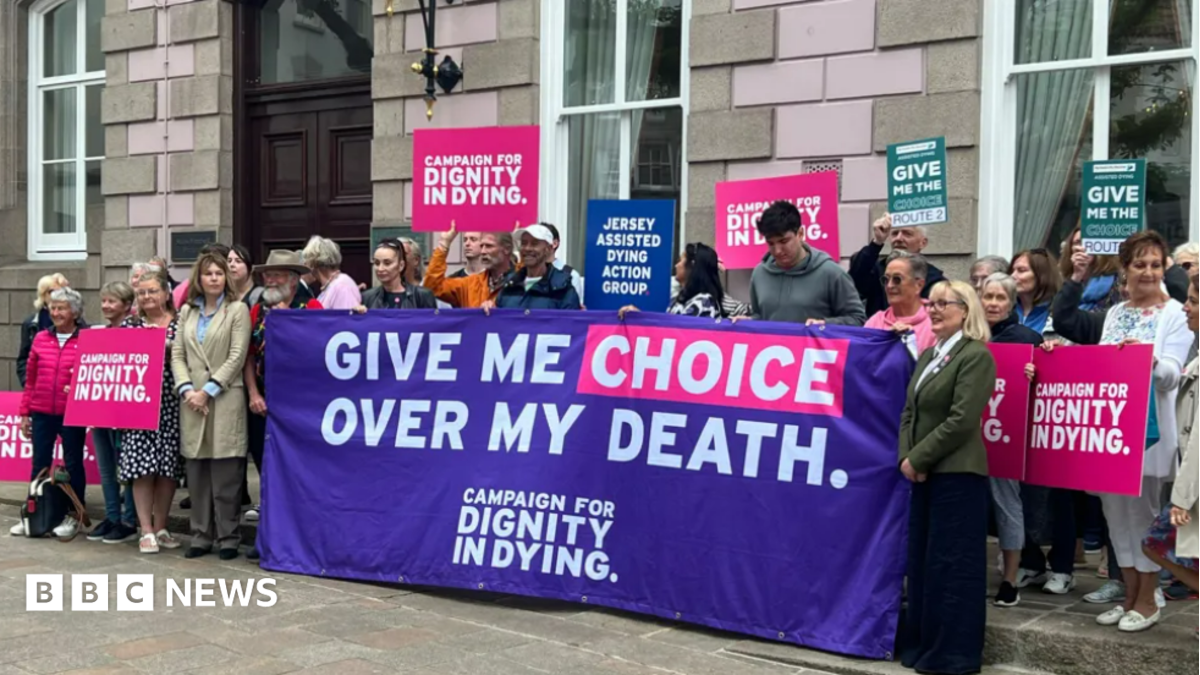
The group further claimed the law fails to provide adequate protections against coercion, particularly for disabled individuals, and indicated it would be consulting legal advisors regarding potential next steps. For those involved in the local campaign, the result is seen as the culmination of years of civic engagement. Lorna Pirozzolo, a campaigner living with incurable cancer, expressed relief that the law will ensure residents avoid experiencing what she described as "torturous symptoms in their final days."
How significant is this development?
Contribute your assessment to the aggregated reader sentiment ledger.
Frequently Asked Questions
Key questions answered in this reportWhat is the key development in: Jersey to legalise assisted dying after receiving Royal Assent?
The Assisted Dying (Jersey) Law 2026 has been granted Royal Assent, paving the way for a clinical service to launch on the island by late 2027.
Why is this Politics development significant for the UK?
This report covers critical events in our Politics beat. Independent reporting monitors related UK statements, regulatory shifts, and public responses as further verified details emerge.
How was this reporting corroborated and verified?
Newsarchy UK compiles and cross-references reporting from primary reporting from bbc.co.uk and cross-checked wire reports. All coverage adheres to published editorial standards.
When was this report published?
This briefing was published on July 10, 2026 and is permanently cataloged in the Newsarchy UK Politics archives.