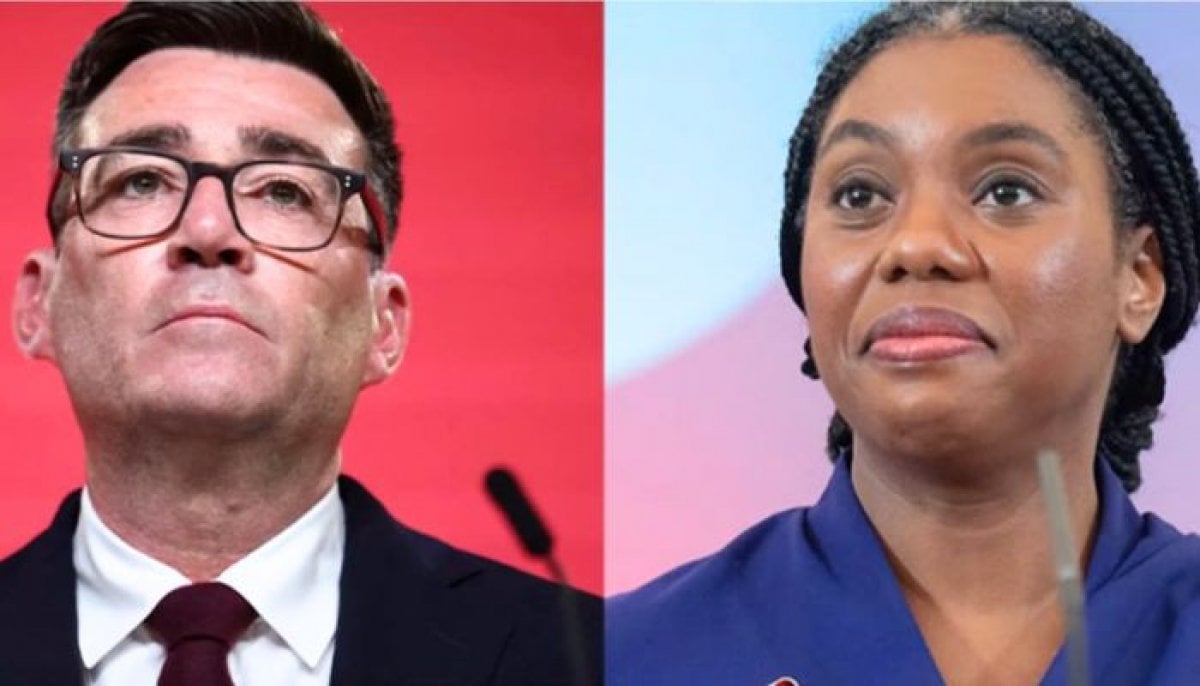
Kemi Badenoch presses Andy Burnham on surging borrowing costs fiery PMQs
In her debut at Prime Minister’s Questions, Kemi Badenoch demanded a concrete fiscal plan from Andy Burnham, citing rising borrowing costs and market uncertainty.
- Core Development: In her debut at Prime Minister’s Questions, Kemi Badenoch demanded a concrete fiscal plan from Andy Burnham, citing rising borrowing costs and market uncertainty.
- Beat Context: Categorized under Politics with independent corroboration.
- Reporting Depth: 6 minute analytical read synthesized from verified newsroom sources.
Kemi Badenoch presses Andy Burnham on surging borrowing costs in fiery PMQs debut
Andy Burnham’s first appearance at Prime Minister’s Questions on Wednesday marked the first public test of his new government’s economic credibility. The session, held after the summer recess, erupted over a rise in UK borrowing costs that has pushed yields to their highest levels in nearly two decades.
Burnham, who succeeded Sir Keir Starmer in July, opened his defence by blaming “turbulence on global markets are because of that exposure that they left behind”, a critique he directed at the previous Conservative administration Andy Burnham, Prime Minister, via Yahoo. He added that “we are turning that corner”, suggesting the market shock was temporary Andy Burnham, Prime Minister, via Yahoo.
Media additions

Conservative leader and opposition front‑bencher Kemi Badenoch seized on the moment to demand a concrete fiscal plan. “The markets are clearly worried that we now have a spendthrift prime minister who wants to say yes to everyone but cannot tell us where the money is coming from,” she told the Commons Kemi Badenoch, Opposition Leader, via Yahoo. Badenoch pressed for a yes‑or‑no answer on a possible tax rise, asking, “Yesterday he said change begins with honesty, so will he be honest and tell us: is he preparing to raise taxes again, yes or no?” Kemi Badenoch, Opposition Leader, via Yahoo. She warned that the prime minister “needs to pay for all his new promises and he has a choice – higher taxes, more borrowing, or spending cuts” Kemi Badenoch, Opposition Leader, via Yahoo.
Burnham responded by pointing to two tax cuts already delivered – a reduction in VAT on energy bills and a cut in business rates for hospitality – and stressed that “my first moves were to cut tax” Andy Burnham, Prime Minister, via Yahoo. He stopped short of promising a full budget in the chamber, saying, “I’m not going to do what any prime minister has done and write the budget here” Andy Burnham, Prime Minister, via Yahoo. He also noted that he and Chancellor John Healey had agreed on an earlier date for the Budget to “reduce speculation” Andy Burnham, Prime Minister, via Yahoo.
Both speakers framed fiscal responsibility in stark terms. Burnham declared, “This will be a government grounded in fiscal responsibility. It will stick to the fiscal rules, but at the same time, we will help reduce cost‑of‑living pressure on our constituents, and that’s the approach that we will take” Andy Burnham, Prime Minister, via Yahoo. Badenoch countered that the markets’ jitteriness stemmed from the prime minister’s “spendthrift” reputation, a label reinforced by the latest borrowing data.
According to the Thenews article, the cost of borrowing “nudged higher earlier, reaching a new 18‑year high”. The Yahoo report quantifies that surge: the yield on a 10‑year gilt is at its highest level since 2008, while the 30‑year gilt sits at its highest since 1998. The convergence of long‑term yields, the article notes, “could constrain its spending choices as the 28 October Budget approaches”.
Financial forecasts underscore the magnitude of the challenge. The Thenews piece projects that the UK will pay £135 bn in debt interest in 2026/27 – a sum “50 % more than on defence” thenews.com.pk. The scale of that interest bill, coupled with the yields’ historic peaks, has amplified concerns about the sustainability of Burnham’s spending agenda.
Underlying the borrowing debate is the role of Lord Jim O’Neill, a cross‑bench peer and economist who has been tipped as a potential chief economic adviser. In a BBC interview, O’Neill praised “a great first five weeks” of Burnham’s premiership, crediting them with lifting consumer and business confidence Lord Jim O’Neill, economist, via Yahoo. Yet he warned that the spike in government‑bond yields would force Labour to start “dealing with the triple lock” on the state pension and to curb “excessive” welfare spending Lord Jim O’Neill, economist, via Yahoo. Badenoch quoted O’Neill’s concern that Burnham’s tone “was the last thing investors wanted to hear” Kemi Badenoch, Opposition Leader, via Yahoo. Burnham replied that he and O’Neill “not always agree” Andy Burnham, Prime Minister, via Yahoo, a thinly veiled rebuttal to the criticism.
The exchange also turned personal. Burnham used the opportunity to attack Badenoch’s recent shadow‑cabinet reshuffle, which reinstated several MPs who had served in former Prime Minister Liz Truss’s short‑lived administration. “Can I also say to her and the whole of her new shadow cabinet, the majority of whom were part of a government that lasted for 49 days, a short‑lived government that crashed confidence in the economy and hammered people’s mortgages,” he said, adding that she “removed a shadow chancellor who said that the Truss mini‑budget was a mistake, and she replaced that shadow chancellor with one that helped to write the Truss mini‑budget” Andy Burnham, Prime Minister, via Yahoo. The reshuffle saw Andrew Griffith replace Sir Mel Stride as shadow chancellor, a move that drew “point‑scoring!” shouts from the Conservative benches.
Defence spending emerged as another flashpoint. Burnham reminded MPs that his government would “fully fund the defence investment plan” and meet a “3.5 % spending target for defence by 2035” Andy Burnham, Prime Minister, via Yahoo. He explained that the new chancellor, who quit as defence secretary in June after the previous government failed to commit to a 3 % increase, was appointed for his “strong commitment to the defence of our country and to defence spending” Andy Burnham, Prime Minister, via Yahoo. The opposition, however, raised the alleged Russian attack on Leipzig airport, urging Burnham to commit to a 3 % defence spend – a pledge that the government has pushed to “spring next year” Yahoo article.
Beyond the fiscal arithmetic, the PMQs highlighted a broader contest over narrative. Burnham framed his agenda as a blend of responsible budgeting and targeted relief, while Badenoch painted a picture of a leader whose “spendthrift” instincts could destabilise markets. The focus on borrowing costs, yields and the looming 28 October Budget turned the session into a de facto fiscal showdown.
Key moments from the debate
- Badenoch challenged Burnham on how he would fund his spending programmes amid “surging borrowing costs”.
- Burnham blamed “turbulence on global markets” on the previous Tory government and promised fiscal rules will be respected.
- Both leaders cited specific tax measures – VAT cuts on energy and business‑rate relief for hospitality – as evidence of fiscal intent.
- Lord Jim O’Neill praised early policy wins but warned the yield spike would force tough choices on the triple lock and welfare.
- The defence commitment, a 3.5 % target by 2035, was foregrounded amid calls for a 3 % spend for the coming year.
Borrowing‑cost context
| Bond | Highest level since |
|---|---|
| 10‑year gilt | 2008 |
| 30‑year gilt | 1998 |
What to watch next
The next major test will be the Budget slated for 28 October. Markets will be scanning for any shift in the trajectory of 10‑year and 30‑year yields, the scale of new borrowing announced, and whether Burnham’s pledge to “stick to the fiscal rules” translates into concrete expenditure limits. Equally, the defence spending timetable – especially the move from an interim 3 % pledge to the 3.5 % target – will be under scrutiny, as will any decision on tax adjustments that could sway the projected £135 bn debt‑interest bill for 2026/27.
How significant is this development?
Contribute your assessment to the aggregated reader sentiment ledger.
Frequently Asked Questions
Key questions answered in this reportWhat is the key development in: Kemi Badenoch presses Andy Burnham on surging borrowing costs fiery PMQs?
In her debut at Prime Minister’s Questions, Kemi Badenoch demanded a concrete fiscal plan from Andy Burnham, citing rising borrowing costs and market uncertainty.
Why is this Politics development significant for the UK?
This report covers critical events in our Politics beat. Independent reporting monitors related UK statements, regulatory shifts, and public responses as further verified details emerge.
How was this reporting corroborated and verified?
Newsarchy UK compiles and cross-references reporting from primary reporting from thenews.com.pk and cross-checked wire reports. All coverage adheres to published editorial standards.
When was this report published?
This briefing was published on September 3, 2026 and is permanently cataloged in the Newsarchy UK Politics archives.