Ministers ask public for views on changing age of consent
Ministers are asking the public whether the age of consent should be staggered, following high-profile legal cases and political debate.

Ministers are asking the public for their views on whether the age of consent should be staggered, following high-profile legal cases that have intensified political scrutiny around sexual offences and victim confidentiality.
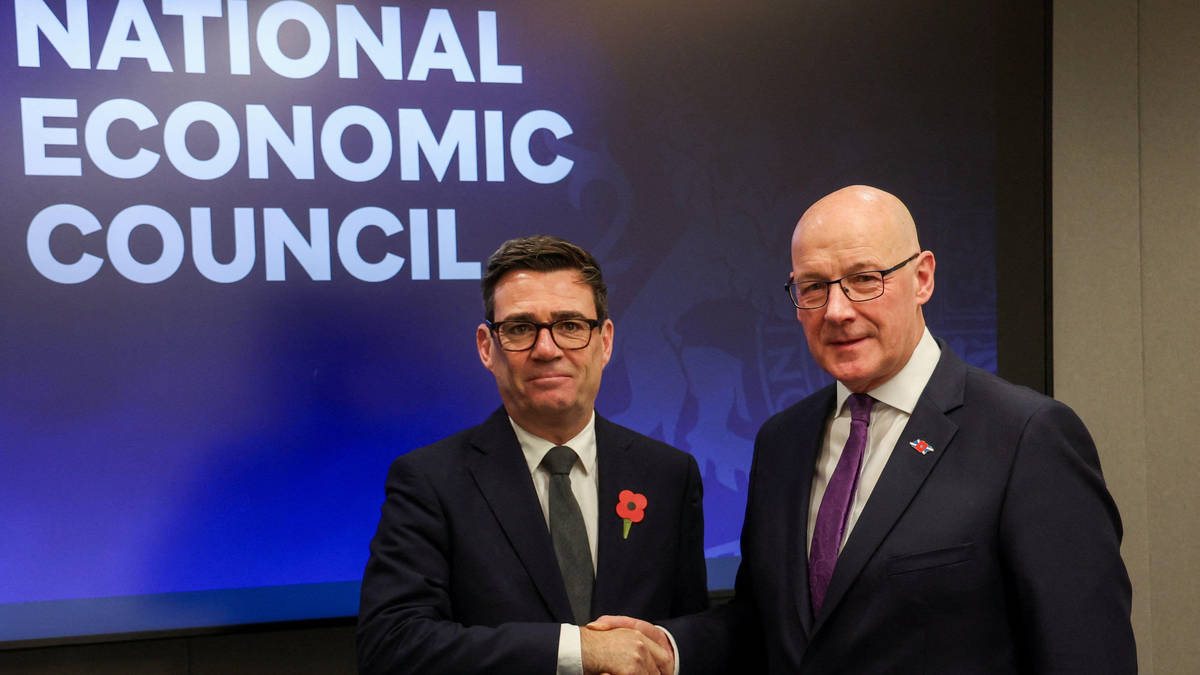
As reported by Yahoo News and the BBC, adults of any age are currently legally able to have sex with 16 and 17-year-olds under UK law. However, campaigners and officials are actively reviewing whether different limits ought to apply depending on the age gap between the individuals involved. Prime Minister Andy Burnham stated that he wants survivors, parents, young people, victim support services, and the wider public to share their experiences and inform the consultation process, which is set to open in the new year.
Media additions


The debate has been heavily driven by recent legal proceedings and public allegations. Mia Latter, a woman who alleges she was raped by Russell Brand when she was 16 and he was 30, has called for the age of consent to be altered. Latter was one of several women who made allegations during a joint media investigation, though none were complainants in Brand's subsequent criminal trial, which resulted in a rape conviction. In the same week as Brand's conviction, separate reports accused author David Walliams of sexual misconduct. One woman stated that she now characterises an alleged encounter with Walliams when she was 15 years old as a sexual assault, while Walliams has strongly denied any criminal activity, grooming, or sexual contact with the girl.
Political figures have already begun dividing over the potential policy shift. Conservative leader Kemi Badenoch acknowledged that there was "some common sense" behind the idea of staggering the age of consent, but questioned how a new law could realistically be enforced. Badenoch also described it as "very confusing" for Labour ministers to discuss staggering the age of consent for sexual relations while simultaneously lowering the voting age to 16. Proponents of reform often point to international comparisons, such as in Canada, where the baseline age of consent is 16, but 14 and 15-year-olds can legally consent to sexual activity provided the partner is less than five years older.
Concurrently, the government is accelerating legislative changes regarding non-disclosure agreements. New limits will now become law in January 2027, coming into force months earlier than originally planned. These measures invalidate confidentiality clauses in new NDAs if they prevent employees from discussing harassment or discrimination, or stop victims from reporting criminal conduct. The rules will also cover NDAs signed outside of the workplace, ensuring that victims of crime retain the absolute right to speak to anyone, including the media, about what occurred.
Zelda Perkins, founder of the campaign group Can't Buy My Silence, welcomed the announcement, stating that the laws would uphold the integrity of a legal system that must never be used to protect perpetrators at the expense of victims. Perkins previously felt forced to sign an NDA preventing her from discussing abuse by her former boss, film producer Harvey Weinstein. Writing in the Guardian, Prime Minister Andy Burnham echoed this sentiment, asserting that NDAs should protect sensitive business interests rather than shield powerful men who have abused or harassed women.
The broader cultural conversation around boundaries and consent has simultaneously played out in Ireland, where a government-funded social media campaign titled We-Consent, run by the Dublin Rape Crisis Centre, sparked intense debate. The campaign featured an online video depicting a family gathering where an elderly couple hugs their grandchildren, with the granddaughter looking visibly uncomfortable before a voiceover declares that not everyone wants a hug, even from family. The advert prompted sharp criticism from Irish Justice Minister Jim O'Callaghan, whose department helps fund the initiative. O'Callaghan intervened, stating that the video was demeaning to grandparents and did not represent government views, leading the DRCC to pull the videos from its social media channels while reflecting on their impact.
Critics like Fine Gael Senator Gareth Scahill condemned the resource allocation as a waste of public money, questioning whether consent forms would eventually be required at airport arrivals. Academic voices similarly divided on the matter; Dr Eoin O'Malley of Dublin City University argued the state was overreaching with extreme messaging, while other scholars like Dr Órfhlaith Campbell and Dr Eoin Daly defended the campaign's underlying focus on teaching children to respect personal boundaries and speak up when uncomfortable.
What to watch next
- The launch of the government's public consultation on staggering the age of consent, scheduled for early next year.
- The implementation of the accelerated non-disclosure agreement laws, due to come into force in January 2027.
- Further developments from the Dublin Rape Crisis Centre regarding the future of its We-Consent educational materials following ministerial intervention.
Readers can follow ongoing developments across our Politics coverage.