US-Iran War Live Updates: Chinese supertankers pass Bab el-Mandeb despite Houthi blockade
Two Chinese-crewed supertankers successfully transited the Bab el-Mandeb Strait, marking the first successful passage since the Houthi-declared blockade began. Concurrently, rising tensions have led Tehran to label RAF Fairford a legitimate target for military action.
- Core Development: Two Chinese-crewed supertankers successfully transited the Bab el-Mandeb Strait, marking the first successful passage since the Houthi-declared blockade began. Concurrently, rising tensions have led Tehran to label RAF Fairford a legitimate target for military action.
- Beat Context: Categorized under Politics with independent corroboration.
- Reporting Depth: 5 minute analytical read synthesized from verified newsroom sources.
Two Chinese‑crewed supertankers slipped through the Bab el‑Mandeb Strait on Thursday, defying the Houthi‑declared blockade that has choked Red Sea oil flows for weeks. The passage of the Xin Long Yang and Cosnew Lake—both laden with Saudi crude—marks the first successful transit since the rebels began targeting vessels in early July, and it comes as the wider US‑Iran confrontation intensifies on three fronts: aerial attacks, maritime disruption and diplomatic brinkmanship.
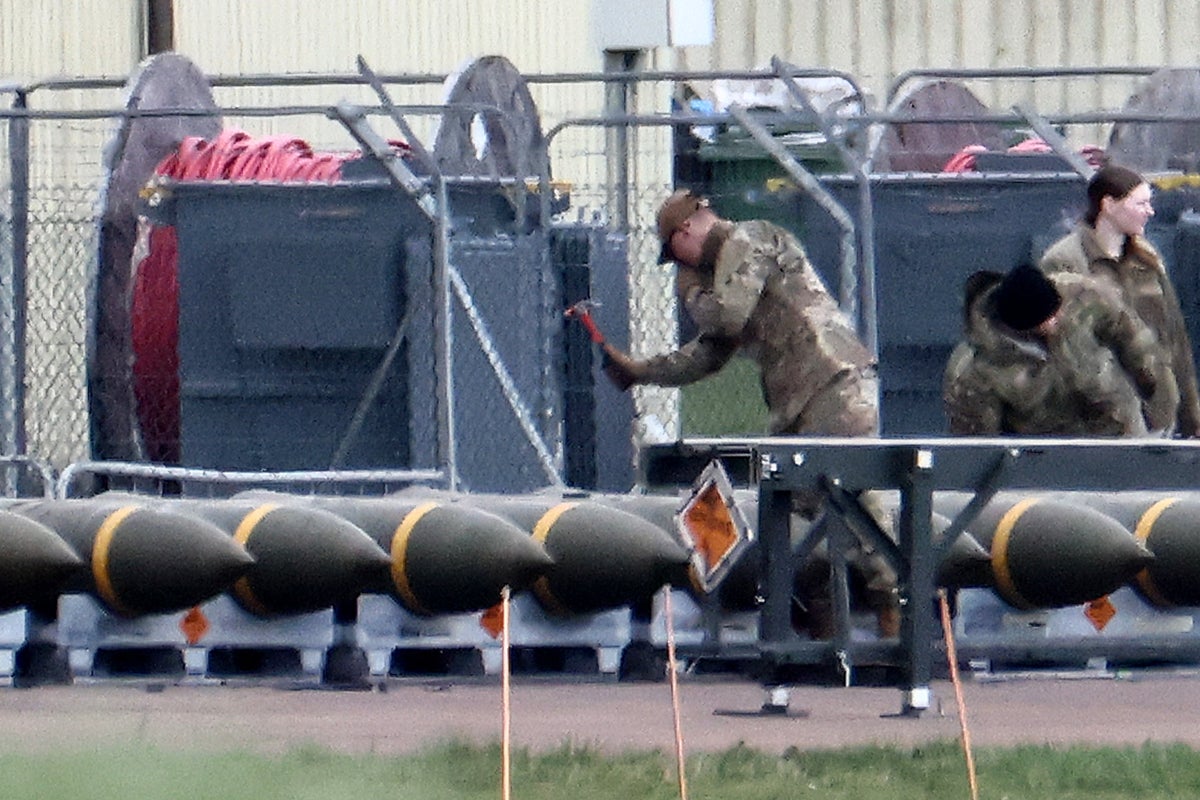
The move matters because it signals that a key chokepoint for global energy supplies is beginning to reopen, even as the United Nations warns that continued closures could exacerbate humanitarian crises across the region. At the same time, Tehran has escalated rhetoric, naming Britain’s RAF Fairford as a “legitimate target” after the base was used for US bomber missions against Iranian territory. London has responded with a public pledge that its armed forces stand ready 24 hours a day to defend the nation.
Media additions

Key developments in the past week
- 13 consecutive nights of US strikes on Iranian military and logistics sites, including a missile hit near Ahvaz that killed four people (source 1).
- Drone attacks launched by Iran on Bahrain’s Sheikh Isa Airbase and Jordan’s Muwaffaq Salti airbase, targeting fuel tanks and aircraft facilities (source 1).
- Houthi attacks on Red Sea tankers have pushed Brent crude above $100 a barrel, prompting concerns over wider shipping disruption (source 1, source 2).
- Chinese supertankers Xin Long Yang and Cosnew Lake exit Bab el‑Mandeb despite the blockade, according to LSEG data cited by Al Jazeera (source 1).
- IRGC threat against RAF Fairford, declaring any base used for “aggression against Iranian territory” legitimate for attack (source 2, source 4, source 5).
- UK government response: armed forces ready 24/7 to defend the country, with a layered air‑and‑missile defence approach (source 2, source 3, source 4, source 5).
- UN warning that escalation could further disrupt maritime trade, flights, and border crossings, heightening humanitarian needs (source 1).
From the front lines: air strikes and drone warfare
Iran’s military reported a fresh wave of drone sorties aimed at Bahrain’s Sheikh Isa Airbase and Jordan’s Muwaffaq Salti airbase, claiming hits on fuel tanks, warehouses, aircraft facilities and troop accommodation (source 1). The attacks follow a series of US strikes that targeted seven Iranian provinces, including Khuzestan and Fars, resulting in civilian casualties in Ahvaz (source 1).
Meanwhile, the United States has continued its campaign of nightly bombardments. A thirteenth consecutive night of strikes focused on maritime capabilities, missile‑storage sites and coastal surveillance assets, a move Washington says is designed to “further degrade Iran’s ability to threaten civilian mariners” (source 3).
Maritime choke points under pressure
Houthi rebels, backed by Tehran, have intensified their campaign against vessels transiting the Red Sea. Their attacks have driven oil prices back above $100 a barrel for the first time since May, underscoring the strategic importance of the Bab el‑Mandeb (source 2).
Despite the threat, two supertankers – the Xin Long Yang and Cosnew Lake – successfully cleared the strait on Thursday, carrying Saudi crude that was loaded at Yanbu earlier in the week (source 1). Shipping data from LSEG, cited by Al Jazeera, confirms the passage, suggesting that not all commercial traffic is now halted.
Iranian diplomatic overtures amid the conflict
In Kyrgyzstan, Iran’s foreign minister Abbas Araghchi attended the Shanghai Cooperation Organisation’s Council of Foreign Ministers, emphasizing the organisation’s role in “genuine multilateralism” and decrying “aggressive unilateralism” that undermines the UN Charter (source 1). Araghchi warned that confiscating another country’s assets to settle unrelated claims would set a “dangerous precedent” (source 1).
These diplomatic signals run parallel to Tehran’s militancy. The IRGC’s public statements have been uncompromising.
“Any base used for aggression against Iranian territory is a legitimate target for us.”
IRGC, via Yahoo News
Britain’s defensive posture
The United Kingdom has framed the Iranian threat as a matter of national security. A government spokesperson told CNN that “Our Armed Forces are ready to keep the United Kingdom safe from any kind of attacks, whether it’s on our soil or from abroad. The UK stands ready 24/7 to defend itself” (source 4).
Britain’s defence ministry added that the response includes a “layered approach to air and missile defence, provided by Royal Navy, British Army and Royal Air Force assets equipped with a range of advanced capabilities, working closely with our NATO allies” (source 3). The ministry also highlighted recent investment of £790 million in air‑and‑missile defence, including upgrades to Sky Sabre systems and Type 45 destroyers (source 3).
While the IRGC claims that American combat aircraft have shifted to B‑1 bombers flying from RAF Fairford after naval missile stocks ran out (source 4), the UK Ministry of Defence has not confirmed recent missions from the base (source 5). Analysts note that the base lies roughly 2,800 miles from Tehran, well beyond the reach of most Iranian ballistic missiles, whose documented ranges hover around 2,000 kilometres (source 5).
Potential escalation pathways
Beyond the physical threat of missile strikes, experts point to other vectors:
- Cyber operations targeting critical infrastructure at RAF Fairford or other UK sites.
- Proxy actions by the Houthis in the Red Sea, which could broaden to attacks on commercial vessels linked to the UK.
- Use of Iranian‑supplied drones and cruise missiles, which, while limited in range, could be launched from nearer staging areas.
“The worry here is that if Iran was to launch a ballistic missile that was heading our way… we have no defences against that in this country,” former air vice‑marshal Sean Bell told the BBC, recalling the decline of Cold‑War era systems (source 2).
What to watch next
- Whether additional supertankers manage to traverse Bab el‑Mandeb in the coming days, indicating a broader easing of the blockade.
- Any concrete US bomber operations from RAF Fairford, which could provoke an Iranian retaliation.
- Further UN statements on the humanitarian fallout of maritime closures, especially as aid routes become strained.
- Potential diplomatic moves at the Shanghai Cooperation Organisation meeting, where Iran may seek broader support against what it calls “aggressive unilateralism”.
- Developments in US domestic funding for the war, given Defence Secretary Pete Hegseth’s warning of “critical shortfalls” without emergency appropriations (source 2).
As Chinese‑flagged tankers resume movement and the UK fortifies its defences, the global community watches a conflict that now stretches from the Persian Gulf to the Red Sea, and from the skies over Bahrain to the airfields of Gloucestershire. Each new transit, each diplomatic exchange, and each threat or response reshapes a precarious balance that could tip toward wider escalation or, if luck holds, a gradual de‑escalation of the most volatile theatre in the world today.
How significant is this development?
Contribute your assessment to the aggregated reader sentiment ledger.
Frequently Asked Questions
Key questions answered in this reportWhat is the key development in: US-Iran War Live Updates: Chinese supertankers pass Bab el-Mandeb despite Houthi blockade?
Two Chinese-crewed supertankers successfully transited the Bab el-Mandeb Strait, marking the first successful passage since the Houthi-declared blockade began. Concurrently, rising tensions have led Tehran to label RAF Fairford a legitimate target for military action.
Why is this Politics development significant for the UK?
This report covers critical events in our Politics beat. Independent reporting monitors related UK statements, regulatory shifts, and public responses as further verified details emerge.
How was this reporting corroborated and verified?
Newsarchy UK compiles and cross-references reporting from primary reporting from cnbctv18.com and cross-checked wire reports. All coverage adheres to published editorial standards.
When was this report published?
This briefing was published on July 24, 2026 and is permanently cataloged in the Newsarchy UK Politics archives.