European airlines and rail brace
A wave of union strikes across European transport sectors is threatening travel disruption this summer. Discover the critical dates and how to prepare.
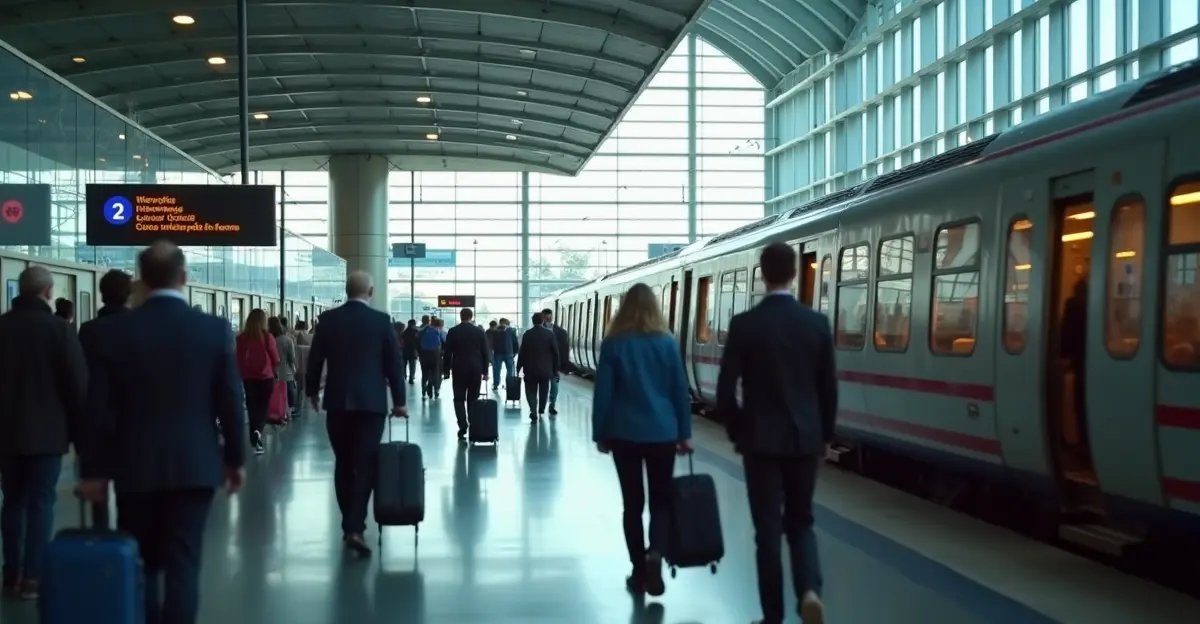
- Core Development: A wave of union strikes across European transport sectors is threatening travel disruption this summer. Discover the critical dates and how to prepare.
- Beat Context: Categorized under Transport with independent corroboration.
- Reporting Depth: 4 minute analytical read synthesized from verified newsroom sources.
What changed? A convergence of wage‑driven disputes, pension‑reform opposition and looming regulatory roll‑outs has pushed unions in Spain, France, Italy, Belgium and Portugal to stage overlapping actions that affect every stage of a journey: air‑traffic control, ground handling, cabin crews, rail staff and airport security. The result is not a handful of isolated cancellations but a continent‑wide lattice of “known‑risk” days that can turn a simple city‑hop into a logistical nightmare.
Industry analysts warn that without flexible bookings and real‑time monitoring, travelers could face “widespread travel chaos” as multiple networks hit their limits at once.
Media additions


"The cumulative effect of these strikes across multiple transport sectors could create widespread travel chaos,"
James Wilson, industry analyst, via Informedclearly
Airlines such as easyJet and Ryanair have already rolled out resilience measures, yet the sheer scale of the disputes means the risk cannot be dismissed as a “minor inconvenience”.
“This isn’t just about inconvenience – it’s about people’s holidays, family reunions, and business trips being disrupted,” said a frequent traveller who asked to remain anonymous.
"This isn’t just about inconvenience - it's about people's holidays, family reunions, and business trips being disrupted,"
Michaela Schmidt, frequent traveller, via Informedclearly
Key strike dates you need to watch
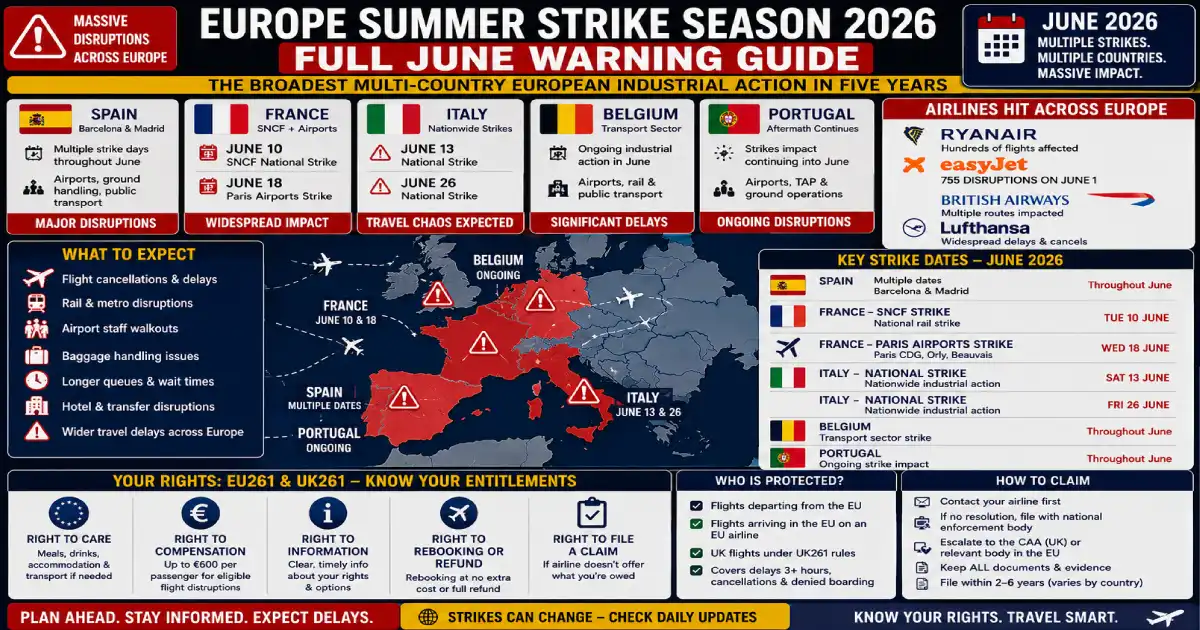
- June 4‑5 – France: rail drivers and national rail staff walk out; roughly half of long‑distance trains expected to be cancelled.
- June 10 – France: all four SNCF unions (CGT‑Cheminots, Sud‑Rail, Unsa‑Ferroviaire, CFDT‑Cheminots) stage a joint rail strike, the highest‑risk day for the French network.
- June 13 – Italy: ATC controllers at Verona and Cagliari strike; airports operate under protected flight windows (07:00‑10:00, 18:00‑21:00).
- June 18 – France: airport ground‑staff unions strike at CDG, Orly and Le Bourget, affecting ramp and baggage handling.
- June 26 – Italy: nationwide ground‑handling walkout, no protected flight windows, leading to extensive baggage‑transfer delays.
- July 1‑30 (ongoing) – Spain: rolling ATC strike by SAERCO (14 regional towers) and partial ground‑handling stoppages at 12 airports on Mondays, Wednesdays and Fridays.
These dates are drawn from a synthesis of six outlets covering the same summer‑strike calendar, including the detailed country‑by‑country guide on Traveltourister and the EU‑wide strike map on Wego.
Why the strikes matter now
Eurocontrol projects a record‑high traffic volume for summer 2026, with daily peaks approaching 37 000 flights. That load is already strained by geopolitical air‑space constraints and, from 10 April 2026, the new EU Entry/Exit System (EES) that adds two‑to‑four‑hour queues at major hubs.
Passenger‑rights expert Sarah Chen points out a legal grey zone that could affect compensation claims.
"The key question is whether strikes qualify as 'extraordinary circumstances'"
Sarah Chen, passenger‑rights expert, via Informedclearly
EU Regulation 261/2004 obliges airlines to pay up to €600 for cancellations that are not deemed extraordinary, but courts have sometimes ruled that internal airline strikes do not qualify as such. By contrast, ATC or baggage‑handler walkouts are generally treated as extraordinary, limiting cash compensation even if passengers endure lengthy delays.
Airline exposure
According to the TravelTourister data, easyJet recorded 32 cancellations and 723 severe delays on 1 June alone, a direct snapshot of cross‑border disruption. Ryanair’s own ground‑handling contracts (Azul) are subject to four‑day‑a‑week stoppages at Spanish airports, amplifying the risk of baggage mishandling and missed connections.
British Airways, Lufthansa, Air France, Iberia, and ITA Airways have all issued alerts for passengers from the UK, Germany, France, the Netherlands, Belgium and the US, urging them to monitor airline apps and to be ready for “free date‑change waivers” where available.
Rail and ferry fragility
Rail passengers face far weaker statutory protection than air travellers. While airlines must provide meals, accommodation and communication during a disruption, rail operators often only offer a refund, with no entitlement to additional compensation. In France, the joint SNCF strike on 10 June shrinks the volunteer pool, meaning cancellations could outstrip the “minimum‑service” guarantees that unions typically negotiate.
Belgium’s rail dispute is rooted in a government plan to strip civil‑service status from new SNCB recruits, a reform unions claim will erode job security. The strike notices are “irrevocable” unless the policy is scrapped, suggesting a protracted series of walkouts that could affect Eurostar services through Brussels‑Midi.
Italian ferry workers have announced a 48‑hour strike in early July, threatening island connections to Sicily and Sardinia.
Practical steps for travellers
The Traveler guide recommends three core habits:
- Book flexible tickets or add “waiver insurance” where carriers allow free date changes.
- Prefer early‑morning departures, which are less likely to be caught in cascading delays.
- Carry all essentials in hand luggage to sidestep baggage‑handler disruptions.
For those heading to Spain, the TravelTourister briefing outlines a three‑layered strike environment: ground‑handling walkouts on M‑W‑F, an indefinite ATC strike affecting nine regional towers, and a separate SAERCO dispute that limits capacity at the Canary Islands. The combined effect means that even if a flight departs on time, baggage transfer and onward rail links may still be compromised.
In Italy, the protected flight windows mean that flights scheduled between 07:00‑10:00 or 18:00‑21:00 are likely to operate, but passengers should not rely on tight connections on 13 June (
How significant is this development?
Contribute your assessment to the aggregated reader sentiment ledger.
Frequently Asked Questions
Key questions answered in this reportWhat is the key development in: European airlines and rail brace?
A wave of union strikes across European transport sectors is threatening travel disruption this summer. Discover the critical dates and how to prepare.
Why is this Transport development significant for the UK?
This report covers critical events in our Transport beat. Independent reporting monitors related UK statements, regulatory shifts, and public responses as further verified details emerge.
How was this reporting corroborated and verified?
Newsarchy UK compiles and cross-references reporting from primary reporting from traveltourister.com and cross-checked wire reports. All coverage adheres to published editorial standards.
When was this report published?
This briefing was published on July 21, 2026 and is permanently cataloged in the Newsarchy UK Transport archives.