All 129 passengers rescued after tanker hits cruise ship in New Orleans
A massive cargo vessel collided with a docked paddlewheel cruise ship on the Mississippi River, triggering a multi-agency rescue operation with zero fatalities.

All passengers and crew members survived after a massive cargo vessel collided with a docked paddlewheel vessel on the Mississippi River, prompting an urgent multi-agency rescue operation that local leaders hailed as a miracle.
The collision occurred on Friday, 13 November 2026, at approximately 12:30 p.m. Local time, when the 520-foot tanker known as the Atlantic Asphalt
struck the American Heritage river cruise ship near the Port of New Orleans. The cruise ship, operated by American Cruise Lines, had completed an eight-day voyage through destinations in Louisiana and Mississippi and had docked roughly two hours prior to the impact to begin disembarking travelers.
Media additions

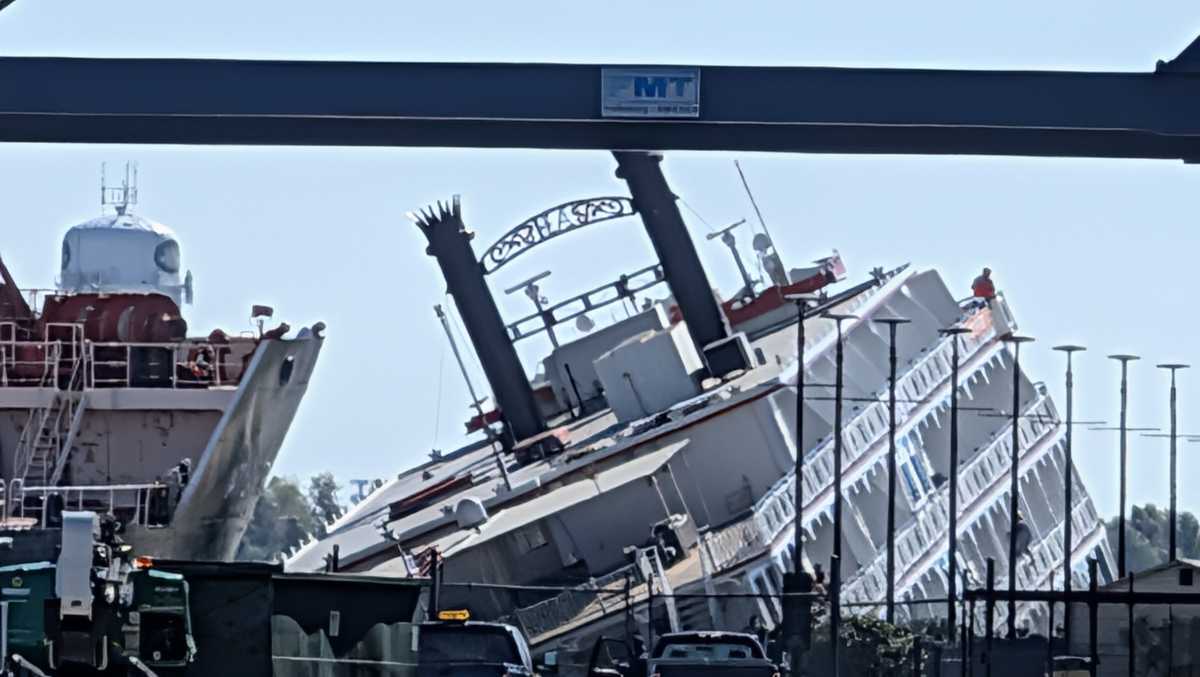
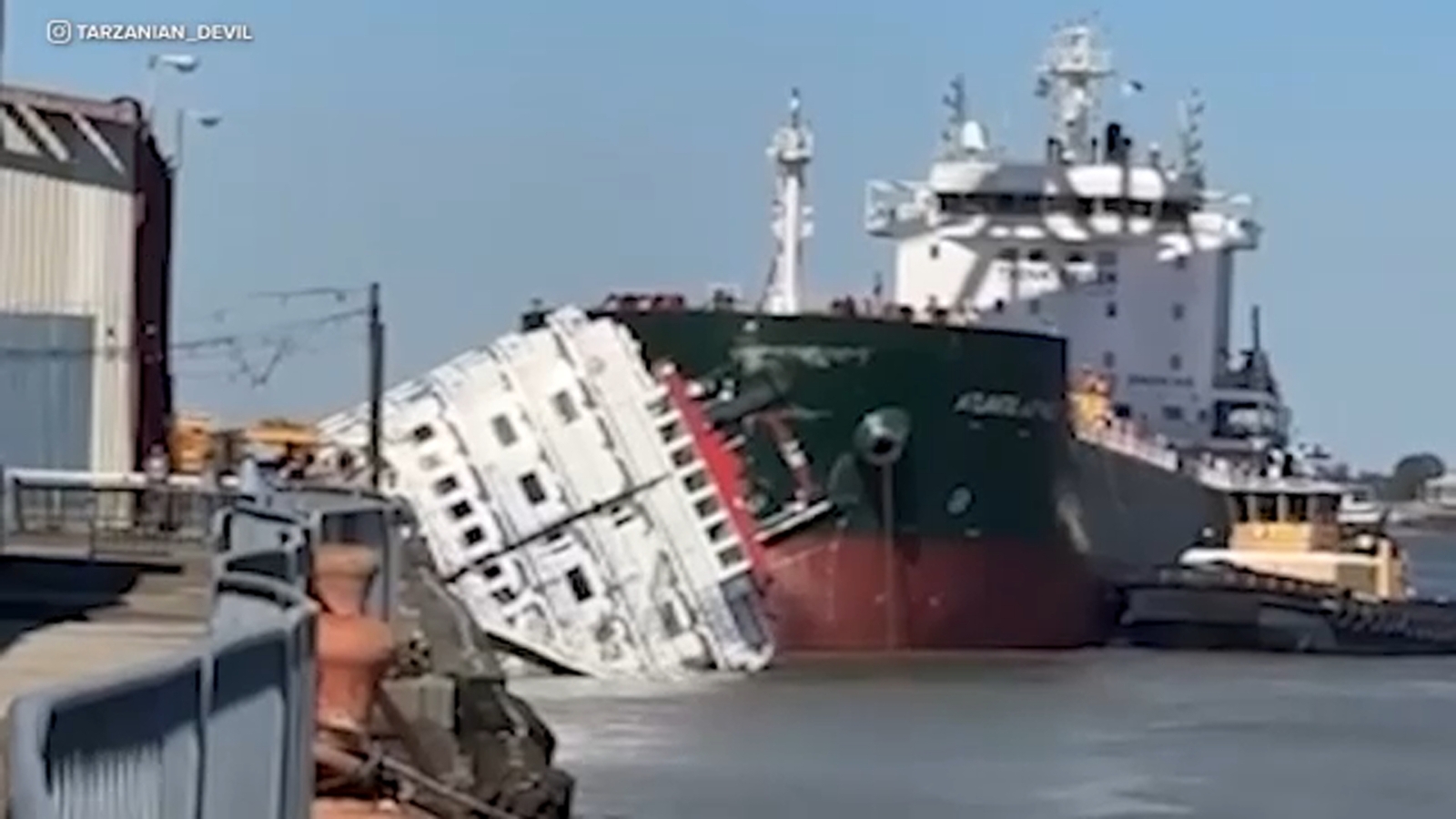
According to official reports from the Port of New Orleans, about 129 passengers were on board the paddlewheeler alongside crew members when the crash happened. Other estimates cited by outlets such as the Los Angeles Times placed the total number of people on the vessel closer to 180.
Witnesses described chaotic scenes as the much larger tanker slammed into the docked passenger boat, sending shattering metal and glass across the pier. Jamie Holford, a witness who spoke with CBS News, described the impact through Bbc coverage, stating it sounded like a war movie. Just imagine tons of steel crunching.
Another witness, Devon Flanagan, told the CBC that the aftermath was pure chaos with multiple vessels and barges rushing to assist people who had plunged into the river.
As the ship took on water, it began to list rapidly before capsizing onto its side. New Orleans Mayor Helena Moreno noted during a press briefing covered by The Daily Beast that firefighters utilized ladders extended from the dock to pull people to safety while passengers and crew scrambled over railings. First responders, tugboat operators, and harbor police leapt directly into the water to rescue stranded individuals.
Officials confirmed that zero fatalities occurred and no individuals remained unaccounted for. Out of those affected, 32 passengers sustained injuries and were transported to area hospitals, though none were reported to be in critical condition. Additionally, two harbor police officers fell into the water during the rescue efforts and were hospitalized in good condition, according to The Daily Beast and CBS News.
State and local leaders quickly mobilized resources to support the survivors. Louisiana Lieutenant Governor Billy Nungesser secured hotel rooms for approximately 85 affected passengers, many of whom were older adults who lost personal items such as identification cards, mobile phones, and car keys during the sinking. Evacuated travelers were brought to the Port of New Orleans Administration Building for triage, shelter, and assistance.
Vessel and Operational Details
| Vessel Name | Vessel Type | Length | Flag / Registry |
|---|---|---|---|
| Atlantic Asphalt | Asphalt and bitumen tanker | 520 feet | Marshall Islands |
| American Heritage | Paddlewheel river cruise boat | 295 feet (five stories) | United States |
Maritime experts and federal officials immediately began probing the root causes of the disaster. U.S. Coast Guard Captain Melanie Burnham stated that preliminary indications point toward a sudden loss of steering aboard the tanker, though a definitive cause has not yet been established. Martin Davies, a maritime law expert at Tulane University, told the Associated Press that an upbound ship experiencing such severe failure after navigating the difficult Algiers Point turn suggests something went drastically wrong with the vessel's systems.
Federal oversight was complicated by wider travel disruptions. According to reports from Newsweek and the Associated Press, National Transportation Safety Board investigators faced initial delays reaching New Orleans due to a nationwide ground stop issued by the Federal Aviation Administration.
President Donald Trump and Secretary of Homeland Security Markwayne Mullin praised the rapid response of local first responders and the United States Coast Guard. Louisiana Governor Jeff Landry flew to the scene to coordinate state assistance, while local tourism officials monitored the situation alongside broader transportation impacts across the region, including temporary ferry suspensions managed by the Regional Transit Authority.
What to Watch Next
- The U.S. Coast Guard established a temporary river closure between mile markers 93 and 96 on the Mississippi River while assessment and clearance operations continue. Officials are actively evaluating protocols to reopen the waterway to vessel traffic.
- Investigators from the National Transportation Safety Board are arriving on site to conduct a formal inquiry into the mechanical and operational factors behind the tanker's reported loss of steering.
- State and local agencies will continue coordinating housing and travel logistics for the displaced passengers through the weekend.