米9月雇用者数2.9万人増、市場予想下回り失業率4.2%に上昇
Eurozone annual inflation accelerated to 3.8% in September, driven largely by soaring energy costs and presenting new challenges for central bankers.

- Core Development: Eurozone annual inflation accelerated to 3.8% in September, driven largely by soaring energy costs and presenting new challenges for central bankers.
- Beat Context: Categorized under Transport with independent corroboration.
- Reporting Depth: 3 minute analytical read synthesized from verified newsroom sources.
Global financial markets absorbed a wave of contrasting economic indicators as slowing employment figures in the United States collided with accelerating inflation across Europe, altering monetary policy expectations on both sides of the Atlantic. In the United States, weaker-than-expected job growth triggered a pullback in immediate interest rate hike bets, while in the currency bloc sharing the euro, surging energy costs pushed inflation to a multi-year high, complicating the policy calculus for central bankers. These shifts occurred against a complex geopolitical backdrop, including ongoing energy supply pressures tied to the Middle East conflict and strategic governmental responses involving emergency fuel reserves.
The preliminary Harmonized Index of Consumer Prices (HICP) data released by Eurostat showed that eurozone annual inflation climbed to 3.8% in September, according to Dailyfinland. This reading represented a sharp acceleration from August's final figure of 3.2% and exceeded consensus market estimates of 3.6%, marking the highest inflation level recorded across the currency area since September 2023 (CNBC). The upward trajectory spanned three consecutive months, building upon earlier readings of 2.9% in July and 2.8% in June (Dailyfinland). On a monthly basis, consumer prices advanced by 0.6% (Anadolu Agency).
Media additions
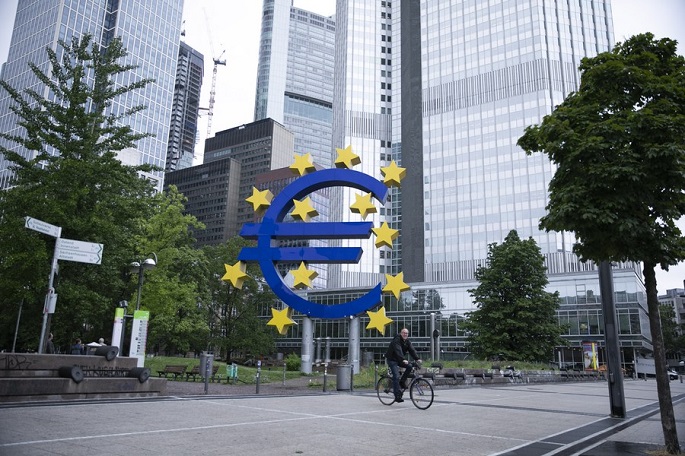


Energy costs remained the primary catalyst behind the price surge, fueled heavily by persistent geopolitical tensions in the Middle East (Qazinform). Energy inflation jumped to 18.8% annually, a steep escalation from the 14.3% recorded in August (Dailyfinland). Beyond energy, underlying price pressures began broadening across other economic sectors. Services inflation picked up to 3.2% from 3.0%, while food, alcohol, and tobacco inflation edged higher to 1.4% from 1.1% (Dailyfinland). Conversely, non-energy industrial goods inflation eased slightly to 1.1% from 1.2% (Dailyfinland). Core inflation, which strips out volatile components such as energy, food, alcohol, and tobacco, ticked up marginally to 2.5% from 2.4% (Dailyfinland).
The acceleration was widespread across the currency union's largest national economies, as well as smaller member states. Price gains exceeded forecasts in several key jurisdictions:
| Country / Region | September Inflation Rate | August Inflation Rate |
|---|---|---|
| Eurozone (Overall Flash) | 3.8% | 3.2% |
| Spain | 5.0% | 4.6% |
| Italy | 4.1% | 3.2% |
| France | 3.4% | 2.6% |
| Germany | 3.3% | 2.9% |
| Lithuania | 6.1% | N/A |
| Malta | 2.4% | N/A |
Among other reporting territories, Greece experienced a sharp jump to 5.1% from 3.7% (To Vima), while Lithuania posted the highest overall annual rate in the bloc at 6.1%, followed by Bulgaria at 5.6% (Dailyfinland). Malta recorded the lowest rate at 2.4%, closely followed by Finland at 2.6% (Anadolu Agency).
Economic analysts emphasized that the September data complicates the policy path for the European Central Bank. Harry Woolman, global capital markets analyst at Validus Risk Management, noted that while energy remains the principal driver, the latest figures suggest the trend has evolved beyond a pure energy story (Cnbc). Markets had pared back expectations of consecutive rate rises in recent days, after President Lagarde suggested that higher bond yields were doing some of the tightening for the ECB. Today's inflation reading makes that argument harder to sustain
, Woolman said via CNBC, adding that policymakers mindful of past inflation shocks will want to avoid second-round pricing effects becoming entrenched (CNBC).
ING economist Bert Colijn pointed out that while energy continued to dominate the headline figures, the simultaneous increases in food and core inflation point toward early, albeit preliminary, signs that higher costs are spilling over into broader price categories (Dailyfinland). Meanwhile, Bloomberg Economics analysts outlined a softer trajectory, suggesting that soaring sovereign yields have already tightened financial conditions significantly, which may lead the Governing Council to exercise patience before taking further policy action (Briefs).
For readers navigating loan rates, bond yields, and broader economic conditions, the critical question centers on whether the current pricing pressure proves temporary—tied heavily to energy shocks and temporary airfare effects—or whether it successfully embeds itself into persistent wage growth and corporate pricing strategies (Briefs). Eurostat is scheduled to publish the complete, finalized September inflation dataset on October 16, which will provide a granular breakdown of sectoral shifts across all participating member states (To Vima).
How significant is this development?
Contribute your assessment to the aggregated reader sentiment ledger.
Frequently Asked Questions
Key questions answered in this reportWhat is the key development in: 米9月雇用者数2.9万人増、市場予想下回り失業率4.2%に上昇?
Eurozone annual inflation accelerated to 3.8% in September, driven largely by soaring energy costs and presenting new challenges for central bankers.
Why is this Transport development significant for the UK?
This report covers critical events in our Transport beat. Independent reporting monitors related UK statements, regulatory shifts, and public responses as further verified details emerge.
How was this reporting corroborated and verified?
Newsarchy UK compiles and cross-references reporting from primary reporting from note.com and cross-checked wire reports. All coverage adheres to published editorial standards.
When was this report published?
This briefing was published on October 3, 2026 and is permanently cataloged in the Newsarchy UK Transport archives.