Heathrow Airport Restores Full Runway Operations
Heathrow Airport has resumed normal flight operations following the rapid containment of a grass fire near its southern runway.
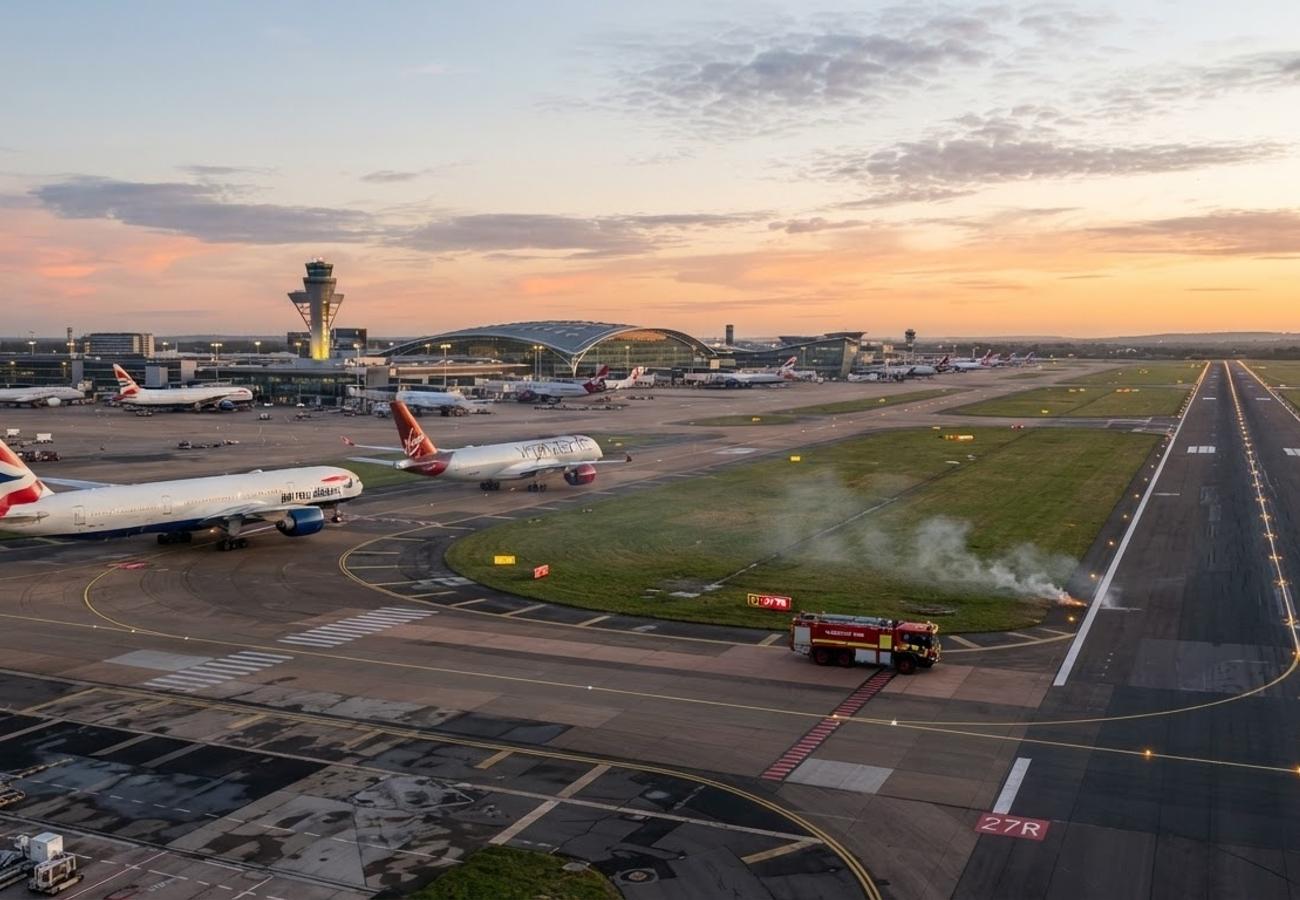
- Core Development: Heathrow Airport has resumed normal flight operations following the rapid containment of a grass fire near its southern runway.
- Beat Context: Categorized under Transport with independent corroboration.
- Reporting Depth: 3 minute analytical read synthesized from verified newsroom sources.
Flight operations at London Heathrow have returned to normal following the rapid containment of a grass fire adjacent to the southern runway. While the incident caused temporary runway closures and scheduling volatility, emergency protocols prevented a systemic collapse of the airport's international traffic.
On September 6, 2026, emergency crews were deployed to address a grass fire that ignited in an area immediately adjacent to Heathrow’s southern runway. To ensure the safety of arriving and departing aircraft, airport authorities activated immediate safety protocols, which necessitated the temporary closure of the affected runway. The proximity of the fire to the active runway created an immediate risk to aviation safety, requiring the suspension of all movements on that strip until the flames were extinguished and a full safety sweep was completed.
Media additions


The coordinated effort between airfield operations staff and emergency responders allowed for a swift resolution. Following the extinguishment of the fire and the completion of mandatory safety checks, Heathrow confirmed that both runways were returned to full operational status.
While Heathrow has not released a specific count of delayed flights, the temporary loss of one runway at one of the world's busiest hubs typically results in immediate ripple effects. For the affected passenger, a runway closure—even a brief one—can trigger a chain of delays, missed connections, and aircraft rotations. Under UK261, if a passenger is delayed significantly at the airport, the airline is responsible for providing assistance, though extraordinary circumstances such as grass fires often exempt carriers from cash compensation.
The rapid resolution of the incident underscores the critical nature of operational resilience in hub-and-spoke aviation models. At an airport operating near peak capacity, the loss of a single runway creates an immediate bottleneck.
| Incident Location | Cause | Operational Impact | Response Details |
|---|---|---|---|
| London Heathrow Southern Runway | Grass fire adjacent to runway | Temporary single-runway operations and flight delays | Extinguished quickly; full dual-runway operations restored |
| Scrubs Lane, North Kensington | Trackside grass fire causing electricity supply failure | Suspension of Elizabeth line, GWR, and Heathrow Express | 6 fire engines, ~40 crew members, 380 passengers evacuated |
Compounding the travel difficulties, the BBC reported that a separate trackside grass fire hit train links to the airport. National Rail stated there was a major disruption to services following an incident that began shortly after 16:00 BST, blocking all lines between London Paddington station and Heathrow's terminals, as well as Reading, due to a failure of the electricity supply caused by a fire next to the track.
Further details on the rail recovery were provided by Derbyshire Live, which noted that 380 passengers left stranded on an Elizabeth Line train were evacuated by the fire service and Transport for London.
The Met Office's Fire Severity Index highlights that if a wildfire was to occur in south-east England, it would carry a high or exceptional fire severity, particularly in parts of London including Heathrow. This environmental vulnerability continues to pose recurring challenges for infrastructure operators across the region. Aviation analysts point out that as climate volatility increases, the risk of runway-side vegetation fires grows, necessitating more aggressive airfield maintenance and faster response times to prevent global network contagion.
Grass and brush fires adjacent to runways are generally regarded as lower-impact events, but they can still force the closure of critical assets if smoke or flames encroach on approach paths, lighting, or navigation aids. The swift containment of the runway-side blaze demonstrates how proximity to specialized fire crews, airfield vehicles, and clear access routes can significantly compress response times.
For passengers navigating these disruptions, real-time digital monitoring tools remain essential. Airlines and airports increasingly direct travelers toward these platforms to monitor flight and ground transport status, helping travelers re-route, adjust departure times, or coordinate with accommodation providers when unexpected delays arise. Travel advisories issued in the aftermath encourage passengers to build extra contingency into itineraries that rely on tight connections, particularly when onward journeys involve separate tickets or different transport modes.
How significant is this development?
Contribute your assessment to the aggregated reader sentiment ledger.
Frequently Asked Questions
Key questions answered in this reportWhat is the key development in: Heathrow Airport Restores Full Runway Operations?
Heathrow Airport has resumed normal flight operations following the rapid containment of a grass fire near its southern runway.
Why is this Transport development significant for the UK?
This report covers critical events in our Transport beat. Independent reporting monitors related UK statements, regulatory shifts, and public responses as further verified details emerge.
How was this reporting corroborated and verified?
Newsarchy UK compiles and cross-references reporting from primary reporting from thetraveler.org and cross-checked wire reports. All coverage adheres to published editorial standards.
When was this report published?
This briefing was published on September 6, 2026 and is permanently cataloged in the Newsarchy UK Transport archives.