Kazakhstan and Belgium expand economic ties during historic royal visit
King Philippe and Queen Mathilde's state visit to Kazakhstan marks a new chapter in bilateral economic, technological, and logistical collaboration.
- Core Development: King Philippe and Queen Mathilde's state visit to Kazakhstan marks a new chapter in bilateral economic, technological, and logistical collaboration.
- Beat Context: Categorized under Transport with independent corroboration.
- Reporting Depth: 3 minute analytical read synthesized from verified newsroom sources.
Kazakhstan and Belgium have entered a transformative phase in their bilateral relations, underscored by a high-profile state visit that brings economic, technological, and logistical collaboration to the forefront. This diplomatic engagement arrives at a critical juncture for Central Asia's largest economy, as it actively broadens its international partnerships, modernises domestic infrastructure, and adapts to evolving global trade routes.
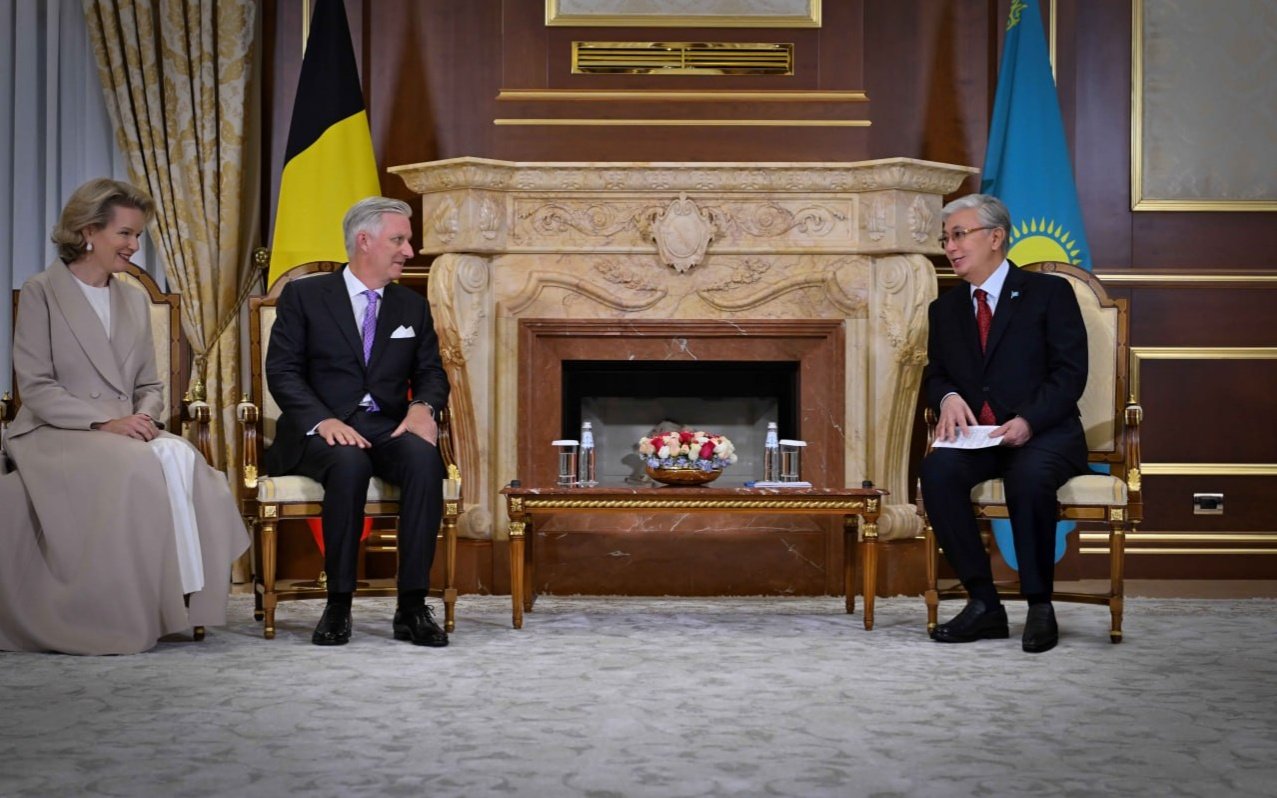
The arrival of the royal couple unfolded at the airport's arrival hall in Astana, where President Kassym-Jomart Tokayev greeted the delegation according to Qazinform. President Tokayev noted the historic nature of the trip, emphasising that it arrives during a crucial period of national development and economic growth. In response, King Philippe expressed enthusiasm for exploring the country over a multi-day itinerary that includes subsequent travel to Almaty, as reported by EUalive.
Media additions

This diplomatic milestone reflects a broader strategic realignment. As geopolitical tensions reshape traditional trade corridors, European nations are increasingly looking to Central Asia to secure resilient supply chains. For Astana, tighter bonds with European capitals provide access to advanced technology, European investment, and logistics expertise, helping to reduce reliance on legacy export routes.
Economic ties have expanded steadily, though trade patterns remain distinct. Pharmaceuticals dominate Belgian exports, while Kazakh exports to Belgium lean heavily on raw commodities and agricultural products. To illustrate the structure of bilateral commerce, the following figures outline recent trade metrics:
| Trade Indicator | Volume / Value | Key Categories |
|---|---|---|
| Total Bilateral Trade | Growth of nearly 28% over the prior year period | Pharmaceuticals, machinery, vegetable products, mineral resources |
| Belgian Goods Exports | Led by chemical and pharmaceutical products | Medicines, immunological products, vaccines, transport equipment |
| Kazakhstan Goods Exports | Concentrated in key commodities | Linseed, molybdenum ores and concentrates, base metals, ferroalloys |
Beyond standard commercial trade, the delegation's agenda tackles advanced industrial cooperation. Alisher Abdreshev, a lead expert at the Kazakhstan Institute for Strategic Studies, noted that Belgium possesses advanced metallurgical technologies and materials processing expertise. These capabilities align with Kazakhstan's extensive mineral reserves, opening pathways to joint manufacturing ventures rather than simple raw material extraction.
Transport connectivity forms another pillar of the discussions. Kazakhstan is actively seeking Belgian management expertise and digital solutions to develop the Trans-Caspian International Transport Route, often referred to as the Middle Corridor. Entities like the Port of Antwerp-Bruges and engineering firms such as Jan De Nul represent the kind of European logistical muscle Astana hopes to leverage for modernising Caspian ports like Aktau and Kuryk.
Academic and technological ties are simultaneously deepening, building on previous institutional agreements. Partnerships involving universities from both nations focus on joint research, mathematical modelling, digital twins, and artificial intelligence. These educational bridges support long-term economic modernisation and pave the way for joint projects within broader European research frameworks.
What happens next depends on the formalisation of pending diplomatic and commercial agreements. Foreign ministries are expected to sign a roadmap guiding cooperation through the end of the decade, while the business council continues to evaluate specific infrastructure and investment portfolios aimed at cementing long-term economic resilience.
How significant is this development?
Contribute your assessment to the aggregated reader sentiment ledger.
Frequently Asked Questions
Key questions answered in this reportWhat is the key development in: Kazakhstan and Belgium expand economic ties during historic royal visit?
King Philippe and Queen Mathilde's state visit to Kazakhstan marks a new chapter in bilateral economic, technological, and logistical collaboration.
Why is this Transport development significant for the UK?
This report covers critical events in our Transport beat. Independent reporting monitors related UK statements, regulatory shifts, and public responses as further verified details emerge.
How was this reporting corroborated and verified?
Newsarchy UK compiles and cross-references reporting from primary reporting from qazinform.com and cross-checked wire reports. All coverage adheres to published editorial standards.
When was this report published?
This briefing was published on October 11, 2026 and is permanently cataloged in the Newsarchy UK Transport archives.