Kazakhstan and Oman launch $150M fund for deeper ties
Kazakhstan and Oman have established a joint investment fund and signed major energy agreements to strengthen economic ties between Central Asia and the Gulf.
- Core Development: Kazakhstan and Oman have established a joint investment fund and signed major energy agreements to strengthen economic ties between Central Asia and the Gulf.
- Beat Context: Categorized under Transport with independent corroboration.
- Reporting Depth: 5 minute analytical read synthesized from verified newsroom sources.
Kazakhstan and Oman have launched a joint investment fund, backed by a financial commitment, as part of a broader push to forge deeper ties between Central Asia and the Gulf region. According to reporting by Qazinform and Jiji Press, the financial vehicle was unveiled during a state visit by Oman’s Sultan Haitham bin Tarik, marking his first official trip to the country. During the visit, Kazakh President Kassym-Jomart Tokayev awarded the visiting monarch the Order of the Golden Eagle, which serves as Kazakhstan’s highest state honor.
The partnership between the two nations extends well beyond capital allocation, touching on heavy industry, infrastructure, and green transition goals. Energy cooperation formed a major pillar of the discussions held during the royal visit. This featured a strategic cooperation agreement signed between Oman’s OQ Exploration and Production and Kazakhstan’s state energy firm KazMunayGas. Additionally, O-Green and Samruk Energy committed to developing solar and wind ventures, complete with battery storage systems.
The broader diplomatic and economic push includes new frameworks designed to protect investments, regulate air services, and establish a dedicated bilateral business council. In a notable multilateral integration step, Oman agreed to join the Eurasian Development Bank, taking its place as the institution's eighth shareholder and its very first member from the Gulf region. Both countries also emphasized building stronger transport links connecting Central Asia with the Gulf, Middle East, and Africa.
The bilateral agreements between Kazakhstan and Oman form part of a wider wave of international engagement by Astana, which has recently seen developments across energy, digital finance, regional transport, and cultural preservation. Tether signed a Memorandum of Understanding with the National Bank of Kazakhstan and the Alatau City Authority to explore stablecoin development, asset tokenization, and decentralized finance. Tether CEO Paolo Ardoino stated,
National Bank of Kazakhstan Deputy Governor Binur Zhalenov emphasized that financial stability, transaction transparency, and investor protection would remain central priorities as the country explores new digital financial infrastructure."Kazakhstan is taking a deliberate, forward-looking approach by exploring asset tokenization and a strategic reserve framework."
Paolo Ardoino, CEO, via Tether
In the nuclear sector, Kazakhstan opened a new center on October 2 to monitor radiation and coordinate responses to nuclear and radiological emergencies, with support from the U.S. Department of Energy’s National Nuclear Security Administration, as reported by The Times of Central Asia. Operating under Kazakhstan’s Atomic Energy Agency, the center will collect and analyze radiation data, coordinate government responses, and train emergency specialists. The initiative comes as Kazakhstan, recognized as the world’s largest uranium producer, expands its nuclear energy ambitions and prepares to build its first nuclear power plant near Lake Balkhash, with additional facilities planned. The country also cooperates with the International Atomic Energy Agency on emergency information exchange and nuclear safety.
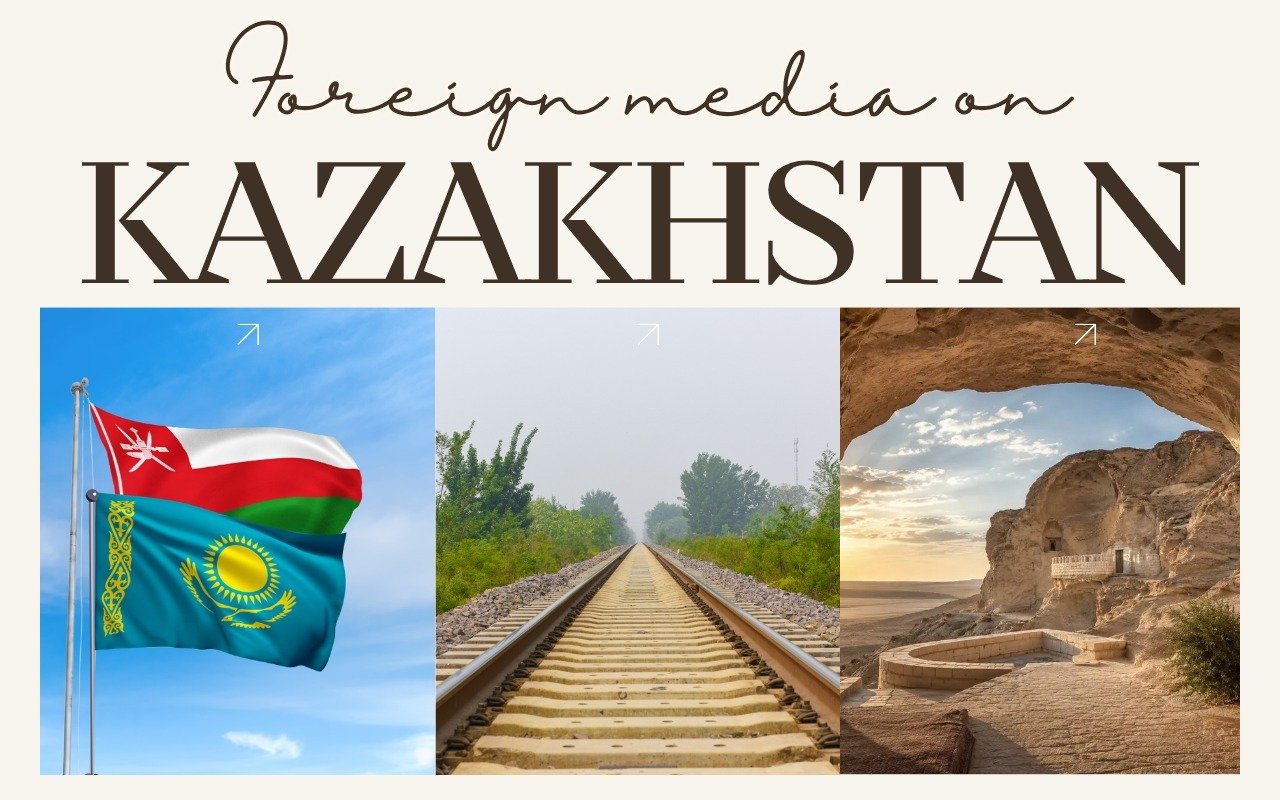
Regional transport connectivity also advanced when Kazakhstan, Uzbekistan, and the United Arab Emirates signed a memorandum of understanding to develop a railway corridor connecting Central Asia with Pakistan through Afghanistan, according to The Jerusalem Post. The proposed Central Asia-South Asia railway would provide Kazakhstan and other Central Asian countries with access to Pakistan’s seaports on the Arabian Sea, opening new opportunities for international trade and logistics. The project could strengthen Afghanistan’s role as a regional transit hub, generating revenue from freight transportation, logistics, and related services. However, the railway remains at an early planning stage, with its implementation dependent on financing, infrastructure development, cross-border coordination, and the results of feasibility studies.
In the cultural sphere, five rock-hewn mosques and associated sacred sites in Kazakhstan’s Mangystau region were added to the UNESCO World Heritage List, recognizing centuries of Sufi spiritual and architectural traditions, Euronews reports. The decision, adopted at the World Heritage Committee’s 48th session in South Korea on July 25, covers the Beket-Ata, Shopan-Ata, Karaman-Ata, Shakpak-Ata, and Sultan-Epe complexes, dating from the 12th to the 18th centuries. Carved into caves and limestone cliffs, the sanctuaries reflect the blending of Islamic Sufi practices with older local spiritual traditions. Erlan Karin, Chairman of Kazakhstan’s National Commission to UNESCO and ICESCO, stated,
Following this recognition, Kazakhstan plans a five-year development program beginning in 2027 to improve visitor infrastructure and preserve the sites."The inscription of the sacred monuments of Mangystau on the World Heritage List was not only a recognition of their significance for humanity as a whole, but also a tribute to the rich history, spiritual heritage and cultural identity of the Kazakh people."
Erlan Karin, Chairman of Kazakhstan’s National Commission to UNESCO and ICESCO, via Euronews
In international sports diplomacy, President Tokayev met newly elected FIDE President Timur Turlov, congratulating him on his appointment and discussing further cooperation in chess development. Tokayev highlighted Kazakhstan’s growing presence in international chess, pointing to the women’s national team’s silver medal at the 46th FIDE Chess Olympiad in Samarkand and noting that more than 278,000 people currently play chess across the country. Turlov, who also heads the Kazakhstan Chess Federation, emphasized the country’s progress in developing young talent, integrating chess into schools, and strengthening institutional support, expressing his intention to share Kazakhstan’s experience with other national federations while advancing FIDE’s global educational and youth development initiatives.
| Initiative / Agreement | Key Participants | Scope & Objectives |
|---|---|---|
| Joint Investment Fund | Kazakhstan and Oman | Targeting industry, healthcare, renewable energy, food production, and logistics. |
| Energy Collaboration | O-Green and Samruk Energy | Pursuing solar and wind projects totaling 2 GW, including battery storage. |
| Eurasian Development Bank | Oman and EDB | Oman becomes the eighth shareholder and first Gulf region member. |
How significant is this development?
Contribute your assessment to the aggregated reader sentiment ledger.
Frequently Asked Questions
Key questions answered in this reportWhat is the key development in: Kazakhstan and Oman launch $150M fund for deeper ties?
Kazakhstan and Oman have established a joint investment fund and signed major energy agreements to strengthen economic ties between Central Asia and the Gulf.
Why is this Transport development significant for the UK?
This report covers critical events in our Transport beat. Independent reporting monitors related UK statements, regulatory shifts, and public responses as further verified details emerge.
How was this reporting corroborated and verified?
Newsarchy UK compiles and cross-references reporting from primary reporting from qazinform.com and cross-checked wire reports. All coverage adheres to published editorial standards.
When was this report published?
This briefing was published on October 11, 2026 and is permanently cataloged in the Newsarchy UK Transport archives.
-1791649227938.webp)