US backs TRIPP trade route with $201M fund following peace deal
The United States has committed a $201 million fund to the Trans-Caspian TRIPP trade route, pivoting toward infrastructure investment following an Armenia-Azerbaijan peace accord.

- Core Development: The United States has committed a $201 million fund to the Trans-Caspian TRIPP trade route, pivoting toward infrastructure investment following an Armenia-Azerbaijan peace accord.
- Beat Context: Categorized under Transport with independent corroboration.
- Reporting Depth: 5 minute analytical read synthesized from verified newsroom sources.
Washington has thrown its financial weight behind a vital Eurasian transport artery following a breakthrough diplomatic accord. The United States has committed a fund to back the Trans-Caspian trade route, shifting its regional policy firmly from diplomacy to infrastructure investment after an agreement between Armenia and Azerbaijan, according to IndexBox. The financial backing arrives as global supply chains face intense pressure from security crises and maritime disruptions, elevating the strategic importance of land-based alternatives across the South Caucasus and Central Asia.
The financial commitment centers on the Trump Route for International Peace and Prosperity, commonly known as TRIPP, which aims to transform regional transit into a commercially viable corridor. IndexBox reports that the US government backed the Trans-Caspian Enterprise Fund, carrying a backing figure of $201 million (EUR175 million), to spur private investment along the Middle Corridor. The initiative was highlighted at a New York gathering convened during the United Nations General Assembly, drawing representatives from over forty companies alongside regional officials, including Azerbaijani Foreign Minister Jeyhun Bayramov and Armenian Foreign Minister Ararat Mirzoyan.
Media additions

Armenian press accounts indicate that Mirzoyan emphasized the historic weight of the August peace summit — convened with decisive US involvement — in reopening regional communications. Meanwhile, Mark Cameron, Deputy Assistant Secretary in the US State Department's Bureau of South and Central Asian Affairs, characterized the fund as a private non-profit entity at the Caspian Business Forum, remarking that American attention to the region has reached unprecedented levels. Azerbaijan's Deputy Minister for Foreign Affairs, Yalchin Rafiyev, welcomed TRIPP as an initiative bringing economic value alongside regional peace with shared interests for all participating nations, according to IndexBox.
This push for connectivity intersects with broader energy and industrial realignments across Eurasia. As detailed by The Times Of Central Asia, recent disruptions in the Strait of Hormuz, despite a temporary ceasefire mediated by Pakistan between Iran and the US, have triggered structural changes in global energy markets. Importers dependent on Middle Eastern shipments are aggressively diversifying. South Korea, which historically receives a significant portion of its crude and naphtha imports through the Strait of Hormuz, dispatched a high-level delegation to Kazakhstan led by Presidential Chief of Staff Kang Hoon-sik to secure alternative supply channels. Similarly, Japan is reassessing its supply strategy by looking to Kazakhstan and Azerbaijan through projects involving INPEX, as noted by The Times Of Central Asia.
However, geography and infrastructure impose severe constraints on these ambitions. Energy Minister Yerlan Akkenzhenov indicated that domestic oil production could face downward revisions due to infrastructure disruptions affecting the Caspian Pipeline Consortium and fires at the Tengiz field, according to The Times Of Central Asia. Transporting Caspian hydrocarbons requires complex logistics across the sea and onward through the Caucasus or Black Sea, with routes traditionally relying heavily on networks passing through Russia.
Beyond fossil fuels, the region is emerging as a critical frontier for industrial minerals required for advanced manufacturing, artificial intelligence, and renewable energy. According to a report by the Caspian Policy Center cited by Rare Earth Exchanges, Western governments and financial institutions, including the World Bank, the U.S. International Development Finance Corporation, ADQ, and Orion Resource Partners, are deploying billions into strategic mining investments across Kazakhstan, Uzbekistan, Kyrgyzstan, Tajikistan, Turkmenistan, and Azerbaijan. Yet, analysts at Rare Earth Exchanges caution that without downstream processing capabilities, such as rare earth separation and magnet manufacturing, the region risks remaining a raw material supplier rather than capturing full industrial value.
| Metric / Indicator | Reported Figure / Context | Source Reference |
|---|---|---|
| US Trans-Caspian Fund Backing | $201 million (EUR175 million) | IndexBox |
| Kazakhstan-Japan Bilateral Trade (2025) | $1.78 billion (Exports: $435 million, Imports: $1.35 billion) | The Astana Times |
| Japan Total Investment in Kazakhstan | Over $8 billion (with 60+ Japanese companies operating) | The Astana Times |
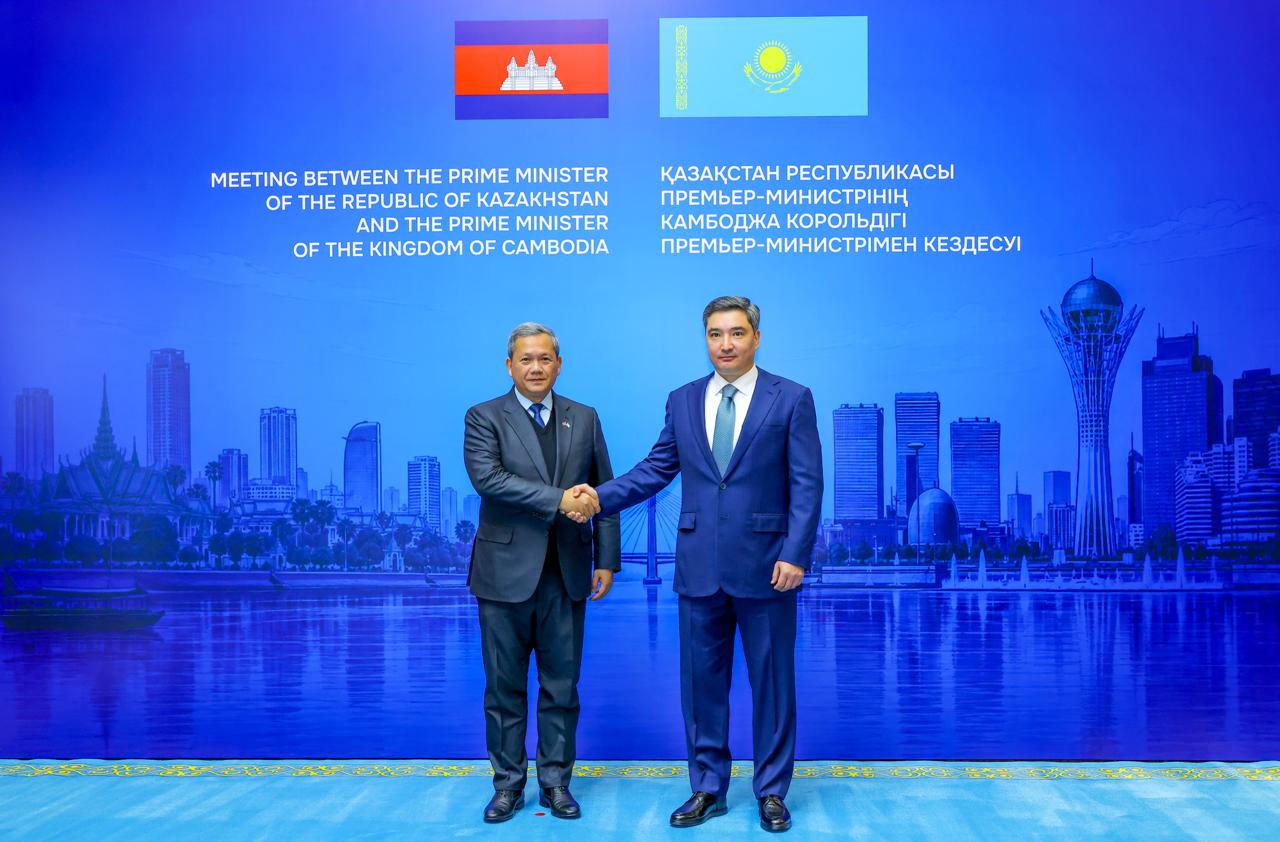
Bilateral diplomacy continues to reinforce these transport and economic ties. During an official visit to Astana, Cambodian Prime Minister Hun Manet and Kazakh Prime Minister Olzhas Bektenov discussed linking the Trans-Caspian International Transport Route (TITR) with the China-Laos-Vietnam-Cambodia corridor, opening new avenues for agricultural and industrial trade, as reported by Trend News Agency. Meanwhile, Japan’s Ambassador to Kazakhstan, Yasumasa Iijima, highlighted in an interview with The Astana Times that Tokyo views Kazakhstan as a vital partner for critical minerals and logistics, noting that bilateral agreements exceeded $3.7 billion during President Kassym-Jomart Tokayev's visit to Tokyo. Ambassador Iijima also cautioned that the declining water level of the Caspian Sea poses a severe environmental risk to the maritime components of the Middle Corridor.
Ankara is also expanding its footprint in the region. According to analysis from the Stiftung Wissenschaft und Politik (SWP), Turkey's outreach through the Organization of Turkic States (OTS) emphasizes multimodal transport development, defense cooperation, and economic partnership. However, experts note that Central Asian states maintain strict multi-vector foreign policies, ensuring that cooperation with Turkey complements rather than replaces their existing ties with Russia, China, and Western institutions.
Stakeholders will closely monitor whether newly committed capital can resolve persistent bottlenecks, including insufficient Caspian shipping capacity, varying customs procedures, and regional rail limitations. Further updates on infrastructure funding and transit developments across the transport sector are expected as regional governments advance their multilateral commitments.
How significant is this development?
Contribute your assessment to the aggregated reader sentiment ledger.
Frequently Asked Questions
Key questions answered in this reportWhat is the key development in: US backs TRIPP trade route with $201M fund following peace deal?
The United States has committed a $201 million fund to the Trans-Caspian TRIPP trade route, pivoting toward infrastructure investment following an Armenia-Azerbaijan peace accord.
Why is this Transport development significant for the UK?
This report covers critical events in our Transport beat. Independent reporting monitors related UK statements, regulatory shifts, and public responses as further verified details emerge.
How was this reporting corroborated and verified?
Newsarchy UK compiles and cross-references reporting from primary reporting from The Astana Times and cross-checked wire reports. All coverage adheres to published editorial standards.
When was this report published?
This briefing was published on October 20, 2026 and is permanently cataloged in the Newsarchy UK Transport archives.