Anti-migrant AfD seeks to break Germany’s political ‘firewall’ in historic state election
Voters in Saxony-Anhalt head to the polls as the far-right Alternative for Germany party holds a commanding lead, threatening the nation's political firewall.
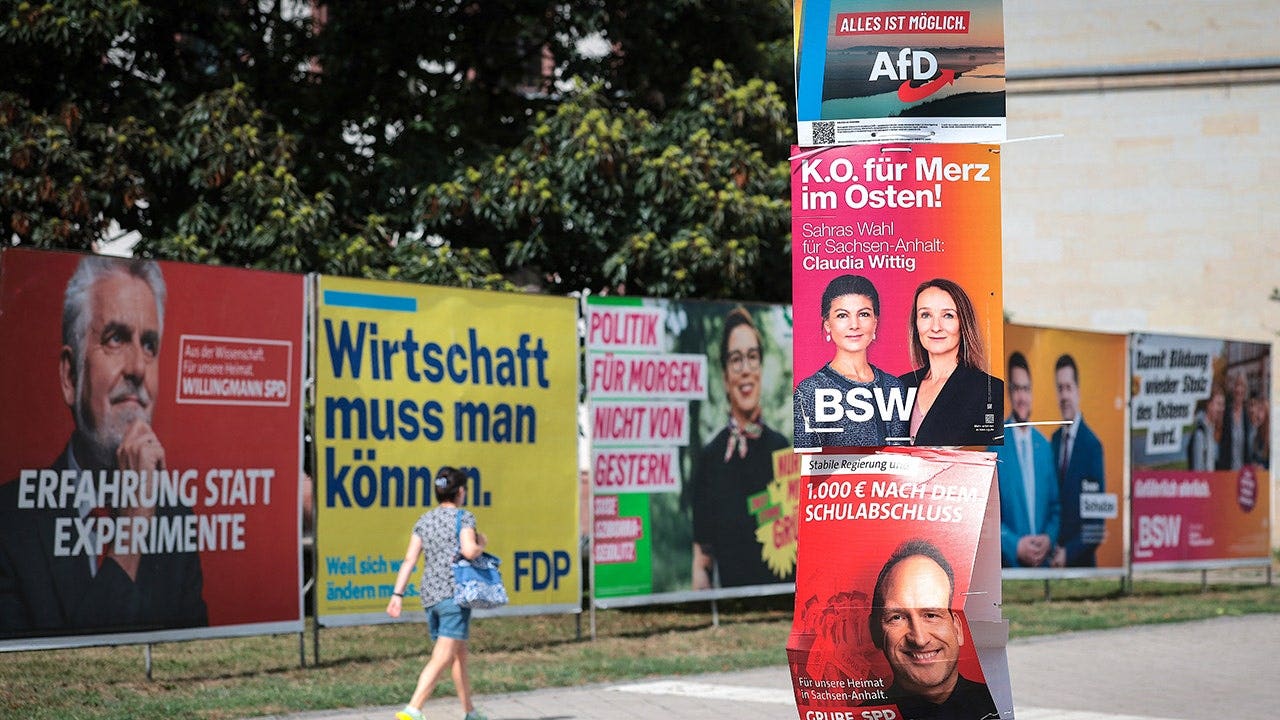
- Core Development: Voters in Saxony-Anhalt head to the polls as the far-right Alternative for Germany party holds a commanding lead, threatening the nation's political firewall.
- Beat Context: Categorized under World with independent corroboration.
- Reporting Depth: 4 minute analytical read synthesized from verified newsroom sources.
Germany stands braced for a profound political shift as voters in the eastern state of Saxony-Anhalt head to the polls on Sunday, 6 September 2026. The anti-immigration and Moscow-friendly Alternative for Germany (AfD) party enters the regional election holding a commanding lead in polls, eyeing an outcome that could grant the far-right its first taste of state-level government since World War II. For decades, mainstream parties have maintained a strict political "firewall"—known in German as the *Brandmauer*—refusing any cooperation with the hard-right movement. An outright victory for the AfD in the state of 2.1 million people would shatter that barrier, threatening to destabilize the federal leadership of Chancellor Friedrich Merz and test the resilience of Germany's post-war democratic conventions.
The regional election carries immense national resonance. According to Fox News, foreign policy expert Daniel Schatz observed that the AfD is no longer merely knocking on the door of power, but is close to kicking it open. The party’s top local candidate, Ulrich Siegmund, has run a polished campaign combining populist rhetoric with a massive social media presence, drawing heavy support from young and working-class voters. As detailed by The Guardian, Siegmund has been feted like a rock star at campaign events, openly vowing to dismantle established political norms.
Media additions


The mechanics of Germany's electoral system mean that even vote shares hovering in the low forties can translate into an absolute majority of seats in the state parliament, or *Landtag*. Under the federal voting rules, smaller parties that fail to clear the 5 percent electoral threshold are stripped of representation, effectively redistributing seats to the frontrunners. Daily Mail noted that voting runs until 6:00 PM local time on Sunday, 6 September 2026, with the first official projections anticipated immediately afterward. The final stretch of the campaign was also marred by fringe controversies, including unverified social media claims regarding mail-in ballot fraud that were swiftly dismissed by parliamentary speaker Julia Klöckner.
Mainstream political resistance to the AfD remains absolute, yet fraught with arithmetic hurdles. Chancellor Friedrich Merz’s center-right Christian Democratic Union (CDU) currently governs the state in a multi-party coalition, but polling indicates the CDU sits far behind the far-right challengers. According to The Independent, if the AfD fails to secure an outright majority, forming an alternative government will prove immensely complicated. The CDU has flatly ruled out a coalition with the far-left Die Linke, leaving few viable combinations for state premier Sven Schulze to cobble together a majority alongside the Social Democrats (SPD) and the Greens.
| Political Party | Latest Polling Averages / Estimates | Stance on AfD Firewall |
|---|---|---|
| Alternative for Germany (AfD) | 41% | Seeks to break the firewall and govern alone |
| Christian Democratic Union (CDU) | 23% | Maintains strict non-cooperation firewall |
| Die Linke (Left Party) | 11.5% | Open to ad-hoc support for a CDU-led minority arrangement |
| Social Democratic Party (SPD) | 8.5% | Participates in regional coalitions, maintains firewall |
| The Greens | 6% | Maintains strict non-cooperation firewall |
The policy platform driving the AfD’s surge has raised alarms across civil society, minority communities, and economic institutes. National co-chair Alice Weidel recently advocated on German broadcaster ZDF for closing national borders, exiting the Schengen treaty, and revoking protected status for Syrian refugees. Locally, the party’s "Vision 2026" manifesto outlines sweeping proposals for state governance. As reported across multiple outlets, an AfD-led administration would establish a dedicated task force to accelerate deportations, segregate refugee children into separate classrooms, ban rainbow flags in public schools, and dismantle public broadcasting funding. The German Economic Institute warned that such an anti-immigration agenda would prove ruinous for an eastern region already grappling with an aging and shrinking workforce.
Foreign policy implications are equally stark. Unlike the mainstream consensus supporting Ukraine, the AfD advocates for a softer line toward Moscow and an end to certain war refugee protections for Ukrainians. State interior minister Georg Maier of Thuringia warned in comments to the *Handelsblatt* that the Kremlin views the AfD as its primary instrument for destabilizing Germany. Critics fear that an AfD-run state security apparatus could compromise sensitive intelligence.
Chancellor Merz faces intense internal pressure regardless of Sunday's exact tally. Political scientists note that a historic defeat in Saxony-Anhalt will amplify criticism of Merz's national leadership, especially as national polls show the AfD surging across the wider federation ahead of the 2029 national elections. Meanwhile, civil opposition remains fierce; thousands of demonstrators converged in Magdeburg for a "festival of democracy" rally on the eve of the vote to protest the far-right's rise.
What to Watch Next
- Official projections and final vote tallies will be released following the close of polling stations at 6:00 PM local time on Sunday, 6 September 2026.
- Attention will quickly turn to the state capitals of Mecklenburg-Western Pomerania and Berlin, where voters head to the polls on Sunday, 20 September 2026.
- Coalition negotiations and potential deadlock in Saxony-Anhalt will test whether the traditional parties can successfully engineer a minority government or if the AfD will claim its historic first executive mandate.
How significant is this development?
Contribute your assessment to the aggregated reader sentiment ledger.
Frequently Asked Questions
Key questions answered in this reportWhat is the key development in: Anti-migrant AfD seeks to break Germany’s political ‘firewall’ in historic state election?
Voters in Saxony-Anhalt head to the polls as the far-right Alternative for Germany party holds a commanding lead, threatening the nation's political firewall.
Why is this World development significant for the UK?
This report covers critical events in our World beat. Independent reporting monitors related UK statements, regulatory shifts, and public responses as further verified details emerge.
How was this reporting corroborated and verified?
Newsarchy UK compiles and cross-references reporting from primary reporting from dailymail.com and cross-checked wire reports. All coverage adheres to published editorial standards.
When was this report published?
This briefing was published on September 6, 2026 and is permanently cataloged in the Newsarchy UK World archives.