Ousted Syrian President Bashar al-Assad sentenced to death in absentia
A Damascus court has sentenced ousted Syrian president Bashar al-Assad and several top regime figures to death in absentia for war crimes and crimes against humanity.

- Core Development: A Damascus court has sentenced ousted Syrian president Bashar al-Assad and several top regime figures to death in absentia for war crimes and crimes against humanity.
- Beat Context: Categorized under World with independent corroboration.
- Reporting Depth: 4 minute analytical read synthesized from verified newsroom sources.
A Syrian court has sentenced ousted president Bashar al-Assad to death in absentia for war crimes and crimes against humanity, marking a profound turning point in the country's pursuit of accountability following a devastating conflict.
The landmark rulings delivered by Judge Fakhr al-Din al-Aryan at the Fourth Criminal Court in Damascus on Tuesday, August 11, 2026, target the pinnacle of the former regime according to Yahoo News. The legal reckoning stems from atrocities committed during a 14-year civil war that left approximately half a million people dead and millions displaced as reported by Al Monitor and The Guardian. The conflict erupted after the Assad family dynasty, which held iron rule for over half a century following the ascendance of Hafez al-Assad in 1971 and Bashar's succession in 2000, met peaceful protests with severe repression.
Media additions
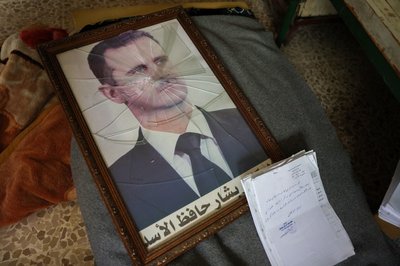

Judicial authorities found Bashar al-Assad guilty of premeditated murder, torture, arbitrary arrest, and the intentional killing of children under 15 noted Ecr. Judge al-Aryan stated during the live television broadcast that the former leader operated as the highest decision-maker, utilizing state institutions to facilitate systematic abuses according to NPR. The court convicted the former president for crimes including the intentional killing of more than one person, torture leading to death, and deprivation of liberty.
Alongside the former president, the court condemned several high-ranking figures. Bashar's younger brother, Maher al-Assad—former commander of the elite Fourth Division—received a death sentence in absentia reported Al Jazeera. Former defense minister Fahd al-Freij and several intelligence chiefs, including Louay al-Ali, were similarly condemned noted Ecr. Other former officials receiving death sentences in absentia included Muhammad Ayman Ayash, Qusay Ibrahim Mahyoub, Wafiq Saleh Nasser, and Talal Faris al-Assimi, according to Al Monitor. Meanwhile, Atef Najib, a cousin of Assad and former head of political security in Daraa province, stood trial inside a caged defendant's dock wearing a prison uniform to hear his own death sentence described Npr.
The roots of the modern Syrian crisis trace back to Daraa in March 2011, when security forces detained and tortured teenagers who scrawled anti-government graffiti on a school wall reported NPR. Najib's role in suppressing the subsequent protests ignited nationwide demonstrations that deteriorated into full-scale civil war noted Al Jazeera. The Assad dynasty ultimately collapsed in December 2024 after an 11-day lightning offensive led by forces under Ahmed al-Sharaa detailed Al Monitor. Following the regime's fall, Syria's transitional government began high-profile criminal hearings in April 2026.
While regime loyalists like Najib faced local detention, the principal architects of the state violence remain beyond immediate reach. Bashar and Maher al-Assad fled to Moscow upon the regime's collapse, securing political asylum from Russia reported NPR. Although Syria's transitional government has repeatedly demanded extraditions and vowed to pursue international legal avenues, analysts indicate that Moscow is unlikely to hand over its former allies barring a major political breakthrough cautioned Al Jazeera. Nevertheless, domestic trials continue to unfold, offering a vital cornerstone for transitional justice and national healing noted Al Jazeera. Abdel Basset Abdel Latif, head of the National Transitional Justice Authority, praised the rulings as an important milestone, while plaintiffs like Masri emphasized the long wait for justice.
Key Developments in the Syria Accountability Process
- December 2024: Rebel forces capture Damascus, ending the Assad family's five-decade rule; Bashar and Maher al-Assad flee to Moscow and receive political asylum.
- April 2026: Syria's transitional court begins high-profile criminal hearings against former regime officials, both in person and in absentia.
- August 11, 2026: The Fourth Criminal Court in Damascus sentences Bashar al-Assad, Maher al-Assad, Atef Najib, and several other former officials to death for war crimes and crimes against humanity.
Wassim al-Assad, another cousin of the ousted leader, has faced ongoing trial proceedings at the Fourth Criminal Court for allegedly forming armed groups that terrorized civilians in Rif Dimashq, including Jaramana and Mleiha, as reported by Al Monitor. Broader stability in the region remains fragile amid persistent low-level violence and retaliatory sectarian tensions highlighted The Guardian, intersecting with wider geopolitical shifts across the Middle East covered by the Boston Herald. Transitional authorities are also working with officials in places like Lebanon to identify and return other wanted individuals hiding abroad, according to Al Jazeera.
What happens next depends heavily on whether Damascus can pressure foreign states to return lower-tier fugitive officials residing abroad, while the transitional authorities navigate domestic reconciliation and the ongoing pursuit of international legal avenues against those sheltered in Moscow, according to Al Jazeera and The Guardian.
How significant is this development?
Contribute your assessment to the aggregated reader sentiment ledger.
Frequently Asked Questions
Key questions answered in this reportWhat is the key development in: Ousted Syrian President Bashar al-Assad sentenced to death in absentia?
A Damascus court has sentenced ousted Syrian president Bashar al-Assad and several top regime figures to death in absentia for war crimes and crimes against humanity.
Why is this World development significant for the UK?
This report covers critical events in our World beat. Independent reporting monitors related UK statements, regulatory shifts, and public responses as further verified details emerge.
How was this reporting corroborated and verified?
Newsarchy UK compiles and cross-references reporting from primary reporting from al-monitor.com and cross-checked wire reports. All coverage adheres to published editorial standards.
When was this report published?
This briefing was published on August 11, 2026 and is permanently cataloged in the Newsarchy UK World archives.