British Columbia wildfire forces 20,000 to evacuate as emergency declared
A massive wildfire in British Columbia has doubled in size to 23,500 acres, forcing over 20,000 residents to evacuate and prompting a state of emergency.
- Core Development: A massive wildfire in British Columbia has doubled in size to 23,500 acres, forcing over 20,000 residents to evacuate and prompting a state of emergency.
- Beat Context: Categorized under World with independent corroboration.
- Reporting Depth: 3 minute analytical read synthesized from verified newsroom sources.
A fast-moving wildfire in western Canada has forced more than 20,000 people to evacuate, prompting News reporting on the unfolding disaster.
The blaze, located in Bald Range, British Columbia, doubled in size overnight as Canadian officials declared a state of emergency. According to Yahoo News, the fire spread rapidly to cover about 23,500 acres. Evacuation orders swept across the province, targeting the districts of Summerland, Peachland, and surrounding areas west of Okanagan Lake.
Media additions
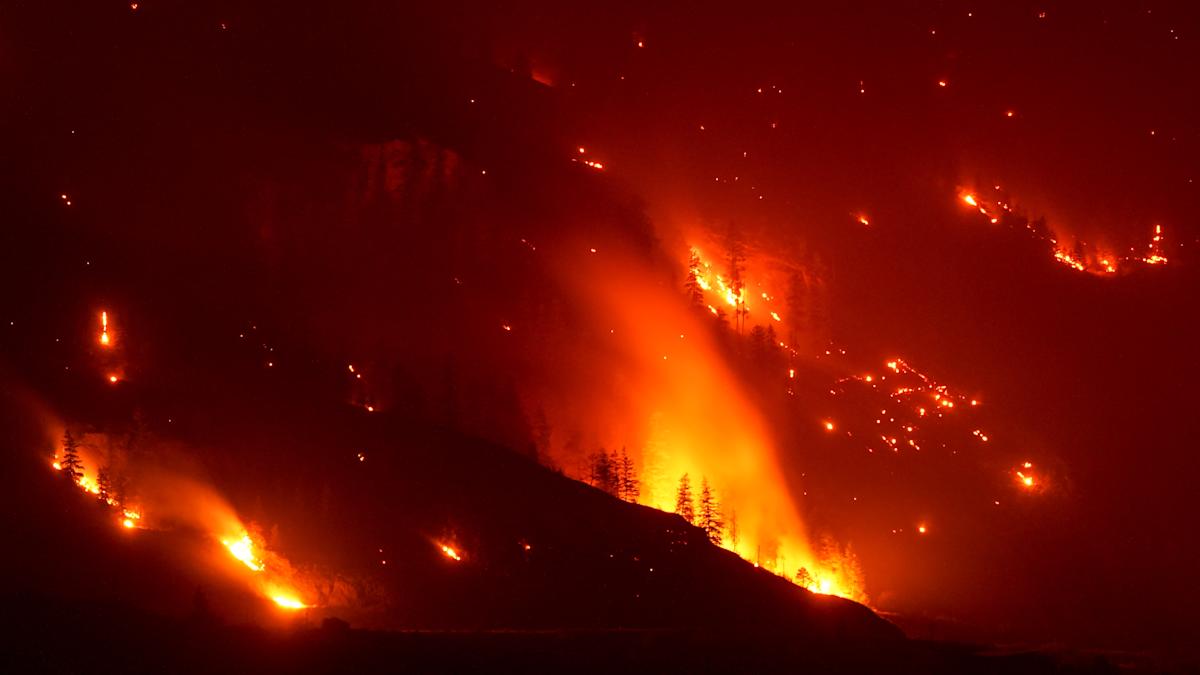
British Columbia Premier David Eby addressed reporters in a press conference, sharing alarming accounts from fire officials. One official compared the ferocity of the blaze to a bomb detonating.
"He described flames on 100ft trees, flames going 200ft above that, and the fire creating its own weather system, which creates lightning, which then feeds on itself,"
David Eby, British Columbia Premier, via Yahoo News
Mr Eby added that some individuals became trapped as conditions shifted with extreme speed, necessitating urgent rescue operations. The Royal Canadian Mounted Police launched an investigation into a possible wildfire death near Summerland, though hazardous conditions have prevented authorities from confirming the fatality.
The region produces the majority of British Columbia's wine and stands as Canada's second-largest wine-producing area. Summerland accommodates a population of about 12,000, while Peachland is home to roughly 6,500 residents. Overnight, about 8,000 people in and around Peachland joined Summerland residents in fleeing the advancing flames.
Evacuees faced immediate peril on jammed roads. Terry Fries, a Summerland resident, recounted watching a football game before a neighbour advised him to leave. When the evacuation notice arrived around midnight, he and his family drove about 28 miles north to Kelowna.
Even frontline workers were caught off guard by the rapid spread. Erick Thompson, an emergency official, described having to abandon his area's emergency operations centre to evacuate his own family.
Air evacuations became necessary for individuals isolated behind the fire perimeter. British Columbia Forests Minister Ravi Parmar stated that 18 firefighting aircraft rescued more than 50 people who remained trapped in the small rural community of Faulder.
Summerland Mayor Doug Holmes noted in a phone interview that numerous farms had sustained damage, though officials could not yet quantify the exact number of lost structures while active firefighting continued.
Kelly Greene, the province's minister of emergency management and climate readiness, formally enacted the state of emergency.
The emergency declaration grants the province expanded legal powers. These measures include the authority to restrict travel and secure necessary accommodations for displaced residents.
Hot, dry conditions and a prolonged drought continue to fuel the crisis across British Columbia, where approximately 1,500 firefighters battle more than 100 active blazes. Nearly half of those fires remain out of control. International assistance has arrived from firefighters originating in Mexico, Australia, France, and New Zealand.
Cliff Chapman, the British Columbia Wildfire Service’s director of operations, characterised the current environment as "explosive," warning that additional communities remain vulnerable to similar sudden conflagrations.
Current emergency status
- Evacuations: More than 20,000 people displaced across Summerland, Peachland, and surrounding districts.
- Fire Scale: Approximately 23,500 acres consumed in the Bald Range area.
- Resources Deployed: Around 1,500 firefighters, including international crews, and 18 firefighting aircraft.
- Provincial Response: 40 evacuation orders and 49 alerts active, backed by a declared state of emergency.
As the situation remains highly dynamic, further developments are expected as ground crews attempt to assess structural losses and search-and-rescue teams sweep the fire zone for missing individuals.
How significant is this development?
Contribute your assessment to the aggregated reader sentiment ledger.
Frequently Asked Questions
Key questions answered in this reportWhat is the key development in: British Columbia wildfire forces 20,000 to evacuate as emergency declared?
A massive wildfire in British Columbia has doubled in size to 23,500 acres, forcing over 20,000 residents to evacuate and prompting a state of emergency.
Why is this World development significant for the UK?
This report covers critical events in our World beat. Independent reporting monitors related UK statements, regulatory shifts, and public responses as further verified details emerge.
How was this reporting corroborated and verified?
Newsarchy UK compiles and cross-references reporting from primary reporting from yahoo.com and cross-checked wire reports. All coverage adheres to published editorial standards.
When was this report published?
This briefing was published on August 10, 2026 and is permanently cataloged in the Newsarchy UK World archives.