4 Canadian service members killed in fire at military base, 39 injured
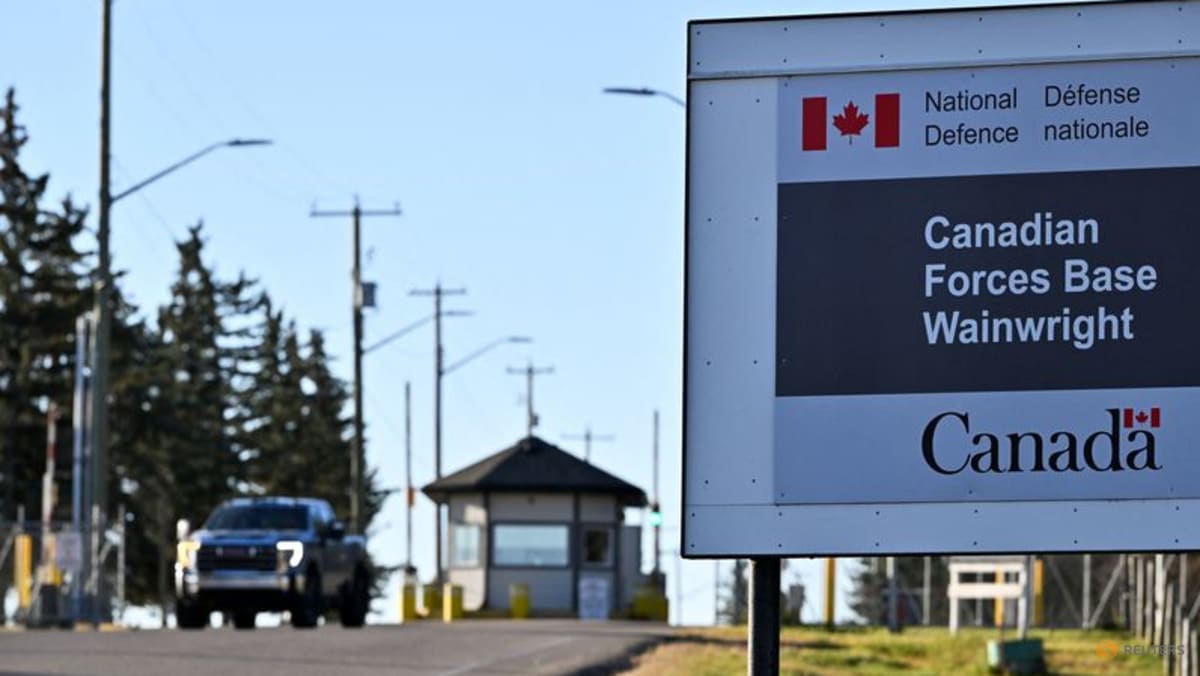
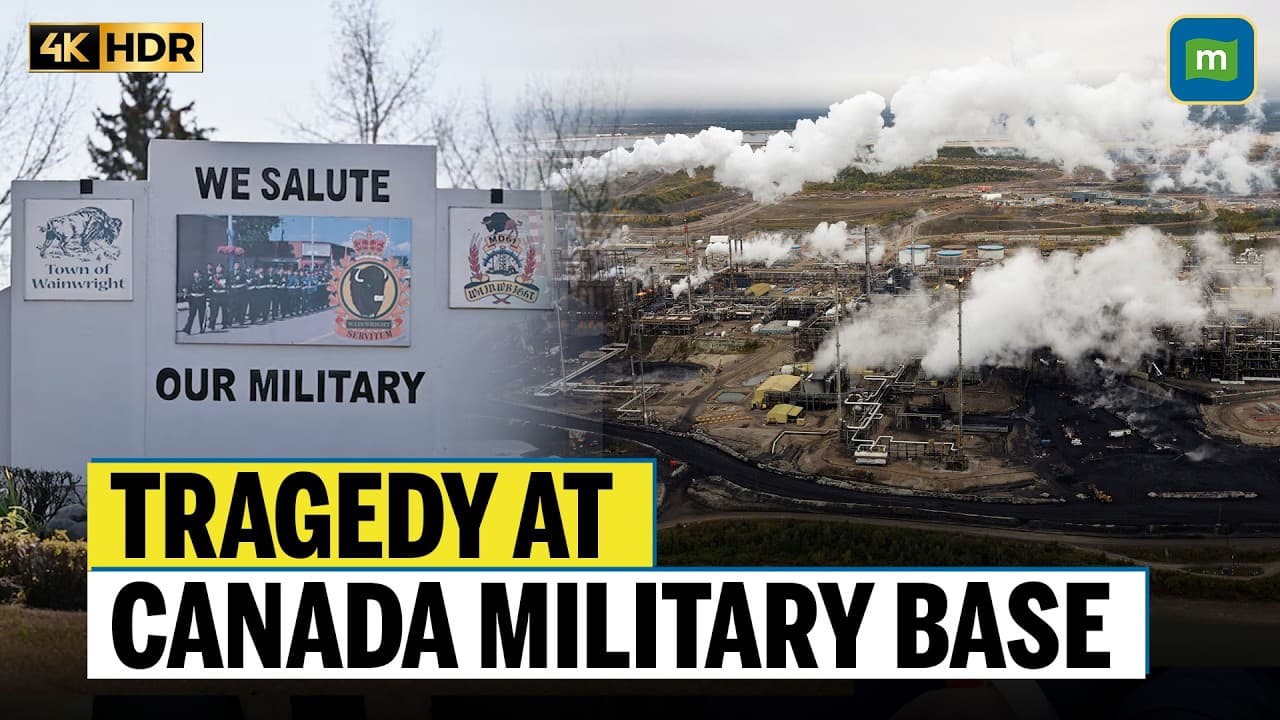
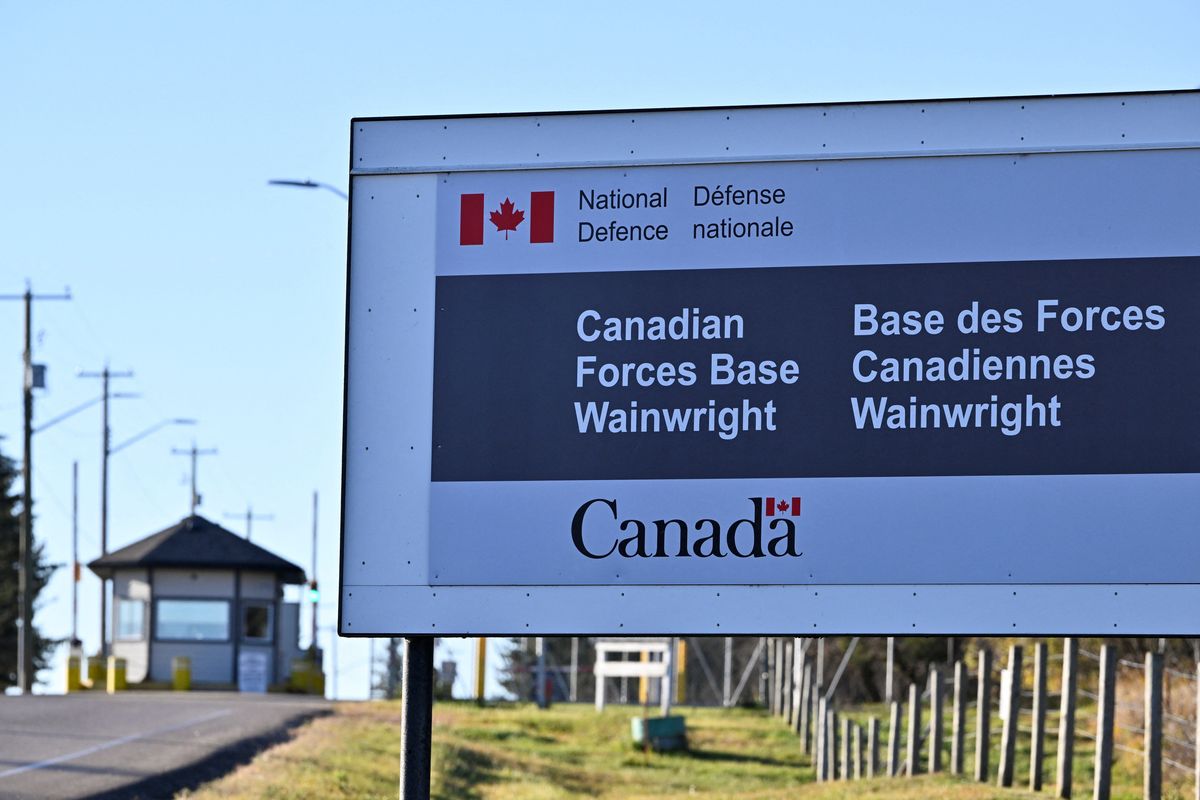
A sudden grass fire at Canadian Forces Base Wainwright killed four soldiers and left 39 others injured during a live-fire training exercise.

- Core Development: A sudden grass fire at Canadian Forces Base Wainwright killed four soldiers and left 39 others injured during a live-fire training exercise.
- Beat Context: Categorized under World with independent corroboration.
- Reporting Depth: 5 minute analytical read synthesized from verified newsroom sources.
Four Canadian service members were killed and 39 others were injured after a fast-moving grass fire swept through a live-fire training area at Canadian Forces Base Wainwright in Alberta. The disaster unfolded on Saturday, 17 October 2026, when uncommonly fierce wind gusts dramatically altered the trajectory of a smouldering vegetation fire, overtaking soldiers mid-drill and plunging the nation’s armed forces into one of the worst peacetime tragedies on domestic soil in modern history.
The incident began around 16:00 local time on Saturday as approximately 84 soldiers from Charlie Company of the 3rd Battalion, Princess Patricia’s Canadian Light Infantry were conducting high-intensity combat training. According to reports compiled by the Canadian Broadcasting Corporation (CBC), the troops were split between a grenade range and a sector where a "section attack" simulated offensive maneuvers against an enemy position. The unit was undergoing rigorous preparation for rapid global deployment and a scheduled mission to reinforce international forces in Latvia the following spring, as detailed by Channel NewsAsia.
Media additions
Major-General Wade Rutland, commander of the 1st Canadian Division, addressed reporters in Edmonton to explain how standard training protocols were upended by extreme meteorological phenomena. Range control had monitored a small grass fire for hours, operating under the assumption that the blaze was sufficiently contained. However, a sudden cold front swept through the prairie installation, shifting southwesterly winds into severe northwesterly gusts. While wind speeds had remained safely below 50 km/h for much of the day, Environment and Climate Change Canada noted that gusts rapidly escalated, with meteorologists recording speeds approaching 69 km/h and regional wind warnings forecasting peaks of up to 90 km/h or even 96 km/h, according to New Hampshire Union Leader.
"The fire was a kilometer away when the wind shifted. That is not normal for a fire to move a kilometer in 36 seconds."
Maj. Gen. Wade Rutland, Commander of the 1st Canadian Division, via Associated Press
Soldiers on the ground experienced a terrifyingly compressed timeline. Rutland recounted that a commander at the scene reported a transition from absolute safety to immediate peril in less than a minute. The wall of fire bypassed established firebreaks, leaped across open terrain, and engulfed the administrative and tactical training sectors where personnel were located. Although initial local speculation suggested that live munitions or underground oil and gas infrastructure might have triggered the catastrophe, military officials explicitly ruled out outside interference, terrorist activity, or pipeline ruptures. The exact ignition source remains under active investigation by military authorities.
| Casualty Category | Reported Figures | Medical Status / Notes |
|---|---|---|
| Total Deceased | 4 service members | Identified as Sgt. Morgan Wong, Pte. Shaun Farrell, Pte. Aidan Goulding, and Pte. Hayden Lykkemark. |
| Total Injured | 39 personnel | Hospitalized across multiple regional facilities in Alberta. |
| Critical Condition | 19 personnel | Suffering from severe burns and respiratory complications from hot gases and smoke. |
| Stable / Ambulatory | 20 personnel | Includes 8 stable patients and 12 ambulatory individuals receiving treatment for less severe injuries. |
The human toll was immediate and deeply felt across the country. The Department of National Defence and the Canadian Armed Forces formally identified the fallen soldiers: Sergeant Morgan Wong of Edmonton, Private Shaun Farrell of Prince Albert, Saskatchewan, Private Aidan Goulding of North Vancouver, and Private Hayden Lykkemark of Langley, British Columbia. All four belonged to the Edmonton-based battalion. Prime Minister Mark Carney, speaking from Ottawa, delivered a solemn address to the nation.
"The nation is in mourning for those brave members of our Armed Forces whom we have lost."
Mark Carney, Prime Minister of Canada, via Associated Press
Carney formally designated the event as one of the most devastating peacetime military incidents in Canadian history, ordering flags on all federal buildings to fly at half-mast. Defence Minister David McGuinty announced immediate travel plans to visit the site for operational briefings, while opposition leaders, including Conservative Party head Pierre Poilievre, offered bipartisan condolences and pledged full support to the grieving families and the surrounding military community.
The sheer scale of the injuries triggered an unprecedented emergency response. Sayeh Zielke, chief executive of Acute Care Alberta, confirmed that alongside the 19 critically ill soldiers, eight patients remained stable while 12 were treated for ambulatory injuries. The evacuation effort required 22 ground ambulances and a massive aerial fleet, alongside military search-and-rescue technicians who parachuted directly into the active fire zone.
While the internal military base absorbed the brunt of the disaster, the effects spilled outward into the neighbouring civilian municipality. The town of Wainwright, situated just north of the installation with a population of roughly 6,600, watched anxiously as flames crossed base boundaries into local rural districts. Local officials confirmed that while property and critical infrastructure were successfully defended, the windstorm also forced the premature closure of advance polling stations for an upcoming provincial referendum on Alberta independence. Health officials eventually stood down the hospital Code Orange on Sunday afternoon after all patients were successfully triaged and distributed across medical centres in Edmonton, Wainwright, Calgary, and Red Deer.
What to Watch Next
- Board of Inquiry: Major-General Rutland indicated that a formal military board of inquiry will take at least a month to investigate the exact mechanics of the fire propagation and determine whether training safety thresholds require revision.
- Medical Recovery: Provincial health authorities have warned that several critically injured soldiers face weeks or months of intensive medical intervention, particularly for severe burns and smoke inhalation damage.
- Operations Stand-Down: Charlie Company has been permanently withdrawn from the field, and all remaining training exercises at CFB Wainwright have been suspended while the armed forces review comprehensive safety protocols across world defense deployments.
As families grapple with unimaginable loss—exemplified by relatives traveling across provinces to bedside vigils—the Canadian military faces profound institutional questions regarding extreme weather preparedness and the inherent risks of live-ammunition drills in vulnerable grassland ecosystems.
How significant is this development?
Contribute your assessment to the aggregated reader sentiment ledger.
Frequently Asked Questions
Key questions answered in this reportWhat is the key development in: 4 Canadian service members killed in fire at military base, 39 injured?
A sudden grass fire at Canadian Forces Base Wainwright killed four soldiers and left 39 others injured during a live-fire training exercise.
Why is this World development significant for the UK?
This report covers critical events in our World beat. Independent reporting monitors related UK statements, regulatory shifts, and public responses as further verified details emerge.
How was this reporting corroborated and verified?
Newsarchy UK compiles and cross-references reporting from primary reporting from firstindia.co.in and cross-checked wire reports. All coverage adheres to published editorial standards.
When was this report published?
This briefing was published on October 19, 2026 and is permanently cataloged in the Newsarchy UK World archives.