China opens Pinglu Canal to link landlocked regions with sea
China has officially opened the 134-kilometre Pinglu Canal, providing landlocked regions with direct sea access and slashing transport distances to Southeast Asia.
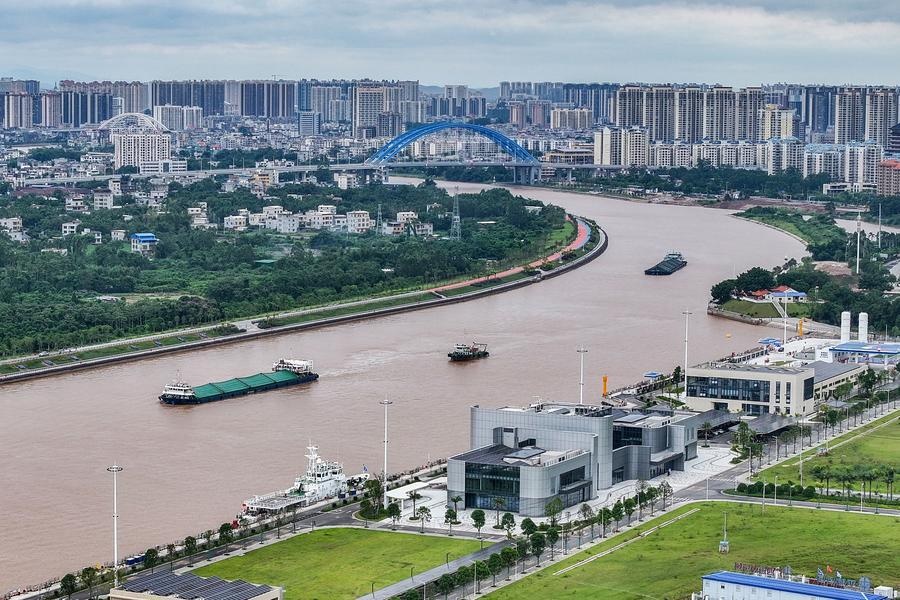
- Core Development: China has officially opened the 134-kilometre Pinglu Canal, providing landlocked regions with direct sea access and slashing transport distances to Southeast Asia.
- Beat Context: Categorized under World with independent corroboration.
- Reporting Depth: 4 minute analytical read synthesized from verified newsroom sources.
China is opening its first modern river-to-sea canal for navigation on Wednesday, a landmark infrastructure achievement designed to link landlocked areas directly with the sea. As Al Jazeera reports, the project aims to dramatically shorten shipping distances between the country’s southern hinterland and Southeast Asia, positioning itself as a vital new trade gateway.
Located entirely in the Guangxi region bordering Vietnam and overlooking the South China Sea, the 134-kilometre (83-mile) Pinglu Canal connects the Xijiang River with the Beibu Gulf. According to state news agency Xinhua, as cited by The Standard (HK), goods from southwestern China previously had to travel to the southern metropolis of Guangzhou to reach the sea. The new waterway cuts that journey by more than 560 kilometres, creating the shortest and most economical route to Southeast Asia.
Media additions

State broadcaster CCTV broadcast footage of the first barge navigating the calm waters, describing the waterway as "the project of our century". The route is especially vital for landlocked and less-connected provinces such as Sichuan, Guizhou, and Yunnan, allowing bulk commodities like coal, ore, cereals, chemicals, and agricultural produce to reach international markets with greater ease.
The construction effort began in August 2022 and cost a total of 72.7 billion yuan. While a small section required excavation, the bulk of the project involved widening, deepening, and modifying existing waterways. The canal accommodates ships with a capacity of 5,000 tonnes, allowing river vessels to sail straight to Qinzhou seaport berths without cargo transfers.
| Metric | Source Estimate / Figure | Attribution |
|---|---|---|
| Total Length | 134 kilometres (83 miles) | Xinhua / Al Jazeera |
| Total Cost | 72.7 billion yuan ($745 million to $10.8bn variants) | Xinhua / Al Jazeera |
| Distance Reduction | More than 560 kilometres (350 miles) | Xinhua / Guangxi local authorities |
| Cost Reduction | 18 to 30 percent | Xinhua / Guangxi local authorities |
| Annual Savings | More than five billion yuan ($700m to $745m) | Xinhua / Zhang Zhiwen |
The financial returns are projected to bring tangible operating cost reductions. Zhang Zhiwen, deputy secretary-general of the Guangxi government, estimated that transport costs alone will decrease by more than 5 billion yuan annually. Regional vice chairwoman Lu Xinning noted that these gains boost both domestic and foreign trade. These changes arrive alongside rapid growth in bilateral trade between China and Southeast Asia, which reached about 4.34 trillion yuan (roughly $640bn) in the first half of 2026, marking an 18.2 percent year-on-year increase according to China’s General Administration of Customs.
The canal functions as a core component of the New International Land-Sea Trade Corridor, tying into President Xi Jinping’s broader Belt And Road Initiative. This corridor connects industrial hubs like Chongqing and Chengdu through a web of rail and waterways down to Beibu Gulf ports. Complementing these maritime routes, rail developments such as the Chongqing-Shenzhen-Hong Kong freight service have slashed transit times to southern ports from five days down to two, facilitating global distribution via Yantian and Kwai Tsing ports as detailed by iChongqing.
To spur early adoption, Guangxi authorities introduced a tiered transit-fee system. Commercial vessels pass through the canal's three water gates completely free of charge until December 31, 2026. Beginning January 1, 2027, a trial rate of one yuan per tonne of vessel capacity will apply per transit, remaining in effect through September 2031.
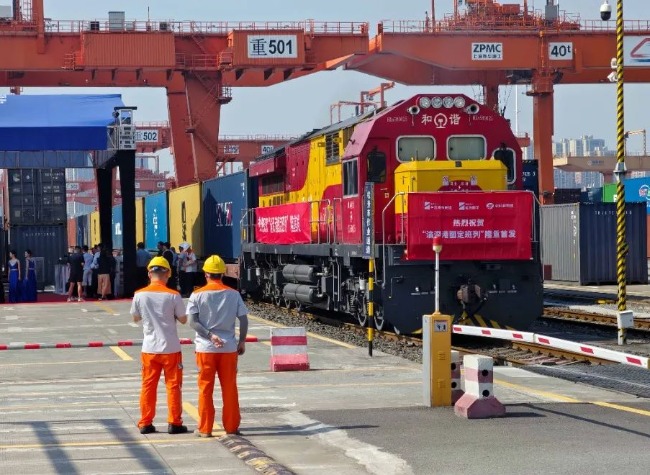
Beyond shipping, Guangxi is developing the "Pinglu Canal Economic Belt" to attract targeted industries—including non-ferrous metals, critical minerals, modern green chemicals, artificial intelligence, and information technology—closer to transport nodes. Commercial activity is already underway, highlighted by a sodium bisulfate train arriving in Nanning from Chongqing ahead of direct sailings to Can Tho in southern Vietnam.
Constructing the mega-project required a massive human relocation effort. Official sources indicate that 2,764 households comprising 11,228 people across four counties and county-level cities were resettled. In Hengzhou, 368 homes were demolished over 84,200 square metres, temporarily displacing 1,221 people. Authorities designed 21 custom housing models reflecting local agricultural traditions, featuring specific room orientations, crop-drying spaces, and poultry enclosures, while residents also transplanted centenarian trees to their new sites.
The opening arrives amid broader global efforts to diversify vulnerable maritime arteries, mirroring concerns seen in chokepoints like the Strait of Hormuz where disruptions can paralyze trade. As nations seek alternative corridors, China's new waterway establishes a fortified domestic route to vital markets.
What happens next depends on the operational rollout of the tiered fee structure and the industrial expansion along the Pinglu Canal Economic Belt. Observers will monitor whether the trial toll rates taking effect at the start of next year impact traffic volume, and how effectively regional authorities integrate the corridor into broader trade networks.
How significant is this development?
Contribute your assessment to the aggregated reader sentiment ledger.
Frequently Asked Questions
Key questions answered in this reportWhat is the key development in: China opens Pinglu Canal to link landlocked regions with sea?
China has officially opened the 134-kilometre Pinglu Canal, providing landlocked regions with direct sea access and slashing transport distances to Southeast Asia.
Why is this World development significant for the UK?
This report covers critical events in our World beat. Independent reporting monitors related UK statements, regulatory shifts, and public responses as further verified details emerge.
How was this reporting corroborated and verified?
Newsarchy UK compiles and cross-references reporting from primary reporting from Al Jazeera and cross-checked wire reports. All coverage adheres to published editorial standards.
When was this report published?
This briefing was published on September 16, 2026 and is permanently cataloged in the Newsarchy UK World archives.