Wildfires in France and Spain force more than 200,000 people to evacuate
Massive wildfires in France and Spain have forced more than 200,000 people to evacuate as emergency services battle unprecedented blazes near Bordeaux and Madrid.

- Core Development: Massive wildfires in France and Spain have forced more than 200,000 people to evacuate as emergency services battle unprecedented blazes near Bordeaux and Madrid.
- Beat Context: Categorized under World with independent corroboration.
- Reporting Depth: 3 minute analytical read synthesized from verified newsroom sources.
Massive and fast-moving wildfires are tearing through southwestern France and central Spain, forcing more than 200,000 residents and holidaymakers to flee scorched tourist regions, homes, and threatened suburbs. As authorities in both European nations scramble to contain the blazes, The Guardian reports that French officials expanded evacuation orders to include multiple outer districts of Bordeaux. The escalating disaster has prompted emergency declarations, international military aid requests, and urgent warnings from meteorologists as tinderbox conditions grip southern Europe.
According to the Mirror, the crisis intensified overnight when British families and hundreds of other hotel guests were forced to settle their bills in the early hours and evacuate areas on the outskirts of Bordeaux. Smoke had drifted over from raging fires located miles away on the Cap Ferret peninsula. In France, the French interior ministry reported that roughly 141,000 people have been displaced across the Gironde and Landes departments. Meanwhile, the Yahoo News coverage notes that 60,000 people have been evacuated in central Spain.
Media additions

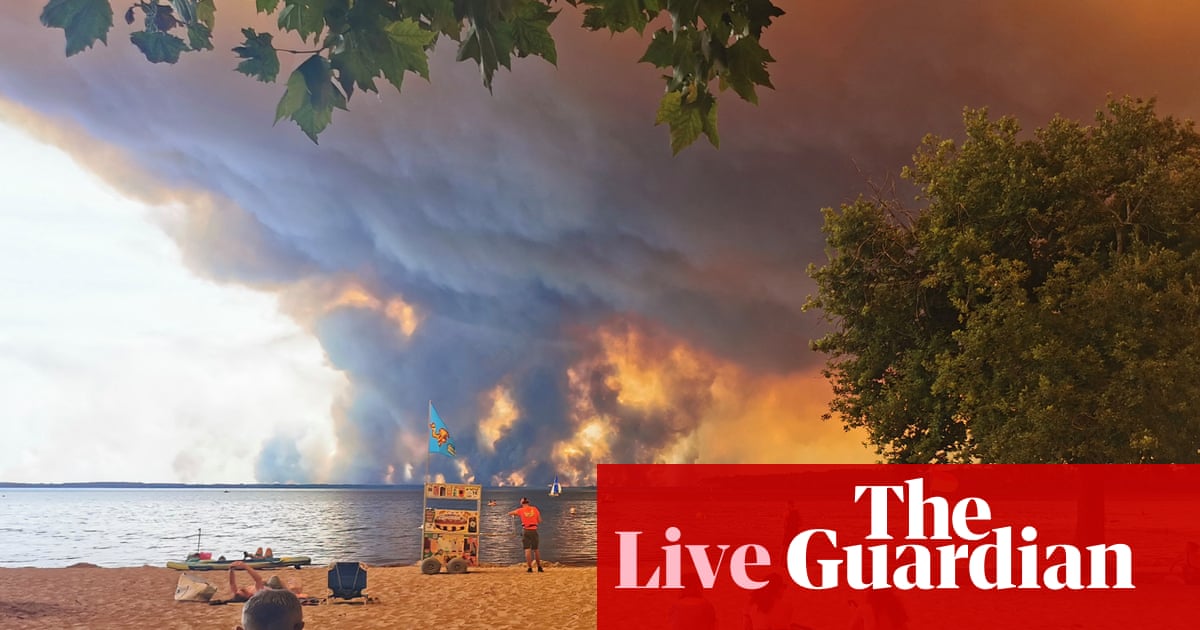
The destructive force of the blazes has caught emergency responders off guard. According to reporting from The Globe and Mail, French Prime Minister Sébastien Lecornu's administration described the fires as reaching an unprecedented level, driven by what specialists term a "convective fire" phenomenon. This type of blaze generates its own localized winds, accelerating its spread and abruptly altering directions. France's Interior Minister Laurent Nunez explained to broadcaster TF1 that a wind shift turned the disaster into a self-sustaining wall of fire moving eastward toward the Bordeaux metropolitan area. In response to the growing peril, President Emmanuel Macron ordered additional military forces into the southwest, bringing the total number of deployed personnel past 1,000 to assist firefighters and manage evacuations.
Across the border, Spain's government declared a national emergency over wildfires for the first time. Regional President Isabel Díaz-Ayuso called the disaster near Madrid the worst in the capital's history after two major fires merged into a single front. Carlos Novillo, the Madrid regional government's emergency management chief, admitted that the fire grew beyond local extinction capabilities as it advanced. The Spanish interior ministry confirmed that international assistance is en route, with Italy and Greece dispatching water-dumping aircraft. France has similarly activated the European Union's Civil Protection Mechanism, securing firefighting aircraft and heavy-lift helicopters from Croatia, Portugal, the Czech Republic, and Slovakia.
The human toll and disruption have been severe. While no deaths have been reported in either France or Spain, dozens of French firefighters sustained injuries, and dozens of homes and campsites were destroyed. In towns near the Cap Ferret peninsula, approximately 1,500 fleeing individuals escaped by sea via small water taxis and larger vessels into Arcachon. Spanish police also arrested a tractor driver accused of sparking a fire by using prohibited farm machinery during extreme weather conditions.
Wildfire analysts point to long-term environmental factors compounding the immediate weather conditions. According to experts cited by The Globe and Mail, the abandonment of traditional farmlands has allowed undergrowth and trees to creep right up to village boundaries, eliminating natural buffer zones. Compounded by record-breaking heat waves across a continent warming twice as fast as the global average, southeastern Europe remains intensely vulnerable.
Key Developments and Emergency Response
- France: Over 141,000 evacuees in Gironde and Landes; suburbs of Bordeaux including Le Haillan, Eysines, and Merignac under evacuation orders. Military reinforcements and European aviation assets deployed.
- Spain: National emergency declared for the first time. Sixty thousand evacuated across Madrid and Ávila regions following the merger of major blazes.
- International Aid: Aircraft and helicopters arriving from Croatia, Portugal, the Czech Republic, Slovakia, Italy, and Greece.
Authorities across both countries remain on high alert as extreme temperatures persist.
How significant is this development?
Contribute your assessment to the aggregated reader sentiment ledger.
Frequently Asked Questions
Key questions answered in this reportWhat is the key development in: Wildfires in France and Spain force more than 200,000 people to evacuate?
Massive wildfires in France and Spain have forced more than 200,000 people to evacuate as emergency services battle unprecedented blazes near Bordeaux and Madrid.
Why is this World development significant for the UK?
This report covers critical events in our World beat. Independent reporting monitors related UK statements, regulatory shifts, and public responses as further verified details emerge.
How was this reporting corroborated and verified?
Newsarchy UK compiles and cross-references reporting from primary reporting from mirror.co.uk and cross-checked wire reports. All coverage adheres to published editorial standards.
When was this report published?
This briefing was published on July 25, 2026 and is permanently cataloged in the Newsarchy UK World archives.