China trade surplus tops $1 trillion for second consecutive year on surging exports
Driven by soaring overseas demand and weak domestic consumption, China's trade surplus has crossed $1 trillion faster than the previous year's record pace.
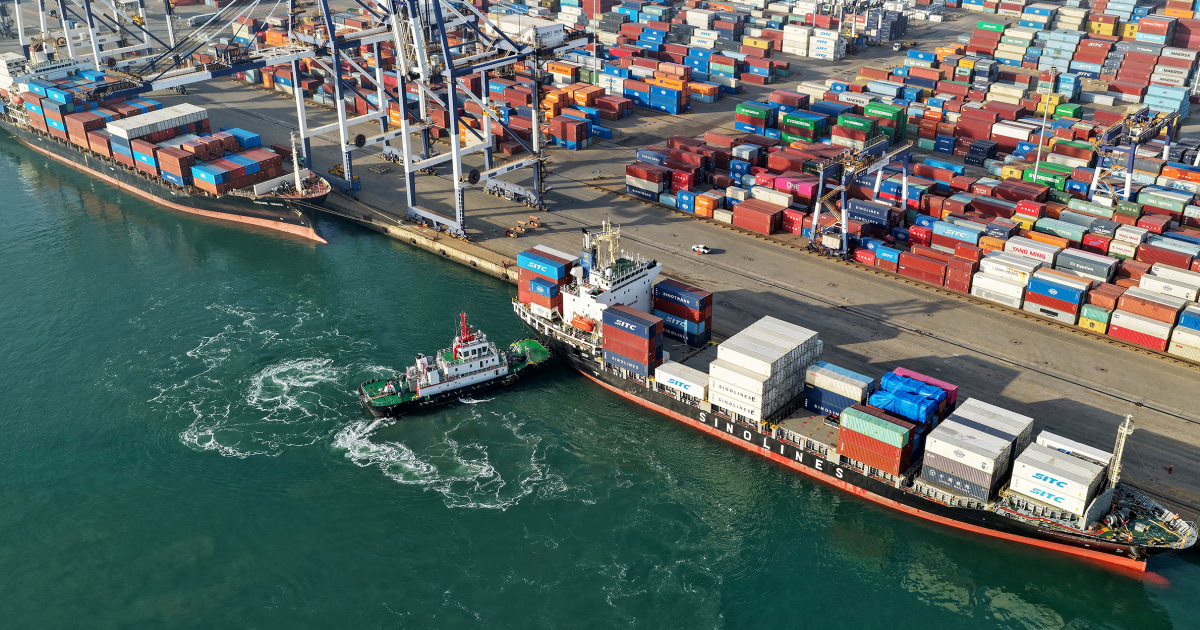
China's trade surplus crossed $1 trillion earlier than ever, driven by soaring overseas demand and weak domestic consumption that raise the stakes for upcoming international summits.
China's trade surplus surpassed $1 trillion for the second consecutive year, hitting the milestone faster than the previous year's record pace, according to official figures released on Tuesday. The NBC News reporting noted that customs data showed total exports surged 35.2 per cent year-on-year in October, reaching $412.3 billion. Meanwhile, imports expanded by 41.6 per cent to $307.1 billion, causing the monthly surplus to narrow slightly to $105.3 billion from $133.5 billion in September as crude oil shipments picked up pace from the Persian Gulf.
Media additions

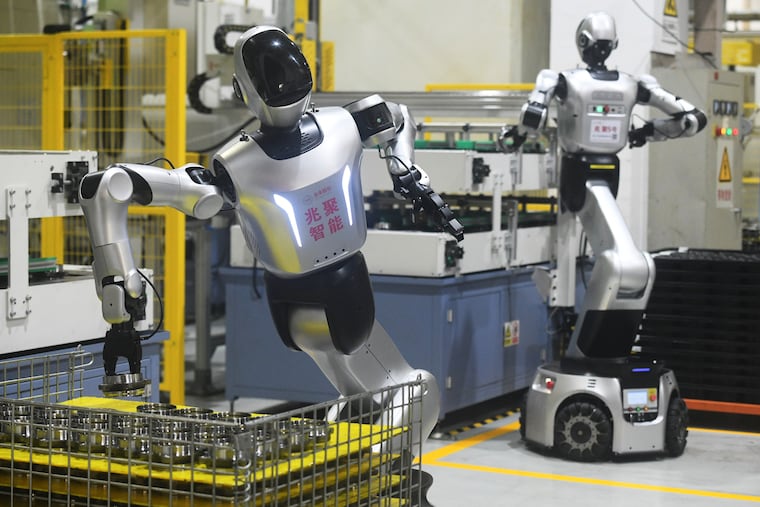

For the first 10 months of the year, China logged a cumulative trade surplus of $1.04 trillion, according to the General Administration of Customs (GAC) cited by Newswav. That leaves the world's second-largest economy on track to eclipse last year's record-breaking surplus of $1.2 trillion, which was not reached until November.
The export boom has been heavily supported by high-tech goods, automobiles, and artificial intelligence-related products such as computer chips, data centre servers, and networking equipment, as reported by the Australian Broadcasting Corporation. Semiconductor exports alone soared by 137.1 per cent in value from the previous year, while automotive shipments rose 37.6 per cent, and electric vehicle and plug-in hybrid exports jumped 145 per cent, as highlighted by Yahoo Finance.
Behind the headline figures lies a domestic economy constrained by a long-running property sector slump. A slow-motion collapse in the housing market, with prices down roughly 40 per cent nationwide over the past five years, has severely damaged middle-class savings and household wealth. Households that once poured four-fifths of their savings into apartments have pulled back sharply on buying cars and appliances, as detailed by the Inquirer. Weak consumer demand, excess domestic savings, and industrial overcapacity have forced manufacturers to seek buyers abroad.
"Exporters have been the key driving force behind China's economy this year," wrote Zhiwei Zhang, president and chief economist at Pinpoint Asset Management, as cited by the ABC. Analysts note that robust overseas shipments have provided a vital lifeline allowing Beijing to meet its official annual economic growth target of 4.5 per cent to 5 per cent.
Competitive advantages including low labor costs, heavy investment in factory automation, world-class shipping infrastructure, and tax rebates that cost the government nearly one-eighth of its tax revenues have kept Chinese goods highly affordable globally. This export flood has intensified trade friction with major Western partners who argue that lower-cost Chinese goods are hollowing out their domestic industries. In Germany, industrial jobs have been shedding at a rate of 14,000 per month amid stiff competition, according to the Inquirer.
| Trade Indicator | October Figure | January–October Total |
|---|---|---|
| Exports | $412.3 billion (+35.2%) | Not specified |
| Imports | $307.1 billion (+41.6%) | Not specified |
| Monthly Surplus | $105.3 billion | $1.04 trillion |
| U.S. Bilateral Surplus | Not specified | $266.5 billion |
| E.U. Bilateral Surplus | $33.4 billion | $310.7 billion to $320.8 billion |
Bilateral tensions remain high across multiple regions. Official data reported by Thehindubusinessline and the Gloucester Daily Times show that exports to the United States grew 32.9 per cent in October year-on-year, building on a low base following last year's tariffs implemented by U.S. President Donald Trump. Meanwhile, China's surplus with the European Union swelled to $310.7 billion for the first ten months, up from $241.6 billion during the same period in the previous year. EU trade officials and Chinese counterpart Wang Wentao agreed last month in Beijing to limit hybrid vehicle exports to Europe, though Nguyen Hoang Nam of Capital Economics noted that recent EU measures apply to only a small portion of China's total exports.
Ahead of high-stakes negotiations, U.S. And Chinese officials held tetchy discussions where American representatives stressed the importance of Beijing immediately fulfilling its commitments. Chinese Vice Premier He Lifeng countered by expressing serious concerns over U.S. Restrictive economic measures.
What to watch next
- November 18–19, 2026: U.S. President Donald Trump and Chinese leader Xi Jinping are scheduled to hold head-to-head talks on the sidelines of the Asia-Pacific Economic Cooperation (APEC) leaders summit in Shenzhen, where trade policy will dominate the agenda.
- January 10, 2027: Expiration of the current two-month extension on the U.S.-China trade truce that temporarily eases tariffs and export controls.