Haley Stevens faces Abdul El‑Sayed in Michigan Senate primary
Rep. Haley Stevens and progressive Abdul El-Sayed face off in a Michigan Senate primary that highlights deep divides within the Democratic Party.
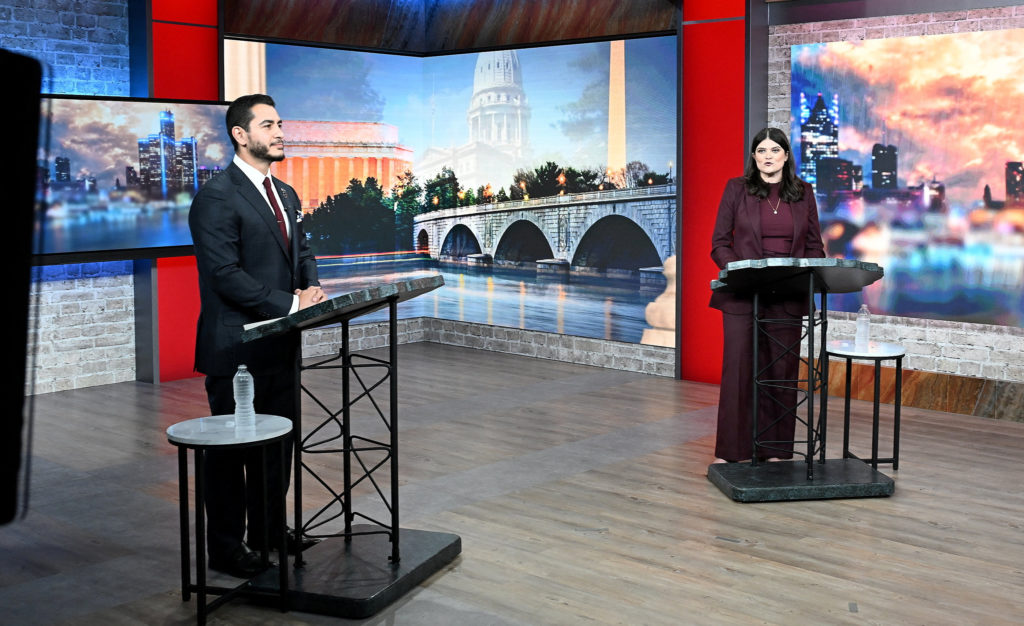
- Core Development: Rep. Haley Stevens and progressive Abdul El-Sayed face off in a Michigan Senate primary that highlights deep divides within the Democratic Party.
- Beat Context: Categorized under World with independent corroboration.
- Reporting Depth: 4 minute analytical read synthesized from verified newsroom sources.
Michigan voters will decide Tuesday’s Democratic Senate contest, a showdown that could shape the party’s national strategy as it seeks to retake the chamber next year. The outcome matters because the winner will confront the likely Republican nominee, former Rep. Mike Rogers, in a November that could tip the Senate balance.
U.S. Rep. Haley Stevens, a four‑term congresswoman backed by Governor Gretchen Whitmer, Sen. Gary Peters and a slate of establishment endorsers, is pitted against former Wayne County health director Abdul El‑Sayed, a self‑described progressive who carries the support of Sen. Bernie Sanders and Rep. Alexandria Ocasio‑Cortez. The clash pits a centrist candidate with a sizable war‑Chest against an insurgent who has framed U.S. Aid to Israel as a defining issue.
Both campaigns have turned the primary into a proxy war over the Democratic Party’s future. Stevens leans on her record of flipping a suburban House seat in 2018 and her role on the Obama auto‑industry rescue team, arguing that her experience makes her the most viable contender in a purple swing state. El‑Sayed, meanwhile, has built his platform on Medicare for All, eliminating corporate money in politics and ending U.S. Military aid to Israel, positioning himself as the voice of a growing progressive base that challenges the status quo.
The financial disparity is stark. According to USA Today, Stevens enjoys at least $50 million in outside spending, much of it from pro‑Israel sources. The Pbs fact‑check notes that AIPAC and affiliated groups have poured close to $30 million into pro‑Stevens, anti‑El‑Sayed advertising, the largest AIPAC investment ever in a single race. By contrast, El‑Sayed relies on a network of progressive donors and a super PAC that lists a nephrologist family member among its top contributors.
Air‑time spending also favors Stevens. Npr reports that she has outspent El‑Sayed on television by at least eight times, a gap amplified by AIPAC‑aligned advertisements that dominate the Michigan media market.
Stevens’ campaign benefits from a cascade of endorsements. Beyond Whitmer and Peters, she has the backing of Senate Minority Leader Chuck Schumer, as noted by Pbs. El‑Sayed, meanwhile, boasts the co‑sponsorship of progressive icons and has secured the endorsement of Sen. Sanders, reinforcing his insurgent credentials.
The race also intersects with national politics. The National Republican Senatorial Committee has aired an anti‑El‑Sayed ad highlighting his positions on ICE and Medicare for All, a move that, as PBS explains, aims to shape the Republican general‑election strategy should El‑Sayed win the primary.
Beyond the candidates, the primary impacts broader electoral calculations. Michigan’s open Senate seat is viewed as a must‑win for Democrats; a loss would make a Senate majority far more elusive. The state’s history – Joe Biden’s 2020 victory and Donald Trump’s wins in 2016 and 2024 – underscores its swing‑state status, making the Democratic nominee’s electability a central theme for both camps.
Key dates and milestones
- March 2025 – Stevens’ House campaign committee received donations from corporate PACs linked to DTE Energy and Consumers Energy (PBS).
- June 2025 – AIPAC‑aligned groups begin a heavy advertising push, later reaching close to $30 million (PBS).
- July 2025 – Stevens transfers prior corporate PAC contributions to her Senate effort (PBS).
- June 2025 – El‑Sayed’s father‑in‑law, Jukaku Tayeb, contributes $300,000 to the Fighting for Michigan super PAC (PBS).
- Aug. 4 2026 – Primary election day; voters choose the Democratic Senate nominee (USA Today, NPR).
The winning candidate will inherit a campaign infrastructure that has already rallied more than one million Michigan voters, most of whom cast ballots by mail, according to PBS. That turnout level, combined with the state’s contested political geography, means the primary winner will need to consolidate both the progressive wing and the establishment base to prevail in November.
Stevens argues that her centrist record gives her the best chance of beating Rogers, who lost a close race to Sen. Elissa Slotkin in 2024. El‑Sayed counters that his progressive platform energizes a grassroots coalition that could overcome any establishment advantage.
What to watch next
- Vote‑counting dynamics on Tuesday evening – early precincts will hint at which side’s ground game is strongest.
- Post‑primary endorsements – whether establishment figures shift to the El‑Sayed camp if he leads or consolidate behind Stevens if she holds a tight margin.
- Republican ad strategy – the NRSC may intensify attacks on the primary winner, shaping the general‑election narrative.
- National Democratic response – party leadership will likely signal which candidate aligns with broader Senate‑control goals.
As the primary draws to a close, observers will gauge whether Michigan’s Democratic electorate is ready to back a centrist with proven fundraising muscle or a progressive challenger who can reshape the party’s stance on foreign aid and health policy. The decision on Aug. 4 will not only determine the face of the Michigan Senate race but also provide a litmus test for the party’s direction heading into the 2026 midterms.
How significant is this development?
Contribute your assessment to the aggregated reader sentiment ledger.
Frequently Asked Questions
Key questions answered in this reportWhat is the key development in: Haley Stevens faces Abdul El‑Sayed in Michigan Senate primary?
Rep. Haley Stevens and progressive Abdul El-Sayed face off in a Michigan Senate primary that highlights deep divides within the Democratic Party.
Why is this World development significant for the UK?
This report covers critical events in our World beat. Independent reporting monitors related UK statements, regulatory shifts, and public responses as further verified details emerge.
How was this reporting corroborated and verified?
Newsarchy UK compiles and cross-references reporting from primary reporting from npr.org and cross-checked wire reports. All coverage adheres to published editorial standards.
When was this report published?
This briefing was published on August 4, 2026 and is permanently cataloged in the Newsarchy UK World archives.