Court convicts 2 organizers of Hong Kong’s Tiananmen vigils in national security case
Former Hong Kong vigil organizers Lee Cheuk-yan and Chow Hang-tung were convicted of inciting subversion in a landmark national security trial.
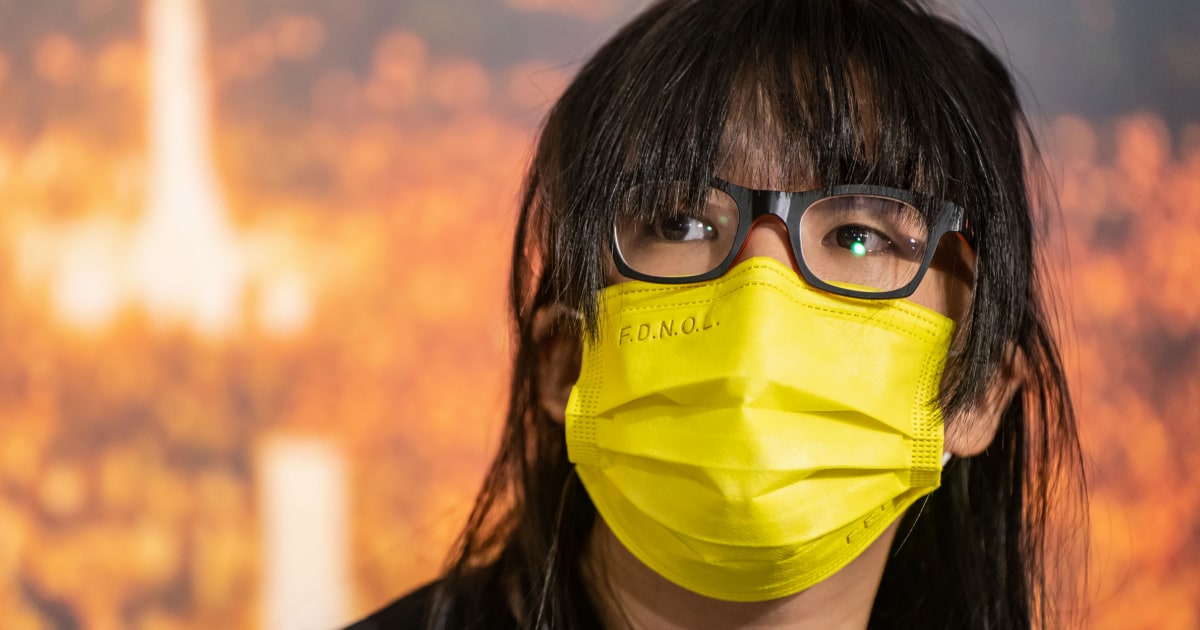
- Core Development: Former Hong Kong vigil organizers Lee Cheuk-yan and Chow Hang-tung were convicted of inciting subversion in a landmark national security trial.
- Beat Context: Categorized under World with independent corroboration.
- Reporting Depth: 4 minute analytical read synthesized from verified newsroom sources.
Two prominent former organizers of Hong Kong’s annual remembrance gatherings for the 1989 Tiananmen Square crackdown were convicted on Friday. The decision marks another major milestone in the suppression of the territory's once-vibrant pro-democracy movement under a sweeping, China-imposed legal framework. Other prominent activists have been jailed under the same legislation, including pro-democracy former media tycoon Jimmy Lai, according to reporting across multiple outlets.
NBC News details that Lee Cheuk-yan and Chow Hang-tung were found guilty of inciting subversion in a closely watched trial. They served as leaders of the Hong Kong Alliance in Support of Patriotic Democratic Movements of China, an organization that was also convicted by the court. The defendants face a maximum prison term of 10 years following charges initially brought in 2021.
Media additions

Background of the Tiananmen Vigils
For three decades, the candlelight gatherings organized by the alliance stood as the sole large-scale public commemorations of the Tiananmen crackdown on Chinese soil. Drawing tens of thousands of participants annually, the solemn events offered a stark contrast to mainland China, where open remembrance remains heavily censored. Hundreds of people, and possibly thousands, were killed in the 1989 crackdown as military tanks rolled into the center of Beijing. The crackdown was a pivotal moment in China's modern history, determining that the market reform that transformed the country into the world's second-largest economy would not be coupled with political liberalization. Authorities banned the gathering in 2020 amid the first year of the Covid-19 pandemic, just weeks before Beijing enacted the security legislation to quell anti-government protests. Beijing stated the 2020 security law was necessary for the city's stability.
According to Abc reporting, prosecutors argued that the alliance’s core demand to "ending one-party rule" constituted an unlawful call to overthrow the leadership of China’s ruling Communist Party through unlawful means. The trial concluded its closing arguments on its 24th day, moving faster than its initially scheduled 75-day timeline. When proceedings began in January, another co-defendant, Albert Ho, entered a guilty plea at the outset.
Defense Arguments and Activist Profiles
The defendants pushed back firmly against the prosecution's characterization of their advocacy. Lee, a 69-year-old veteran of the local labor movement who has been active since the 1970s, testified that his lifelong commitment to human rights was rooted in witnessing the military crackdown firsthand in Beijing during the spring of 1989. He visited students demonstrating for political reform in late May of that year and was present when troops and tanks moved in on June 4, reporting that he heard gunfire and witnessed the wounded and dead on Tiananmen Square. He maintained that demanding an end to one-party rule was not about eliminating the Communist Party, but about fostering democratic reform and independent trade unions.
Chow, a 41-year-old Cambridge-educated lawyer who represented herself in court, came of age after Hong Kong's 1997 return to Chinese rule, attending vigils from childhood and joining the alliance as a volunteer before becoming a spokesperson. She argued that her calls aimed to dismantle a state of unrestricted power rather than attack the party's existence. In a social media post prior to the verdict, she detailed severe treatment during her transit from prison, stating she was moved in handcuffs and heavy chains.
"Justice lives in the hearts of the people. There is no need to look up to this kind of top-down ruling, and one verdict doesn't matter much."
Chow Hang-tung, defendant, via NBC News
Reactions and International Observers
Human rights advocates and legal experts criticized the outcome as evidence of declining judicial independence in the former British colony. Eric Lai, a senior fellow with the Georgetown Center for Asian Law, told NBC News that the proceedings reflect a system increasingly resembling mainland China’s party-led judiciary, noting that the incitement to subversion charge is commonly used in the mainland to criminalize human rights lawyers, activists, and intellectuals. Similarly, Fernando Cheung, an overseas spokesperson for Amnesty International Hong Kong, stated that the decision underlines how the security legislation punishes peaceful remembrance.
Outside the court, dozens of people lined up under drizzling rain ahead of the hearing. Tang Ngok-kwan, a former alliance member, stated that police prohibited him from joining the line if he insisted on bringing sensitive materials such as bookmarks printed with "vindicate June 4," prompting him to forgo entering. Former vigil-goer Margaret Chan, who joined the queue at 6 a.m., questioned how an alliance with "patriotic" in its name could incite subversion. Following the political changes and the dissolution of dozens of civil society groups, the former vigil site in Hong Kong has instead been occupied around the Tiananmen anniversary by a carnival and market stalls organized by pro-Beijing groups.
What to Watch Next
- Lee and Chow are expected to appear at a separate hearing to plead for and present mitigating arguments for lesser penalties alongside Albert Ho.
- Sentencing dates for Lee, Chow, and Ho will be determined by the court following the upcoming penalty hearings.
- Observers are awaiting the release of the complete judicial reasoning document online, as judges did not read out the reasons behind the conviction during the hearing.
How significant is this development?
Contribute your assessment to the aggregated reader sentiment ledger.
Frequently Asked Questions
Key questions answered in this reportWhat is the key development in: Court convicts 2 organizers of Hong Kong’s Tiananmen vigils in national security case?
Former Hong Kong vigil organizers Lee Cheuk-yan and Chow Hang-tung were convicted of inciting subversion in a landmark national security trial.
Why is this World development significant for the UK?
This report covers critical events in our World beat. Independent reporting monitors related UK statements, regulatory shifts, and public responses as further verified details emerge.
How was this reporting corroborated and verified?
Newsarchy UK compiles and cross-references reporting from primary reporting from nbcnews.com and cross-checked wire reports. All coverage adheres to published editorial standards.
When was this report published?
This briefing was published on August 21, 2026 and is permanently cataloged in the Newsarchy UK World archives.