Houthi port strike in Yemen kills seven as regional tensions escalate
A coordinated Houthi missile and drone strike on Yemen's government-held port of Mokha killed seven people and left 15 injured.
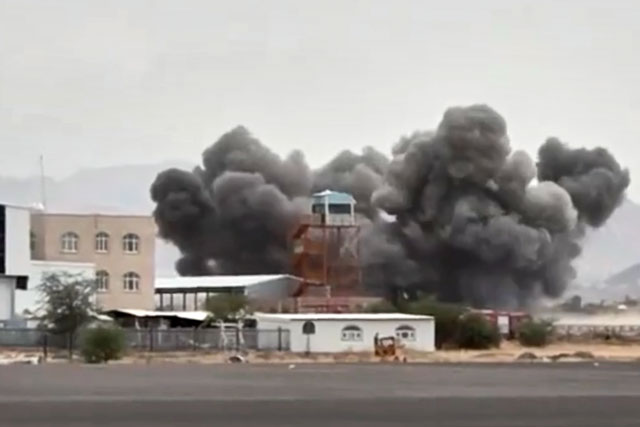
- Core Development: A coordinated Houthi missile and drone strike on Yemen's government-held port of Mokha killed seven people and left 15 injured.
- Beat Context: Categorized under World with independent corroboration.
- Reporting Depth: 3 minute analytical read synthesized from verified newsroom sources.
Regional tensions in the Middle East escalated sharply on Sunday, August 9, 2026, as a coordinated missile and drone strike hit the government-held port of Mokha on Yemen’s Red Sea coast. According to Yemen government-allied National Resistance Forces, the attack resulted in the deaths of seven people, comprising four troops and three civilians, alongside 15 injured civilians. Fayed al-Noman, assistant undersecretary of the information ministry, stated that the facility was targeted with missiles and drones, causing extensive damage to port buildings, piers, commercial goods, and food supplies.
The Iran-backed Houthi rebels claimed responsibility for the assault. Yahya Saree, a military spokesperson for the Houthis, stated that the group fired a large number of ballistic missiles and drones
targeting military enforcement and warehouses in the area. Mokha has been developed as an alternative shipping facility to handle maritime traffic avoiding Houthi-held ports in Hodeida.
Media additions

Simultaneously, the conflict widened as Houthi forces launched a drone strike targeting an Aramco oil refinery in the southwestern Saudi city of Jazan. Saree asserted that the action was a direct response to Saudi drones breaching Yemeni airspace over the provinces of Hajjah and Saada. Early on Sunday, August 9, 2026, the Saudi Energy Ministry confirmed that a fire broke out at a facility belonging to the Aramco refinery and reported that the blaze was extinguished without causing any casualties, though the ministry did not specify the exact cause.
The bloodshed in Yemen threatens to completely shatter a truce that had largely frozen major armed conflict in the impoverished nation since 2022. Beyond the Bab el-Mandeb strait, diplomatic efforts regarding the critical Strait of Hormuz face severe friction. Iran and Oman are working to finalise a temporary arrangement aimed at reopening the crucial oil and gas corridor. Under the proposed framework, vessels would enter near Iran and exit near Oman without paying fees or tolls during an interim period designed to restart a clock for nuclear negotiations with the United States. Gulf Cooperation Council members reportedly endorse the blueprint, which is expected to be announced jointly by Iran, Oman, the US, and the International Maritime Organization once finalised, though sources familiar with the talks noted the terms could still change.
However, Tehran has introduced stringent prerequisites. Mohammad Bagher Zolghadr, secretary of Iran's Supreme National Security Council, stated through state broadcaster reports that the strait will remain closed until the United States corrects its behaviour, never threatens Iran again, permanently ends the war with Iran and its regional allies, lifts its naval blockade of Iranian ports, and withdraws military forces from the zone. According to US Central Command figures, the ongoing blockade has redirected 53 commercial vessels, disabled two, and boarded two through Saturday, August 8, 2026. Meanwhile, Iranian Foreign Minister Abbas Araghchi maintained that indirect message exchanges with Washington do not constitute formal talks, stating that negotiations cannot resume until memorandum violations have ended and the US has remedied the provisions it violated. Araghchi also noted that while talks with Oman are in the final stages, reopening the strait is subject to conditions conveyed through intermediaries, and warned that vessels from countries considered hostile to Tehran could be barred.
Backing these maritime flashpoints, the US military-industrial base is racing to replenish depleted arsenals. Pentagon spokesperson Sean Parnell stated that the Department of Defense is actively focused on boosting munitions acquisitions to provide the weapons our warfighters need at the pace the threat demands.
Parnell added that the push for speedier delivery forms part of a broader modernisation effort predating the five-month-old conflict. An analysis from the Center for Strategic and International Studies highlighted that the ongoing conflict with Iran has drained more of the US military's already diminished stockpiles of advanced missile interceptors.
What to watch next
- Finalisation of the Omani-brokered interim agreement for maritime transit through the Strait of Hormuz.
- Potential responses from the United States and Gulf Cooperation Council members regarding Iran's preconditions for reopening waterways.
- Further security developments on the Red Sea coast as the Yemeni government responds to the Mokha port casualties.
- US defence industry procurement updates addressing depleted missile interceptor stockpiles.
- Developments regarding the proposed Gaza roadmap following Israeli leadership's rejection of immediate withdrawals.
How significant is this development?
Contribute your assessment to the aggregated reader sentiment ledger.
Frequently Asked Questions
Key questions answered in this reportWhat is the key development in: Houthi port strike in Yemen kills seven as regional tensions escalate?
A coordinated Houthi missile and drone strike on Yemen's government-held port of Mokha killed seven people and left 15 injured.
Why is this World development significant for the UK?
This report covers critical events in our World beat. Independent reporting monitors related UK statements, regulatory shifts, and public responses as further verified details emerge.
How was this reporting corroborated and verified?
Newsarchy UK compiles and cross-references reporting from primary reporting from bostonglobe.com and cross-checked wire reports. All coverage adheres to published editorial standards.
When was this report published?
This briefing was published on August 10, 2026 and is permanently cataloged in the Newsarchy UK World archives.