Ireland sees thousands gather for rare partial solar eclipse
EXECUTIVE BRIEFKey Takeaways & Signal
Core Development: Thousands of spectators across Ireland gathered in parks and city streets to witness a rare partial solar eclipse that blocked up to 96% of the sun.
Beat Context: Categorized under World with independent corroboration.
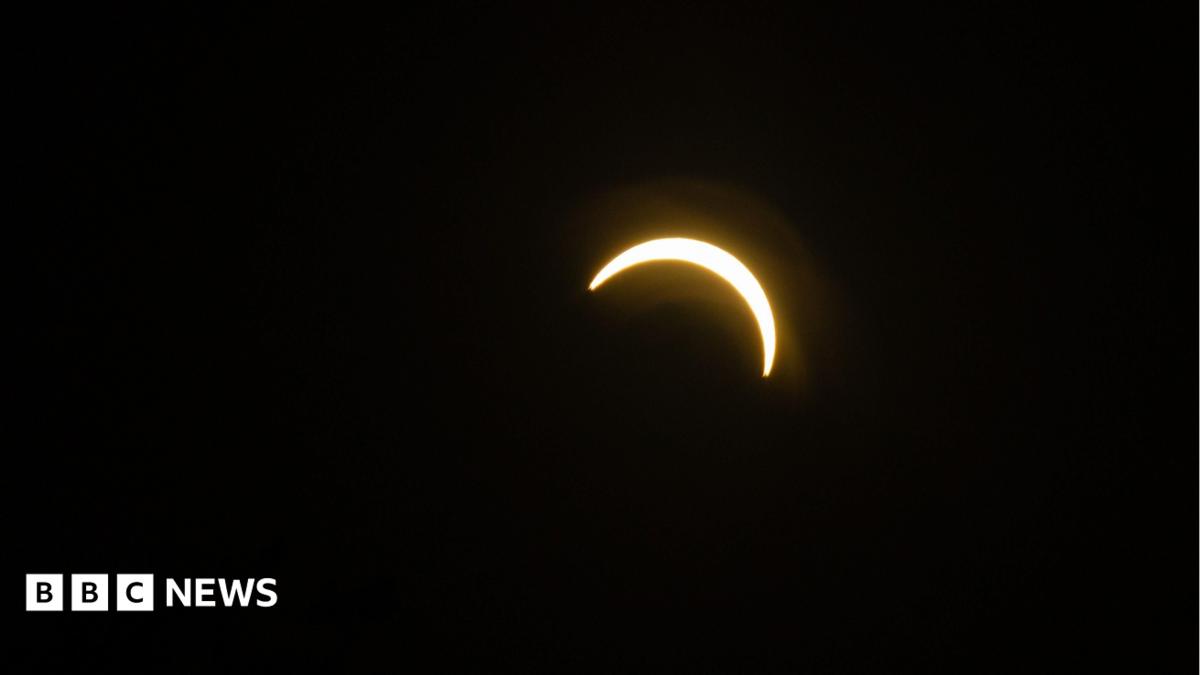
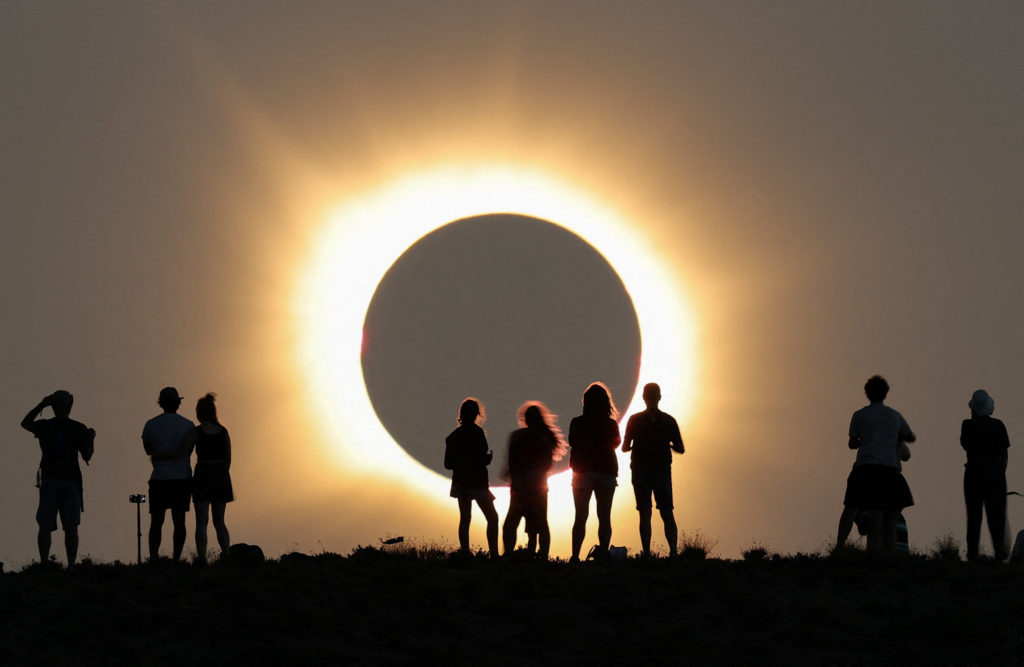
On Wednesday 12 August 2026 the Moon slipped across the Sun in a partial eclipse that cloaked most of Ireland in a hushed twilight. In Dublin’s Phoenix Park a temporary telescope allowed spectators to watch the moon swallow up to 96 per cent of the solar disc. The crowd, estimated in the thousands, cheered as the sky dimmed and a thin crescent of light edged the horizon.
“It is great to see the crowds here and so many people that are interested. I have got my eclipse glasses so I’m well prepared.”
Media additions
Image via bostonherald.comImage via bbc.co.ukImage via pbs.org
Colm Healey, via The Irish Times
Elsewhere in the capital, South Great George’s Street briefly froze as motorists queued for the scarce certified glasses. At Croke Park, a friendly football match between Manchester United and Leeds United provided an unexpected backdrop; two stewards handed out welding masks so fans could glimpse the eclipse during halftime, the peak coverage falling between about 7 pm and 7.15 pm and coinciding with the start of the second half.
Further north, Queen’s University Belfast hosted a watch‑along under variable cloud cover, while the Armagh Observatory and Planetarium announced a “packed‑out” house. Professor Michael Burton, director of the observatory, told families the event reminded visitors “that we live on a spaceship – spaceship Earth – and it’s travelling around our solar system.”
“It does remind us that we are a small part of the universe, and this is a cosmic happening out there, and we are part of that.”
Michael Burton, via The Irish Times
At Sundrive Park in Dublin 12, around 200 people climbed a mound, many with cereal‑box viewers, tin‑foil contraptions or welded helmets. A Newtonian telescope set up by the Sundrive Astronomy Club drew a sizable crowd, while amateur astrophysicist Ramses Jerez Nicurcar marveled at the cloud‑free sky, saying the weather had “turned out … beautiful.”
Safety warnings echo across the island
Gerry Fahy, president of the Irish College of Ophthalmologists, warned that “Staring directly at the sun can permanently scar the retina and cause irreversible loss of central vision.” He urged the public to use certified eclipse glasses rather than sunglasses, welding helmets or improvised filters.
Met Éireann forecaster Gerry Murphy added that the eclipse would begin around 6 pm and end around 8 pm, with peak coverage between about 7 pm and 7.15 pm. He stressed that “people should take the advice not to look directly at the Sun” and that “it’s best to have the correct eyewear for looking at the Sun and not to rely on other eyewear.”
How people protected their eyes
Certified eclipse glasses (sold out in pharmacies)
DIY viewers made from cereal boxes, tin‑foil or colanders (as reported by the BBC)
Welding masks (some used for photos, not recommended for eye safety)
Irish crowds compared with Europe’s total eclipse
While Ireland experienced a high‑percentage partial eclipse, the same evening delivered a total eclipse across northern Spain, Portugal and parts of Iceland. The Boston Herald noted that “millions of people crowded cloudless cities and towns in Spain” for the country’s first total eclipse in more than a century.
Spanish authorities prepared 350 official viewing sites and deployed more than 33,500 police officers to manage the surge, according to the Herald. In Reykjavik, hundreds gathered beneath Hallgrímskirkja as the Sun dimmed behind cloud, only to re‑emerge with phones alight.
Portugal’s southwestern coast saw a near‑total view: at Sagres the moon blocked about 94 per cent of the Sun, a figure that matched the Irish forecast for the southwest coast. Conor Pope of The Irish Times described how tourists fashioned cereal‑box viewers, full‑face welders’ masks and even “intermeshed fingers” to glimpse the dimming disc.
Local color and reactions
Frank McNally, observing from Dublin, described “temperatures dropped. Birds stopped singing. Even the seagulls of Dublin briefly suspended their missions … perhaps they were spooked by the spectacle of so many humans gazing skywards in strange glasses.”
In the south‑west, a beach near Sagres filled with people who “drawed oohs from the adults” as the eclipse reached its apex at 6.42 pm local time. Dogs whined, windsurfers kept sailing, and a lone drone was chased away by “baleful stares.”
Across the United Kingdom, the moon obscured about 90 per cent of the Sun, prompting “great place” gatherings on the South Downs and improvised colander viewers in Surrey (Bbc). Rhiannon Quinche of Tunbridge Wells said she had “never seen anything like it.”
What’s next for sky‑watchers?
22 July 2050 – the next partial eclipse visible from the United Kingdom, as reported by the BBC.
15 May 2090 – the next total solar eclipse expected to be visible across the UK, the first since this generation’s near‑total event.
Irish astronomers warned that the 2026 eclipse would be the last chance for most people to experience such a high‑coverage event for decades. With the next UK eclipse not arriving until 2050, the crowds that gathered in Phoenix Park, Queen’s University and Armagh Observatory are likely to be remembered as a once‑in‑a‑generation gathering.
READER INTELLIGENCE PULSE
How significant is this development?
Contribute your assessment to the aggregated reader sentiment ledger.
Click an option to register your anonymous assessment.
Frequently Asked Questions
Key questions answered in this report
What is the key development in: Ireland sees thousands gather for rare partial solar eclipse?
Thousands of spectators across Ireland gathered in parks and city streets to witness a rare partial solar eclipse that blocked up to 96% of the sun.
Why is this World development significant for the UK?
This report covers critical events in our World beat. Independent reporting monitors related UK statements, regulatory shifts, and public responses as further verified details emerge.
How was this reporting corroborated and verified?
Newsarchy UK compiles and cross-references reporting from primary reporting from apnews.com and cross-checked wire reports. All coverage adheres to published editorial standards.
When was this report published?
This briefing was published on August 13, 2026 and is permanently cataloged in the Newsarchy UK World archives.