Cambridge scientist Marta Shahbazi killed in Spain train crash
University of Cambridge researcher Dr Marta Shahbazi has been confirmed dead following a high-speed train collision in central Spain.
- Core Development: University of Cambridge researcher Dr Marta Shahbazi has been confirmed dead following a high-speed train collision in central Spain.
- Beat Context: Categorized under World with independent corroboration.
- Reporting Depth: 4 minute analytical read synthesized from verified newsroom sources.
University of Cambridge researcher Dr Marta Shahbazi has been confirmed dead following a high-speed train collision in central Spain, an accident that claimed at least 69 lives and left more than 100 people injured. The 41-year-old scientist was travelling on the Madrid-to-Seville route to collect a prestigious award for her pioneering work in developmental biology when tragedy struck, casting a shadow over the academic community and triggering a national mourning period across Spain.
Dr Shahbazi, an affiliate associate professor at the University of Cambridge's Stem Cell Institute and a group leader at the Medical Research Council Laboratory of Molecular Biology (LMB) on the Cambridge Biomedical Campus, was aboard one of the services involved in the crash. According to reports from Ua and The Guardian, the collision took place near the town of Urda in Spain’s Toledo province, south of Madrid. The scientist was en route to El Rompido in Andalusia to receive an award from the Spanish Society for Developmental Biology for her research into early human embryogenesis and mammalian development.
Media additions



Following the initial impact, her whereabouts were unconfirmed for several days, with family members and colleagues holding out hope while providing DNA samples to forensic authorities. Her death was eventually confirmed by the Centre for Research in Molecular Medicine and Chronic Diseases (CiMUS) in Santiago de Compostela, where her aunt works. Tributes quickly poured in from across the scientific community. The LMB described her as an inspiring, talented, and passionate researcher whose work on early pregnancy and embryo development was internationally acclaimed. Colleagues also highlighted her role as a dedicated parent, noting that she often wrote eloquently about balancing demanding academic careers with raising a family under the banner of a "mother scientist."
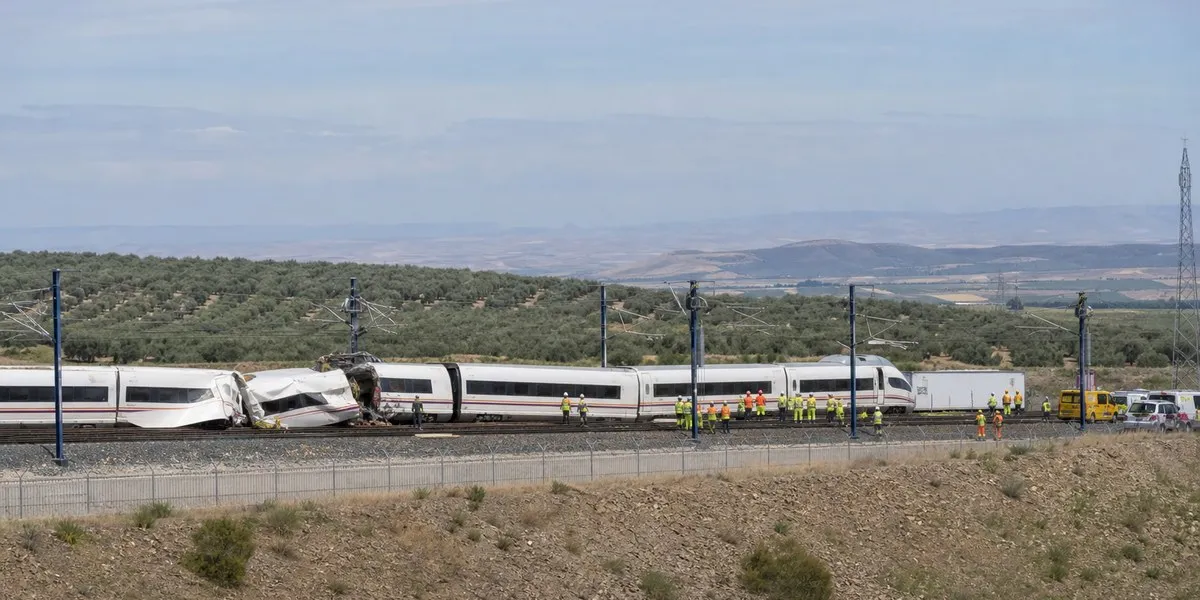
The crash itself unfolded on Wednesday when a state-operated Renfe AVE high-speed train smashed into the rear of a stationary Iryo service. Regional authorities in Castilla-La Mancha reported that the stationary Iryo train carried 146 passengers and an infant, while 397 people were on board the moving Renfe train. The violent impact derailed multiple carriages, sending several tumbling down an embankment. Forensic teams and data integration centres deployed temporary identification protocols, confirming dozens of fatalities, including former Spanish government minister Fatima Banez and fellow scientist Tamara Gonzalez, alongside foreign nationals from several countries.
Transport officials have begun piecing together the sequence of events that allowed the disaster to occur. According to statements from The Mirror and Metro.co.uk, Spain's transport minister Oscar Puente explained that a computer malfunction had disabled safety systems, halting multiple trains. Central control staff subsequently authorised operations to resume without speed restrictions, a decision Puente described as occurring under inexplicable circumstances. Investigators suggest that multiple technical breakdowns, combined with human error from control personnel, permitted the Renfe locomotive to travel into the stationary train ahead.
| Train Service | Passenger Count | Operational Status |
|---|---|---|
| Iryo Service | 146 passengers plus one infant | Stationary on track |
| Renfe AVE Service | 397 passengers | Moving / collided into rear |
The disaster represents a profound blow to Spain’s high-speed rail network. As reported in our Toledo investigation coverage, the tragedy is Spain's deadliest railway accident since 2013 and has triggered intense political scrutiny for Prime Minister Pedro Sánchez's administration. Further details on the broader casualty figures and emergency response can be found via our regional report and the Toledo collision overview.
In response to the catastrophe, Spain observed three days of national mourning, with flags flown at half-mast and official events suspended. High-speed rail links between Madrid and Andalusia remain suspended while forensic specialists conclude autopsies and transport authorities continue their technical inquiry. Meanwhile, family, friends, and academic collaborators across Cambridge and Spain are preparing memorial services to honour Dr Shahbazi's immense contributions to science and her enduring legacy as a researcher and mother.
How significant is this development?
Contribute your assessment to the aggregated reader sentiment ledger.
Frequently Asked Questions
Key questions answered in this reportWhat is the key development in: Cambridge scientist Marta Shahbazi killed in Spain train crash?
University of Cambridge researcher Dr Marta Shahbazi has been confirmed dead following a high-speed train collision in central Spain.
Why is this World development significant for the UK?
This report covers critical events in our World beat. Independent reporting monitors related UK statements, regulatory shifts, and public responses as further verified details emerge.
How was this reporting corroborated and verified?
Newsarchy UK compiles and cross-references reporting from primary reporting from Daily Mail and cross-checked wire reports. All coverage adheres to published editorial standards.
When was this report published?
This briefing was published on November 1, 2026 and is permanently cataloged in the Newsarchy UK World archives.