Rescuers in Nepal pull Chinese worker and woman alive 10 days after floods
Ten days after catastrophic floods struck Nepal, rescue teams have successfully pulled a Chinese engineer and a local woman alive from the rubble.
- Core Development: Ten days after catastrophic floods struck Nepal, rescue teams have successfully pulled a Chinese engineer and a local woman alive from the rubble.
- Beat Context: Categorized under World with independent corroboration.
- Reporting Depth: 3 minute analytical read synthesized from verified newsroom sources.
On Saturday, ten days after devastating floods struck Nepal, rescue teams pulled a Chinese man and a woman alive from the wreckage in separate operations.
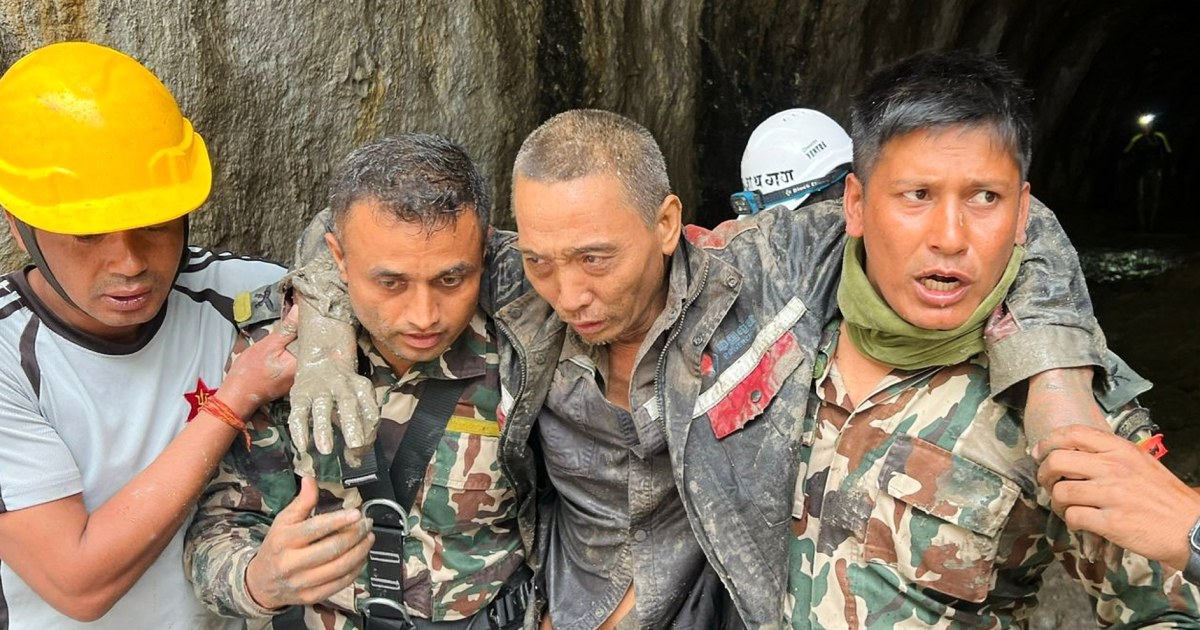
The man rescued from the hydropower tunnel was identified as Lu Haitao, a 49-year-old farmer from Henan province in central China who had taken on carpentry work in Nepal. A joint team of Nepalese military personnel and South Korean disaster experts extracted him from a 225-metre tunnel at the Trishuli hydropower project. He was evacuated by helicopter and placed under medical assessment, with CCTV reporting he was in stable condition.
Media additions

"When they rescued me today, when they shone (the light) before my eyes, I couldn't believe it,"
Lu Haitao, via CCTV audio
Lu's sister, Lu Hairong, told Chinese state media outlets that her family had worried constantly since the mudslide occurred. She expressed relief upon seeing her brother's photo in news reports.
"It’s a stroke of sheer luck amid the misfortune,"
Lu Hairong, via Cover News
In a separate operation in Nuwakot, a woman named Chandika Kumari Shrestha was pulled alive from a mud-filled, damaged house by the Nepal Army. Army images showed rescuers providing her with bottled water and wrapping her in a grey blanket before she was airlifted to Kathmandu for treatment. Nepali Prime Minister Balendra Shah stated that her rescue "has given hope to the entire nation", according to Abc.
Lu is the third worker pulled alive from the Trishuli project, following two Nepalese workers rescued on Friday. International teams from India, China, South Korea, and the United States continue searching through 12 hydropower projects where approximately 900 workers remain missing and about 500 are believed trapped in tunnels.
| Metric | Figure |
|---|---|
| People killed in floods | 1,300 |
| Missing people | 5,000 |
| Missing tunnel workers | 900 |
| Trapped tunnel workers | 500 |
| Rescued alive from Trishuli tunnel | 3 |
| Rescued alive from Nuwakot house | 1 |
The disaster has left a trail of widespread destruction across the country. According to a provisional damage assessment released by the government on Saturday, more than 7,500 houses, 48 public buildings and about 100 bridges had been destroyed. The United Nations has warned that the "magnitude of the destruction" makes delivering aid an immense challenge, as it launched a $US50 million ($69 million) appeal to help more than 84,000 people affected by the disaster.
With morgues overflowing, about 1,030 bodies have been buried in mass graves after having DNA samples taken for future identification, Nepal Police said on Saturday. Meanwhile, more than 5,000 people remain missing, and at least 1,300 people were killed in the August 26 floods, which were likely caused by a glacier collapse, according to Nepal's disaster management agency.
Amid the ongoing crisis, a team was able to reach the remote Nepal-China international border crossing at Timure in Rasuwa district on Saturday, where Prime Minister Shah stated that Nepal's national flag was successfully reinstalled after three days of continuous efforts.
Search and rescue operations are ongoing. Emergency teams continue to comb through debris and tunnels across the 12 designated hydropower sites, while medical personnel monitor the survivors receiving hospital treatment.
How significant is this development?
Contribute your assessment to the aggregated reader sentiment ledger.
Frequently Asked Questions
Key questions answered in this reportWhat is the key development in: Rescuers in Nepal pull Chinese worker and woman alive 10 days after floods?
Ten days after catastrophic floods struck Nepal, rescue teams have successfully pulled a Chinese engineer and a local woman alive from the rubble.
Why is this World development significant for the UK?
This report covers critical events in our World beat. Independent reporting monitors related UK statements, regulatory shifts, and public responses as further verified details emerge.
How was this reporting corroborated and verified?
Newsarchy UK compiles and cross-references reporting from primary reporting from nbcnews.com and cross-checked wire reports. All coverage adheres to published editorial standards.
When was this report published?
This briefing was published on September 6, 2026 and is permanently cataloged in the Newsarchy UK World archives.