Netanyahu rejects White House Gaza disarmament plan
Prime Minister Benjamin Netanyahu has publicly split with the White House by refusing its Gaza peace plan, insisting Israel will not withdraw until Hamas is fully disarmed.
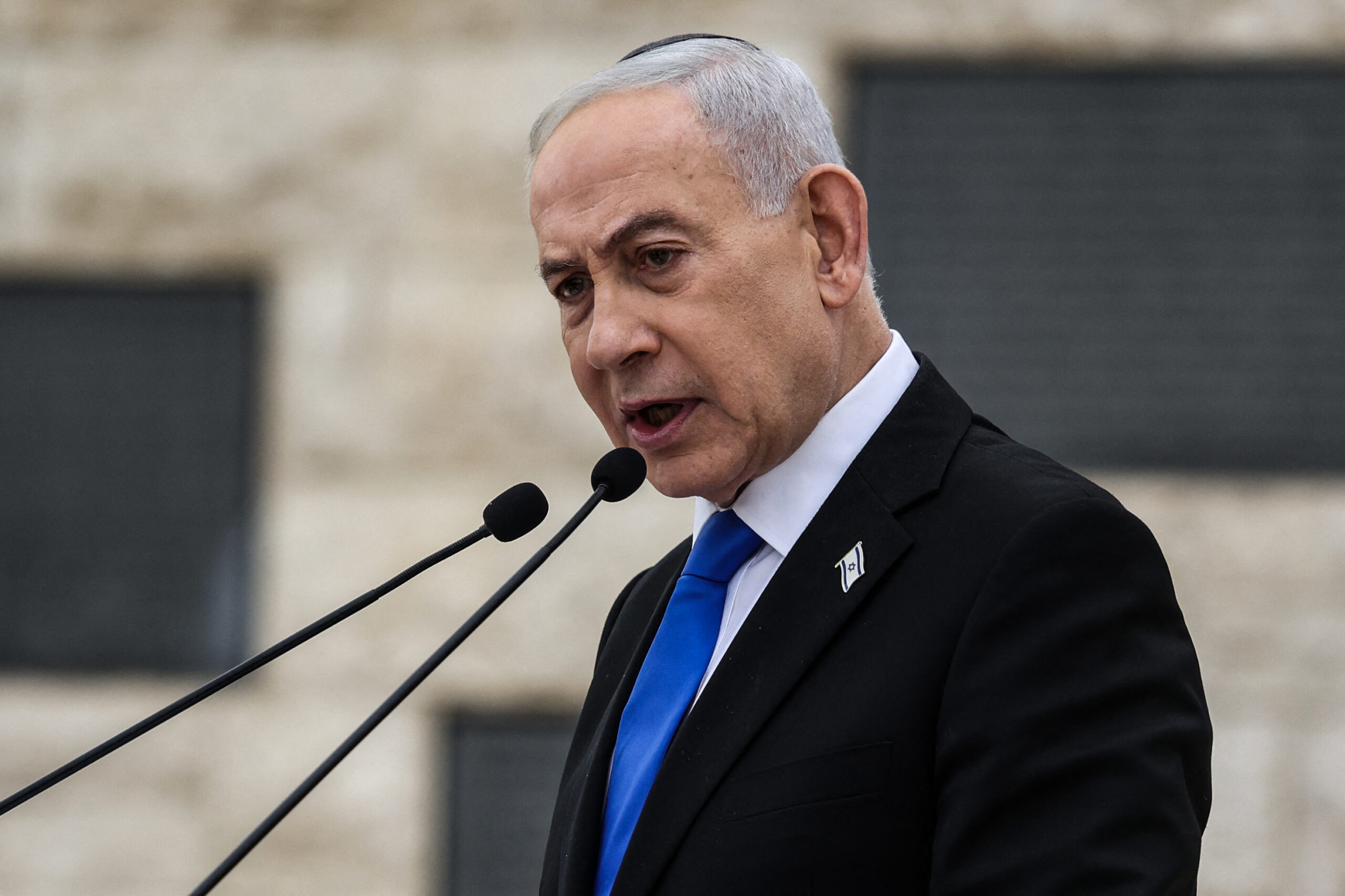
- Core Development: Prime Minister Benjamin Netanyahu has publicly split with the White House by refusing its Gaza peace plan, insisting Israel will not withdraw until Hamas is fully disarmed.
- Beat Context: Categorized under World with independent corroboration.
- Reporting Depth: 4 minute analytical read synthesized from verified newsroom sources.
The refusal marks the first public split between Prime Minister Benjamin Netanyahu and President Donald Trump’s administration on a core element of the White House’s Gaza “peace” strategy, and it arrives as Washington grapples with an expanding war on Iran that threatens to reshape regional security.
Netanyahu told his cabinet that Israel “would not carry out any withdrawal until Hamas is disarmed.” The statement directly contradicts the White House’s narrative, which has promoted the plan since it was announced in July 2026. The rift underscores a broader divergence: while Washington continues to press a diplomatic formula that links Gaza de‑escalation to Hamas surrender, Israeli leaders insist that any cease‑fire must be predicated on verifiable weapons hand‑overs.
Media additions
What the White House plan entails
- Fifteen‑point framework agreed by the U.S.‑led Board of Peace and Hamas in July 2026.
- Goal: gradual disarmament of Hamas, followed by an Israeli withdrawal from the Gaza Strip.
Israeli response
During a cabinet meeting, Netanyahu emphasized that Israel could not “withdraw until Hamas is disarmed,” rejecting any notion of a phased pull‑back without full verification. The stance aligns with long‑standing Israeli policy that any cease‑fire must guarantee that the militant group no longer controls weapons.
“It’s all a show, it’s a charade, a spectacle,” said Jonathan Conricus, a former IDF spokesperson and senior fellow at the Foundation for Defense of Democracies.
Jonathan Conricus, Foundation for Defense of Democracies, via Jewish Insider
Conricus added that authentic disarmament would require Hamas to hand in every weapon for verification, not merely store them or safeguard them elsewhere. His assessment casts doubt on the feasibility of the White House timetable.
Regional reverberations: Iran, Oman and the Strait of Hormuz
At the same time, the United States is locked in a protracted conflict with Iran, a war that has redirected attention to the strategic Strait of Hormuz. Iranian and Omani officials continue talks on a mechanism to assure safe navigation through the narrow waterway, a process that has drawn comments from Japanese, Azerbaijani and Iranian leaders.
Iranian Foreign Ministry spokesperson Esmaeil Baqaei told state‑linked outlets that the proposed arrangements would include “mechanisms to monitor the safe passage of vessels … along with cooperation on environmental issues, maritime services and combating crime.” He added that “when you provide maritime services, you should also receive compensation for them.” The remarks were reported in a live‑blog by CNBC TV18.
Iran’s foreign ministry later warned that reopening the strait “is conditional on the lifting of the US naval blockade” and on Washington ending what it described as “illegal and destructive actions.” The spokesperson linked US‑supported Israeli operations to the broader regional instability, stating that the United States “enabled Israel to wage war with impunity.”
“We are still at war, and as long as the US naval blockade and other US violations continue, there will be no conditions to say that the strait has become a safe waterway,” Baqaei said.
Esmaeil Baqaei, Iranian Foreign Ministry, via CNBC TV18
These statements illustrate how the Gaza deadlock is being framed by Tehran as part of a larger US‑Israel nexus that fuels its demands for a “new order” in the Persian Gulf.
Parallel diplomatic currents
- Japan’s Prime Minister Sanae Takaichi praised Oman’s diplomatic outreach and urged “free and safe navigation” through the Hormuz corridor.
- Azerbaijan’s President Ilham Aliyev thanked Iran’s Masoud Pezeshkian for his “kind and sincere words” and highlighted Azerbaijani assistance to Tehran in transport‑aid routes.
- U.S. Ambassador to the United Nations Mike Waltz warned that Treasury Secretary Scott Bessent’s sanctions are “devastating the Iranian economy,” underscoring the financial pressure accompanying the military stand‑off.
These moves occur against the backdrop of a recent oil slick covering roughly 390 square kilometres off Oman’s coast after a sanctioned tanker transporting Russian crude was damaged near the Hallaniyat Islands. The spill, reported by Oman’s Environment Authority, adds an environmental dimension to the maritime security talks.
Timeline of key developments
| Date | Event |
|---|---|
| July 2026 | U.S.‑led Board of Peace and Hamas agree on 15‑point Gaza disarmament framework. |
| Late July 2026 | Iranian President Masoud Pezeshkian reports a meeting with Supreme Leader Mojtaba Khamenei on national unity. |
| Early August 2026 | Iran and Oman continue negotiations on safe navigation through the Strait of Hormuz; Iranian spokesman outlines compensation for maritime services. |
Implications for the war in Gaza and the wider Middle East
Regional actors are watching both fronts closely. The Mecca Joint Defense Agreement signed by Saudi Arabia, Turkey and Pakistan earlier in August has already raised alarms in Israel about Turkish ambitions, according to former British diplomat Edmund Fitton‑Brown. The agreement, coupled with Iran’s insistence on a “new order” for the Gulf, adds layers of complexity to any U.S. Effort to broker a Gaza settlement.
How significant is this development?
Contribute your assessment to the aggregated reader sentiment ledger.
Frequently Asked Questions
Key questions answered in this reportWhat is the key development in: Netanyahu rejects White House Gaza disarmament plan?
Prime Minister Benjamin Netanyahu has publicly split with the White House by refusing its Gaza peace plan, insisting Israel will not withdraw until Hamas is fully disarmed.
Why is this World development significant for the UK?
This report covers critical events in our World beat. Independent reporting monitors related UK statements, regulatory shifts, and public responses as further verified details emerge.
How was this reporting corroborated and verified?
Newsarchy UK compiles and cross-references reporting from primary reporting from cnbctv18.com and cross-checked wire reports. All coverage adheres to published editorial standards.
When was this report published?
This briefing was published on August 10, 2026 and is permanently cataloged in the Newsarchy UK World archives.