Nuclear watchdog increasingly concerned about Iranian enrichment plant, report says
The United Nations atomic agency has expressed growing alarm over an uninspected uranium-enrichment facility hidden within an Iranian tunnel network.

The international community faces mounting uncertainty over Tehran’s atomic capabilities as monitors report a total blind spot regarding a hidden enrichment complex.
The United Nations atomic agency has expressed growing alarm over an uninspected uranium-enrichment facility hidden within an Iranian tunnel network, according to confidential findings circulated to member states on Friday. Awani International reported that the International Atomic Energy Agency warned member states of critical blind spots regarding nuclear infrastructure in Isfahan. The facility, known as the Isfahan Fuel Enrichment Plant, was declared to inspectors on June 12, 2025, shortly before military strikes commenced.
Media additions
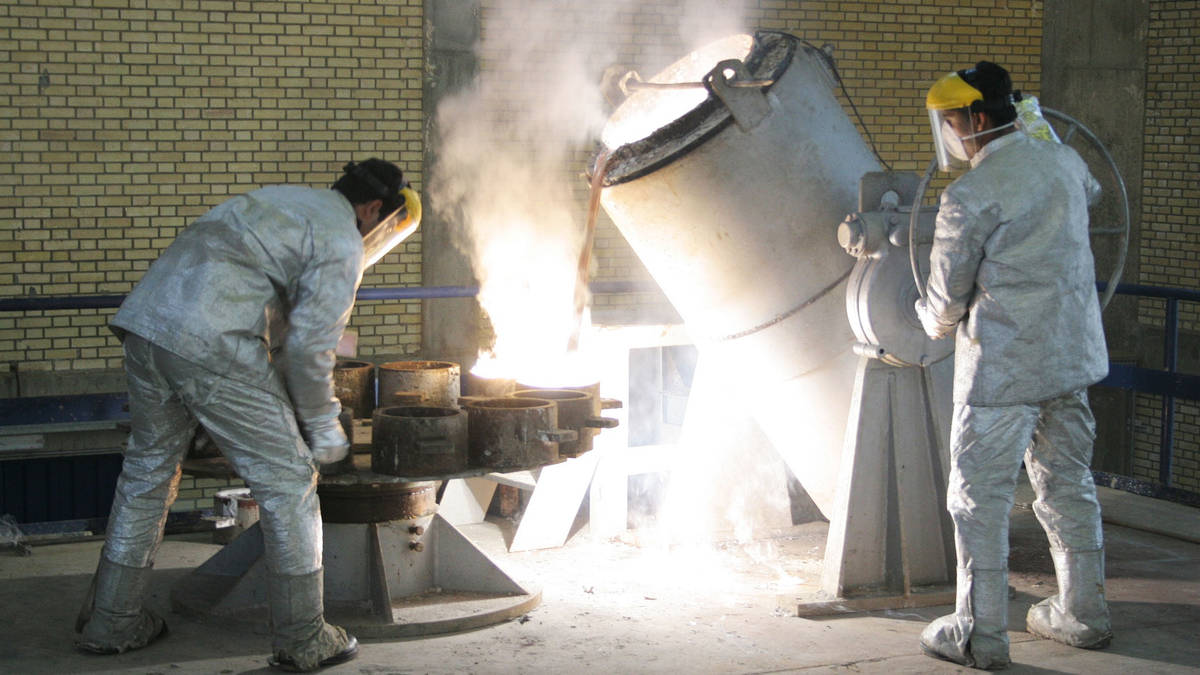
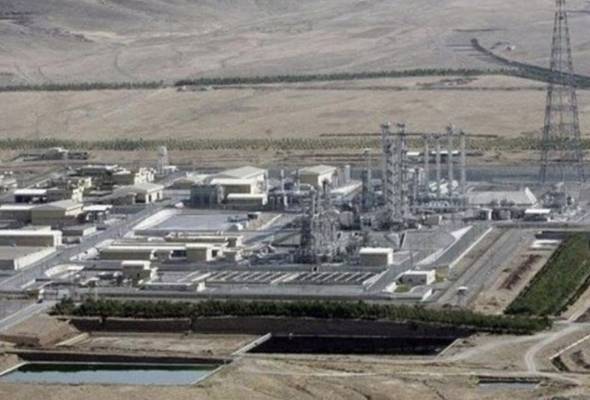
Inspectors were originally scheduled to visit the site on June 13, 2025. Those plans were abruptly abandoned when joint airstrikes destroyed or severely damaged surface facilities across Iran's nuclear heartland. Israel and the United States launched a 12-day war against Iran last June, carrying out heavy airstrikes on its nuclear sites, leaving much of Iran's nuclear program in ruins even as the full extent of the damage remains unclear. The U.S. And Israel launched further military strikes against Iran on Feb. 28 with attacks that killed Iran's Supreme Leader Ayatollah Ali Khamenei and other top officials. The strikes targeted Revolutionary Guard command facilities, air defense systems, missile and drone launch sites, and military airfields.
According to the confidential IAEA report, the agency does not know the exact location of the Isfahan Fuel Enrichment Plant, its status for safeguards purposes, or whether it contains nuclear material. IAEA chief Rafael Grossi said in March his agency believed a significant amount of Iran's most highly enriched uranium was in the tunnel complex at Isfahan. Such highly enriched nuclear material should normally be verified every month, according to the IAEA's guidelines.
The IAEA noted in its report that the lack of information about Iran's atomic sites and nuclear material is a matter of proliferation concern that needs to be rectified with the utmost urgency. The only facility inspected in Iran by the IAEA since last June is the Bushehr nuclear power plant. Inspectors conducted an inspection there on Sept. 12-15. The reactor currently running at Bushehr uses uranium from Russia enriched to 4.5%, a low level needed for power generation in such plants.
Iran told the U.N. Nuclear watchdog this month that discussions on nuclear monitoring cannot proceed while it is under threat from military attacks. According to the IAEA report, Iran insisted that discussions on resuming inspections cannot resume amid a series of persistent, explicit, and public threats by the President of the United States to commit further acts of armed aggression against Iran, particularly targeting its nuclear facilities. Tehran stated that the situation won't resolve until the root causes of the present situation are addressed and the essential requirements for normal safeguards implementation are restored, the report added. Nevertheless, Iran reaffirmed its "firm commitment to resume full implementation of its safeguards obligations as soon as the relevant legal and actual conditions permit it," while the IAEA noted that it is "fully prepared to resume its safeguards activities in Iran at short notice."
The IAEA encouraged Iran to "consider technical and gradual measures" to allow for a return of inspectors to Iran. At the same time, Iran also expressed concern in a letter to the IAEA about a recent U.S. Offer of a reward of up to $20 million in exchange for information on Iran's nuclear program. Tehran stressed the importance of maintaining the "confidentiality" of the IAEA's activities and the need to ensure that information on Iran's nuclear program is not "disclosed, misused or exploited."
According to the IAEA, Iran maintains a stockpile of 440.9 kilograms (972 pounds) of uranium enriched up to 60% purity — a short, technical step away from weapons-grade levels of 90%. That stockpile could allow Iran to build as many as 10 nuclear bombs, should it decide to weaponize its program, IAEA director general Rafael Grossi warned in an interview with the AP last year. He added that it doesn't mean that Iran has such a weapon. Iran long has insisted its program is peaceful, but the IAEA and Western nations say Tehran had an organized nuclear weapons program up until 2003.