Nigeria faces world-highest death toll from super El Niño heatwaves
New scientific models project a devastating public health crisis as a super El Niño threatens Nigeria with the world's highest national heat-related death toll.
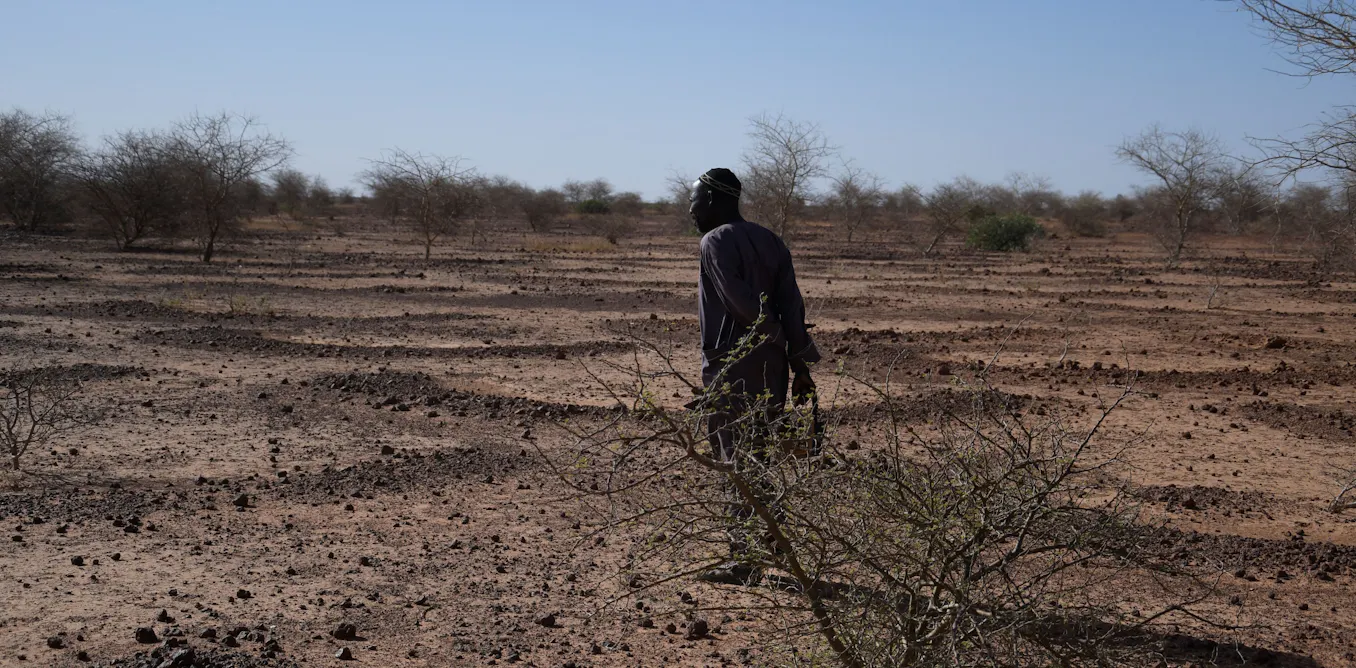
- Core Development: New scientific models project a devastating public health crisis as a super El Niño threatens Nigeria with the world's highest national heat-related death toll.
- Beat Context: Categorized under World with independent corroboration.
- Reporting Depth: 5 minute analytical read synthesized from verified newsroom sources.
Nigeria stands at the epicentre of a looming public health catastrophe as a record-breaking weather anomaly bears down on the Sahel, with new scientific models projecting the highest national heat-related death toll in the world.
The alarming projections were published by researchers at the University of Chicago’s Climate Impact Lab, who combined advanced seasonal temperature forecasts with empirical data tracking how heat influences mortality rates across more than 24,000 global regions. According to The Guardian, the phenomenon burst past previous temperature records for the cycle, prompting descriptions from scientists as mind-blowing
.
Media additions



The analysis calculates that the super El Niño will drive global land temperatures roughly 1.2 degrees Celsius above normal, triggering a 44 percent increase in extremely hot days compared to an average year. While the total estimated mortality of 451,000 spans from June 2026 through February 2027, approximately 239,000 of those excess deaths are anticipated within the initial six-month window.
Africa’s Sahel region — a dry belt stretching across the continent from the Atlantic Ocean to the Red Sea — is facing some of the largest temperature anomalies on Earth. Within this arid zone, four nations shoulder the most severe burden: Nigeria, Sudan, Niger, and Chad. Together, these countries are projected to record 66,800 additional heat deaths. Nearly half of that sub-regional total is concentrated in Nigeria, the most populous nation in the group, which faces 31,400 projected excess deaths. Aol reported that Nigeria alone accounts for nearly half of the Sahel's projected mortality burden.
| Country / Region | Projected Excess Heat Deaths | Key Vulnerability Factors |
|---|---|---|
| Nigeria | 31,400 | Extensive poverty, frequent power outages, high outdoor workforce |
| Indonesia | 19,300 | Tropical climate exposure, severe weather disruptions |
| Sudan | 17,600 | Conflict-damaged infrastructure, destroyed power supplies |
| India | 15,800 | Intense summer transition, large vulnerable population |
| Brazil | 13,300 | High baseline temperatures, agricultural reliance |
| Niger | 10,000 | Limited electricity access, widespread drought exposure |
| Chad | 8,000 | Low cooling adoption, agrarian dependence |
The structural vulnerability of these regions exacerbates the physical threat. According to New York Post reporting, over 60 percent of Nigeria's population lived below the national poverty line, and even electrified households experience routine power cuts. In Sudan, ongoing conflict has devastated local businesses and electrical grids. Meanwhile, Niger and Chad report minimal household electricity access, leaving populations entirely unequipped to run fans or air conditioning during extreme heat waves.
Futurism noted that populations in the Global South face the steepest challenges because low-income areas lack the resources to deploy widespread indoor cooling. Research cited by the study indicates that the extra electricity used per person during high heat in low-income nations would only power a single LED light bulb for four months, inadequate for mechanical air conditioning.
Scientists emphasise that the crisis extends far beyond the Sahel and Africa. Tropical nations and emerging economies across Asia and South America are also bracing for heavy casualties. Indonesia is projected to record 19,300 deaths, while India faces 15,800 additional fatalities, and Brazil anticipates 13,300. In Southeast Asia, a combined 19,400 deaths are projected across the Philippines, Vietnam, Thailand, and Cambodia. Even industrialised nations are not entirely spared; the United States is positioned among the top twenty affected countries, with approximately 3,500 projected additional heat deaths.
Independent researchers have evaluated the modeling exercise with a mixture of urgency and caution. Raquel Nunes, an associate professor in health and environment at the University of Warwick, told Suaragarut that while the figures are plausible modeling estimates, they serve primarily to highlight severe vulnerabilities rather than act as definitive predictions. Similarly, Abhiyant Tiwari, a heat expert at the Natural Resources Defence Council India, described the findings to Aol as an essential call to action, noting that preparedness must be measured by how effectively populations are protected from preventable mortality.
Atmospheric experts attribute the intensity of the event to abnormal wind patterns off Indonesia that have driven warm ocean waters into the central Pacific. Akshay Deoras, a senior research scientist at the University of Reading, explained to Suaragarut that the displaced water dumps vast quantities of heat into the atmosphere, supercharging extreme rainfall, droughts, and meteorological volatility worldwide. Adam Scaife, head of long-range forecasting at the United Kingdom's Met Office, added that meteorological offices are already tracking widespread disruptions to seasonal rain patterns affecting agriculture.
Climate scientists stress that while El Niño is a natural cyclical phenomenon, its severity is heavily amplified by human-driven global heating. Friederike Otto, a professor of climate science at Imperial College London, told Suaragarut that the event unfolds upon an already warmed baseline, making it exceptionally difficult for communities to cope without immediate fossil fuel emission mitigation.
Because the timing of peak mortality varies significantly by region, researchers argue that governments retain a vital window to intervene. In Nigeria and Indonesia, substantial portions of the excess mortality are projected to occur between December and February, allowing authorities time to reinforce public health infrastructure. Mitigation recommendations from the Climate Impact Lab's Adaptation Inventory include:
- Deploying robust early warning systems to alert communities ahead of extreme temperature spikes.
- Establishing municipal cooling centres and public hydration stations in high-risk districts.
- Enforcing mandatory protections and rest schedules for outdoor agricultural and manual workers during peak danger hours.
- Preparing public hospitals for surges in heatstroke and sunstroke admissions by hiring temporary medical staff and stocking essential supplies.
As the super El Niño continues to intensify through the northern hemisphere winter, researchers warn that elevated heat-related mortality could persist well into mid-2027.
How significant is this development?
Contribute your assessment to the aggregated reader sentiment ledger.
Frequently Asked Questions
Key questions answered in this reportWhat is the key development in: Nigeria faces world-highest death toll from super El Niño heatwaves?
New scientific models project a devastating public health crisis as a super El Niño threatens Nigeria with the world's highest national heat-related death toll.
Why is this World development significant for the UK?
This report covers critical events in our World beat. Independent reporting monitors related UK statements, regulatory shifts, and public responses as further verified details emerge.
How was this reporting corroborated and verified?
Newsarchy UK compiles and cross-references reporting from primary reporting from The Conversation and cross-checked wire reports. All coverage adheres to published editorial standards.
When was this report published?
This briefing was published on September 25, 2026 and is permanently cataloged in the Newsarchy UK World archives.