Early returns in Russia’s parliamentary election show the main Kremlin party leading
Early returns from Russia's first wartime parliamentary election show President Vladimir Putin's United Russia party leading with nearly 58 percent of the vote.
- Core Development: Early returns from Russia's first wartime parliamentary election show President Vladimir Putin's United Russia party leading with nearly 58 percent of the vote.
- Beat Context: Categorized under World with independent corroboration.
- Reporting Depth: 4 minute analytical read synthesized from verified newsroom sources.
Early returns from Russia’s first wartime parliamentary election, released Monday by the Central Election Commission, confirm that United Russia, the party that backs President Vladimir Putin, is sweeping the vote. With roughly 58 percent of the precincts counted, the Kremlin’s party already has almost 58 percent of the party‑list seats, and is poised to win the majority of the 225 single‑seat constituencies that will be decided in the final round.
Election context and the war narrative
The vote, which began on Friday for 111 million eligible voters and closed Sunday night, is Russia’s first parliamentary election since the full‑scale invasion of Ukraine began in 2022. The Kremlin has framed the poll as a referendum on the war, hoping to showcase popular support for its actions in Ukraine and to legitimize the annexation of four Ukrainian regions that Moscow has claimed since the start of the conflict. Russian election also included residents of Crimea, which Russia annexed in 2014, and the four partially‑controlled zones in the Donetsk and Luhansk regions.
Media additions


Kyiv has called the vote illegal, urging foreign governments not to recognise the result, while the European Union described it as a “blatant violation of international law.” The Al Jazeera report notes that the election was conducted in a political environment that has seen the suppression of dissent and the removal of opposition parties from the ballot.
Ballot process and opposition absence
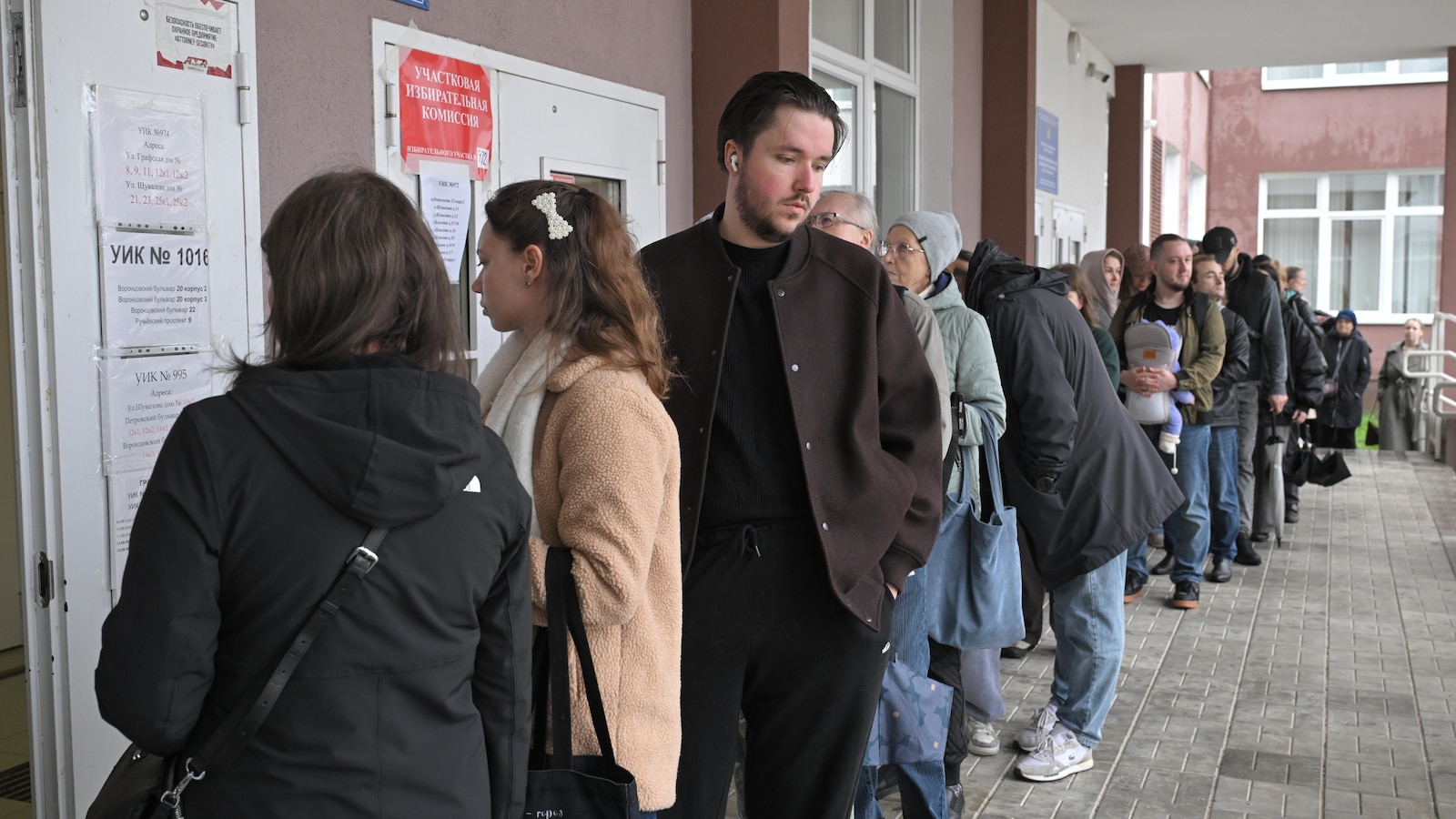
In Moscow and other cities, voters were required to cast two ballots: one for a party list, which would fill half of the 450 seats in the State Duma, and another for a candidate in a single‑seat constituency. United Russia is expected to retain its overwhelming majority, while several “systemic opposition” parties that usually align with Putin’s policies are also likely to keep their seats. The only party that has openly criticised the war, Yabloko, was removed from the ballot last month by the Supreme Court and has only a handful of candidates in the single‑seat races.
Yabloko’s campaign office reported that many of its observers were turned away from polling stations. An observer arrested at a St. Peterburg station was reportedly rendered unconscious by police, according to the Enidnews. The party also cited sealed ballot boxes being opened and the refusal to issue paper ballots in several locations.
While the Central Election Commission said the process was “mostly smooth,” the cyberattacks on Moscow’s electronic voting system were reported by Ella Pamfilova, the election commission head. Pamfilova blamed a “systemic party” for the attacks, though she did not specify which one. An independent outlet, SotaVision, noted glitches in the electronic registry systems at polling stations across Moscow, leading to lines outside stations as many voters refused to vote electronically.
Security incidents during the vote
Sunday’s voting coincided with a large Ukrainian drone offensive. The Russian Defence Ministry said it had shot down 1,110 drones, including hundreds aimed at Moscow. The attack killed at least three people in the Moscow region and two more in the Russian‑held part of Kherson, where an election official was also killed, according to the regional governor and the election commission.
In the Donetsk region, voters dropped their ballots into a box while an armed Russian soldier stood nearby, a scene captured by local media.
Early results and what they mean
| Metric | Value |
|---|---|
| Precincts counted | 58 percent |
| United Russia share of party‑list vote | ≈58 percent |
| Turnout | 56.66 percent |
| Seats to be allocated by party lists | 225 |
| Seats to be decided in single‑seat constituencies | 225 |
These figures, published by the Central Election Commission and echoed by ABC News and Caledonian Record, underscore the Kremlin’s continued dominance. The Al Jazeera report added that United Russia is “widely expected to retain its overwhelming control of the State Duma,” and that the systemic opposition parties are also likely to maintain their presence.
International reaction and domestic protest
Kyiv’s denouncement and the EU’s statement have not altered the outcome. Meanwhile, anti‑war Russians have continued to organise protests. In Yerevan, thousands of Russians living in Armenia joined an anti‑war demonstration outside the Russian Embassy, while in Berlin a protest outside the embassy saw activists call for a peaceful Russia.
Yulia Navalnaya, the widow of the late opposition leader Alexei Navalny, called on anti‑war Russians to cast their votes at noon on Sunday, hoping to signal dissent. Meanwhile, Yabloko leader Nikolai Rybakov took to the ballot box in St. Peterburg, writing “For freedom” on his ballot, a symbolic act highlighted by the Enidnews photo coverage.
What to watch next
- Official results and final seat allocations are expected on Monday morning.
- Observers will monitor whether the single‑seat constituencies follow the same pattern as the party‑list results.
- International bodies may issue further statements on the legality of the vote.
- Protests and civil‑society responses could intensify as the final counts are announced.
As Russia’s parliament prepares to reconvene, the early returns paint a picture of a state that has tightened its grip on political life, even as the war in Ukraine continues to rage.
How significant is this development?
Contribute your assessment to the aggregated reader sentiment ledger.
Frequently Asked Questions
Key questions answered in this reportWhat is the key development in: Early returns in Russia’s parliamentary election show the main Kremlin party leading?
Early returns from Russia's first wartime parliamentary election show President Vladimir Putin's United Russia party leading with nearly 58 percent of the vote.
Why is this World development significant for the UK?
This report covers critical events in our World beat. Independent reporting monitors related UK statements, regulatory shifts, and public responses as further verified details emerge.
How was this reporting corroborated and verified?
Newsarchy UK compiles and cross-references reporting from primary reporting from abcnews.com and cross-checked wire reports. All coverage adheres to published editorial standards.
When was this report published?
This briefing was published on September 21, 2026 and is permanently cataloged in the Newsarchy UK World archives.