Saudi Arabia, Turkey and Pakistan sign mutual defense pact in Mecca
Saudi Arabia, Turkey and Pakistan signed a joint defense agreement in Mecca, establishing a strategic alignment amid ongoing regional conflicts.
- Core Development: Saudi Arabia, Turkey and Pakistan signed a joint defense agreement in Mecca, establishing a strategic alignment amid ongoing regional conflicts.
- Beat Context: Categorized under World with independent corroboration.
- Reporting Depth: 3 minute analytical read synthesized from verified newsroom sources.
Saudi Arabia, Turkey and Pakistan signed a joint defense agreement on Friday in Mecca, forming a strategic alignment among three major Sunni Muslim nations as a wider regional conflagration continues to impact Gulf energy exports and security. Reported by NBC News and Aol, the pact follows nearly a year of negotiations and arrives as regional powers grapple with the fallout of ongoing conflicts involving Israel and Iran.
The newly minted Mecca Joint Defense Agreement stipulates that an armed attack against any of the three participating nations will be regarded as an attack on all. According to the joint statement issued by the governments, the framework is designed to strengthen collective deterrence against aggression, though the text did not detail specific military commitments or obligations required under the pact.
Media additions
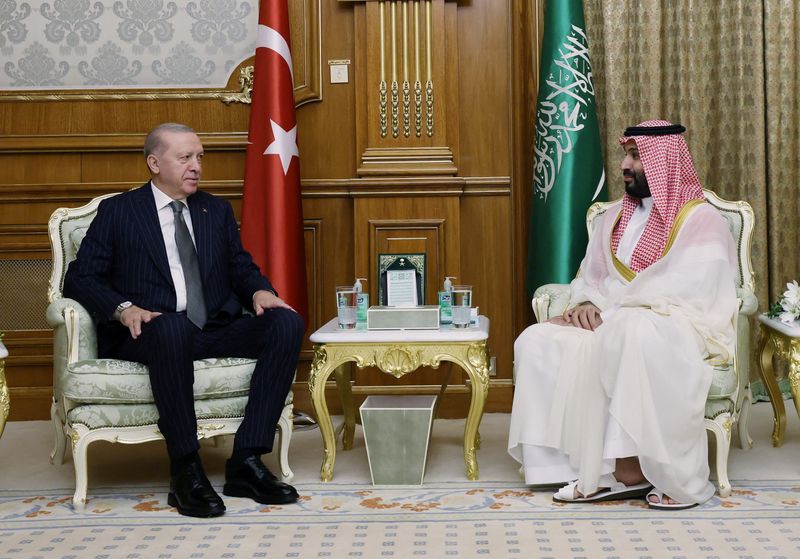
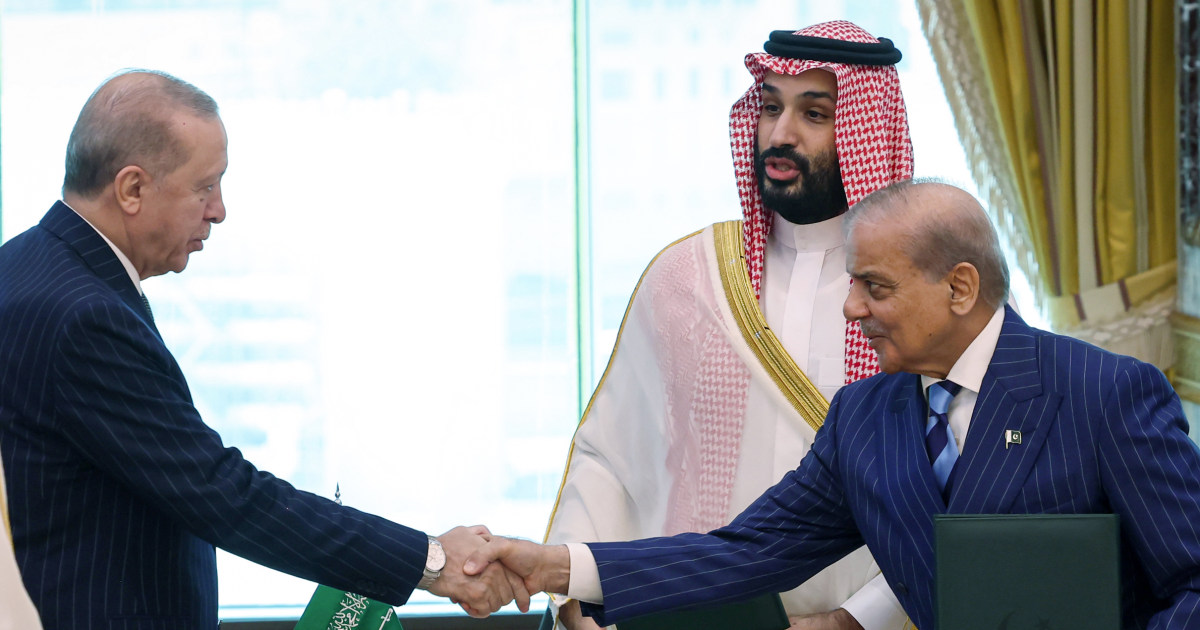
The signing ceremony in Mecca brought together Saudi Crown Prince Mohammed bin Salman, Turkish President Recep Tayyip Erdoğan, and Pakistani Prime Minister Shehbaz Sharif. Pakistani Prime Minister Shehbaz Sharif was accompanied by army chief Asim Munir, with the high-level delegation performing the Umrah pilgrimage prior to the formal proceedings.
Regional tensions have escalated significantly since attacks involving the United States, Israel, and Iran. Iran and its regional allies have launched missile and drone strikes against Saudi Arabia and other Gulf states while blockading critical energy shipments. The conflict has severely disrupted shipping through the Strait of Hormuz, a vital maritime corridor for global energy supplies.
Official representatives from the participating nations emphasized the defensive nature of the accord. A Turkish official stated that the agreement is purely defensive, does not target any specific actor, and leaves existing bilateral and multilateral arrangements intact. Turkish Vice President Cevdet Yilmaz and Rayed Krimly, Saudi deputy minister for public diplomacy, both stressed via social media and official remarks that the pact does not constitute a sectarian bloc, a military axis, or an effort tied to nuclear ambitions or arms races.
Analysts note that the trilateral grouping unites formidable military and economic capabilities. Turkey maintains NATO's second-largest military, Saudi Arabia holds significant global energy resources and houses Islam's holiest sites, and Pakistan stands as the Muslim world's sole nuclear-armed state. Abdulaziz Sager, chairman of the Saudi-based Gulf Research Center, described the political symbolism of the summit as a demonstration of middle powers taking greater initiative in regional security.
Burcu Ozcelik, a senior research fellow for Middle East Security at the RUSI think tank, observed that the framework focuses on counterbalancing Iranian hegemony and building deterrence rather than escalating direct confrontations. Similarly, Mansoor Ahmed of the Australian National University’s Strategic and Defence Studies Centre noted that while Pakistan and Turkey bring robust defense industries to the partnership, the accord is not expected to incorporate Pakistan's nuclear deterrent, which remains oriented toward regional defense against India.
The agreement builds upon existing military cooperation among the three countries. Pakistan has historically provided training and technical assistance to Saudi forces, while Turkey and Pakistan have traded warships and training aircraft. Riyadh previously agreed to procure Turkish drones, and Pakistan has deployed roughly 8,000 troops, fighter jets, drones, and an air defense system to the kingdom.
As world observers monitor the changing security architecture, reactions from neighboring states vary. Israel's Prime Minister Benjamin Netanyahu's office declined to comment on the pact. Meanwhile, a spokesperson for India's Foreign Ministry stated that New Delhi is closely following the development, and Iran did not immediately issue a formal response.
What to Watch Next
- Implementation of the Mecca Joint Defense Agreement and whether the signatories establish concrete military cooperation frameworks or specific operational protocols.
- Potential expansion of regional security ties, following Pakistan's parallel discussions with Kuwait regarding security arrangements in exchange for energy cooperation and investment.
- Official responses or diplomatic maneuvers from Tehran and other regional capitals as the trilateral security architecture develops.
How significant is this development?
Contribute your assessment to the aggregated reader sentiment ledger.
Frequently Asked Questions
Key questions answered in this reportWhat is the key development in: Saudi Arabia, Turkey and Pakistan sign mutual defense pact in Mecca?
Saudi Arabia, Turkey and Pakistan signed a joint defense agreement in Mecca, establishing a strategic alignment amid ongoing regional conflicts.
Why is this World development significant for the UK?
This report covers critical events in our World beat. Independent reporting monitors related UK statements, regulatory shifts, and public responses as further verified details emerge.
How was this reporting corroborated and verified?
Newsarchy UK compiles and cross-references reporting from primary reporting from nbcnews.com and cross-checked wire reports. All coverage adheres to published editorial standards.
When was this report published?
This briefing was published on August 7, 2026 and is permanently cataloged in the Newsarchy UK World archives.