Scientists warn seven planetary boundaries reach record breach levels
Researchers reveal that seven out of nine critical planetary boundaries have been breached, pushing Earth's life-support systems into dangerous territory.
- Core Development: Researchers reveal that seven out of nine critical planetary boundaries have been breached, pushing Earth's life-support systems into dangerous territory.
- Beat Context: Categorized under World with independent corroboration.
- Reporting Depth: 4 minute analytical read synthesized from verified newsroom sources.
Earth’s critical life-support systems have reached a dangerous juncture as researchers warn that planetary boundaries continue to experience unprecedented strain. According to findings from Euronews reporting on the latest Oceanographic Magazine coverage, severe environmental pressures are driving transgression levels higher across multiple key indicators, reinforcing warnings issued by the Virgin platform regarding planetary limits.
The updated diagnostic arrives following a protracted period of severe weather events, marine heatwaves, and widespread ecological disruption. Researchers note that human activities continue to push environmental indicators beyond safe operational limits, elevating the probability of irreversible shifts in global ecosystems. Scientific American analysis and Mongabay reporting have similarly documented how industrial activities destabilize these interconnected boundaries.
Media additions

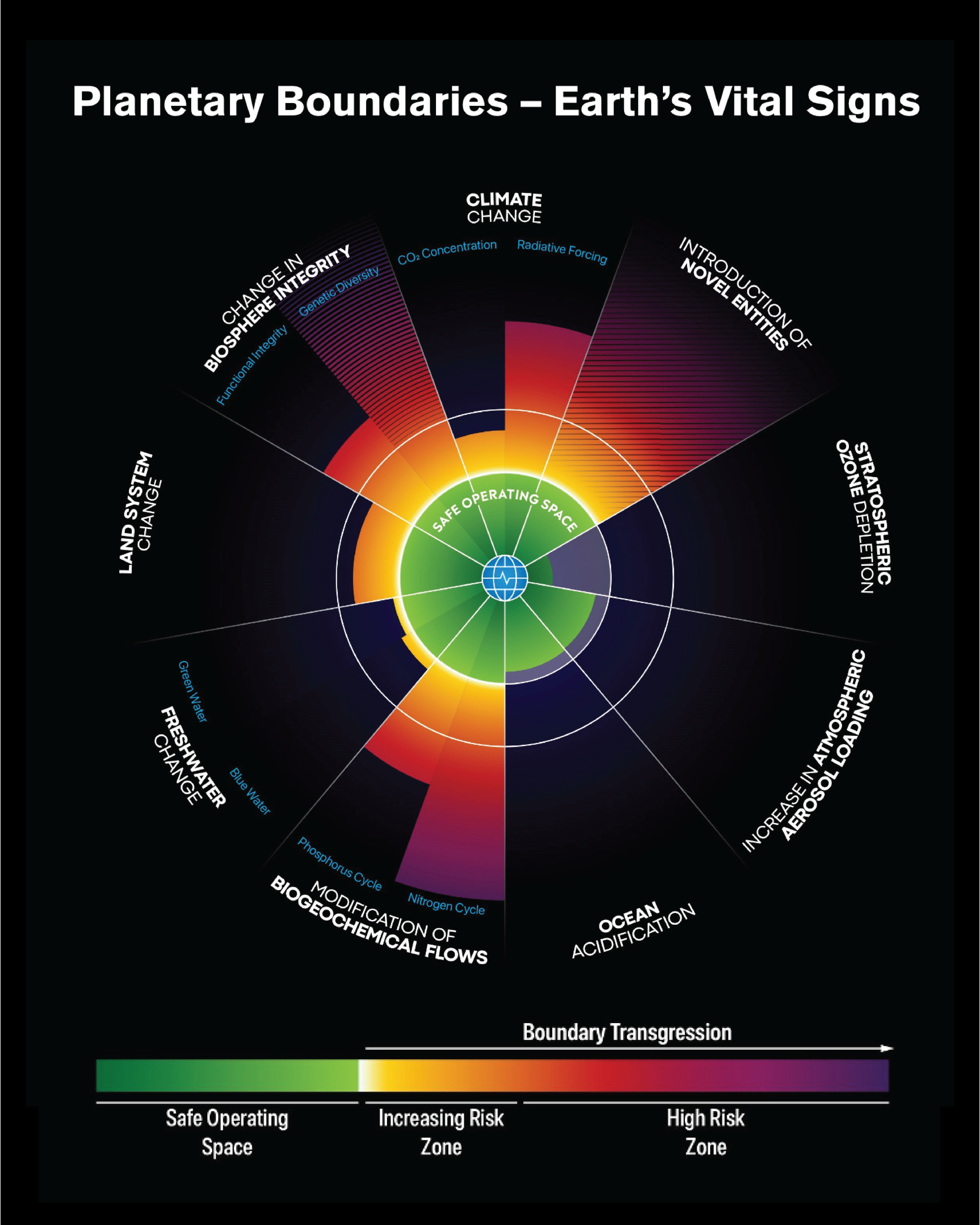
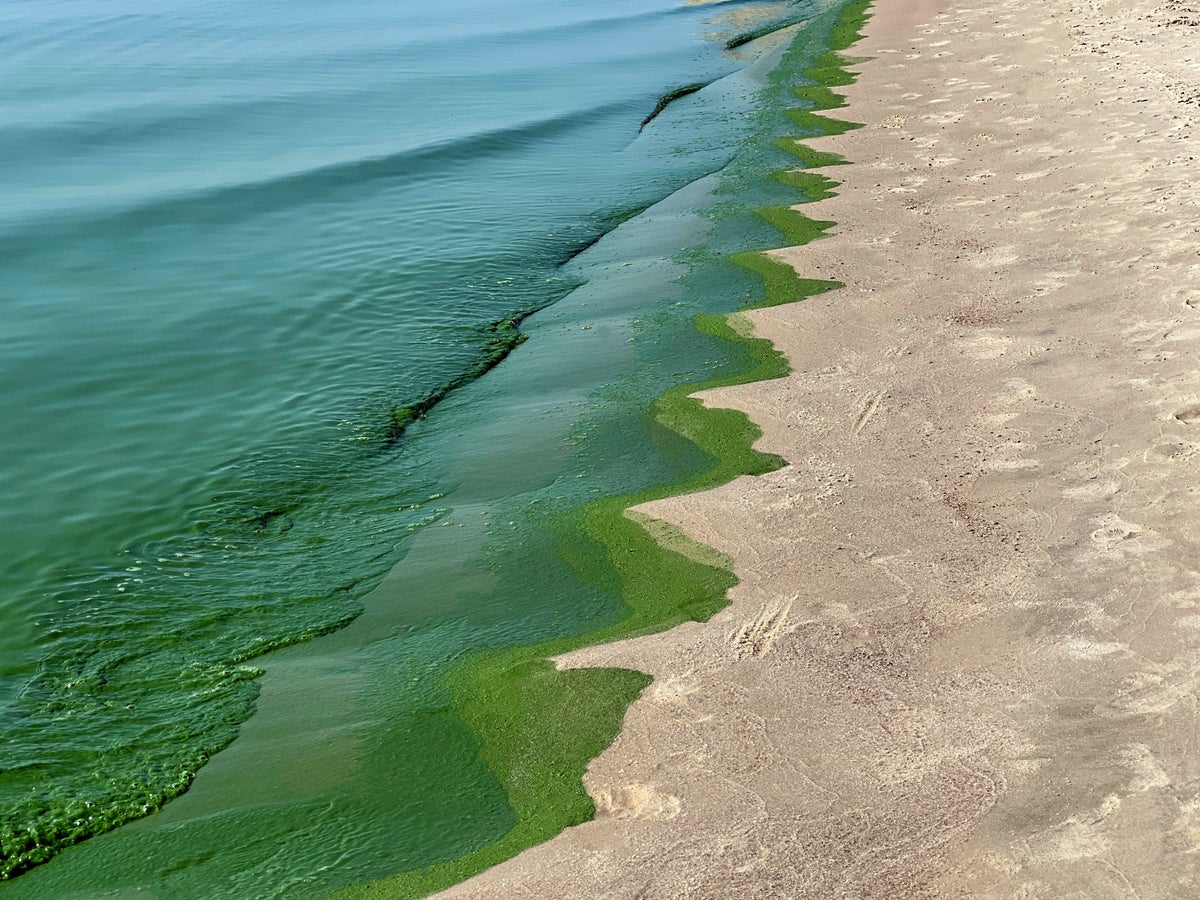
The latest Planetary Health Check, authored by more than sixty scientists and produced by the Potsdam Institute for Climate Impact Research (PIK), comes after months of extreme weather events. Boris Sakschewski, PIK scientist and lead author of the report, stated:
"The diagnosis is unambiguous. Pressure is rising across every Planetary Boundary already outside the safe operating space. It means that the risk of large-scale, persistent and potentially irreversible change is increasing while our margin for error in tackling these problems is shrinking."
Boris Sakschewski, PIK scientist and lead author, via Euronews
The framework relies on nine boundaries that must remain within safe limits to keep humanity safe and the natural world resilient. Out of these, seven boundaries have now been breached: climate change, change in biosphere integrity, land system change, freshwater change, modification of biogeochemical flows, introduction of novel entities, and ocean acidification. Ocean acidification became the latest to breach its boundary after scientists found that surface pH dropped significantly, representing a sharp spike in acidity since the start of the industrial era.
The only planetary boundaries that humans have not breached are stratospheric ozone depletion and atmospheric aerosol loading. While these two have shown signs of improvement over the past decade, scientists warn that global progress may mask unsafe aerosol levels persisting in specific regions.
| Planetary Boundary | Status | Key Driver / Indicator |
|---|---|---|
| Climate Change | Breached | Carbon dioxide concentrations and radiative forcing |
| Biosphere Integrity | Breached | Extinction rates and primary production co-opted |
| Land System Change | Breached | Forest loss and agricultural expansion |
| Freshwater Change | Breached | Blue and green water alteration |
| Biogeochemical Flows | Breached | Nitrogen and phosphorus pollution |
| Novel Entities | Breached | Synthetic chemicals and microplastics |
| Ocean Acidification | Breached | Surface pH drops and marine heat stress |
| Stratospheric Ozone | Within Safe Limits | Montreal Protocol recovery measures |
| Atmospheric Aerosols | Within Safe Limits | Regional air pollution controls |
Experts stress that these boundaries operate as an interconnected network rather than isolated silos. When one threshold is crossed, feedback loops can accelerate pressure across others. Hindou Oumarou Ibrahim, chair of the Planetary Guardians, emphasized the interconnected nature of these emergencies:
"Read the list again: Pakistan, the Caribbean, Europe, the reefs beneath our oceans. These are not separate emergencies; the planet is telling us, in every region at once, that it is out of balance."
Hindou Oumarou Ibrahim, chair of the Planetary Guardians, via Oceanographic Magazine
Observers point out that while historical discussions have largely isolated climate change as a standalone crisis, biodiversity loss, chemical pollution, and freshwater shifts demand equal urgency. Natural carbon sinks such as oceans, forests, and peatlands are essential to achieve net zero, but repeated extreme weather is degrading these systems. In some regions, ecosystems have transitioned from carbon sinks to carbon sources.
PIK Director and co-author Johan Rockström noted:
"We do not have the luxury of time but we do have the knowledge, capacity and solutions to change course. Accelerating action to return to the safe operating space across all Planetary Boundaries is essential to protect lives and livelihoods and to deliver on the promise of shared future prosperity."
Johan Rockström, PIK Director, via Euronews
Landmark new research from The Earthshot Prize and the University of Exeter recently identified priority clusters and solutions to trigger rapid and transformative change. These solutions include cutting fossil fuel reliance by transitioning to clean energy, reducing solid fuels for cooking, ocean conservation, and clamping down on deforestation.
Researchers and advocacy groups emphasize that societies possess the necessary tools to reverse these trajectories. Collaborative frameworks incorporating scientific data alongside traditional stewardship practices are seen as essential for restoring stability.
How significant is this development?
Contribute your assessment to the aggregated reader sentiment ledger.
Frequently Asked Questions
Key questions answered in this reportWhat is the key development in: Scientists warn seven planetary boundaries reach record breach levels?
Researchers reveal that seven out of nine critical planetary boundaries have been breached, pushing Earth's life-support systems into dangerous territory.
Why is this World development significant for the UK?
This report covers critical events in our World beat. Independent reporting monitors related UK statements, regulatory shifts, and public responses as further verified details emerge.
How was this reporting corroborated and verified?
Newsarchy UK compiles and cross-references reporting from primary reporting from news - Mongabay and cross-checked wire reports. All coverage adheres to published editorial standards.
When was this report published?
This briefing was published on September 22, 2026 and is permanently cataloged in the Newsarchy UK World archives.