Spain reinforces Ceuta border after 60,000 migrants cross from Morocco
Spain has deployed military reinforcements to its North African enclave of Ceuta following an unprecedented mass border crossing from Morocco.
- Core Development: Spain has deployed military reinforcements to its North African enclave of Ceuta following an unprecedented mass border crossing from Morocco.
- Beat Context: Categorized under World with independent corroboration.
- Reporting Depth: 4 minute analytical read synthesized from verified newsroom sources.
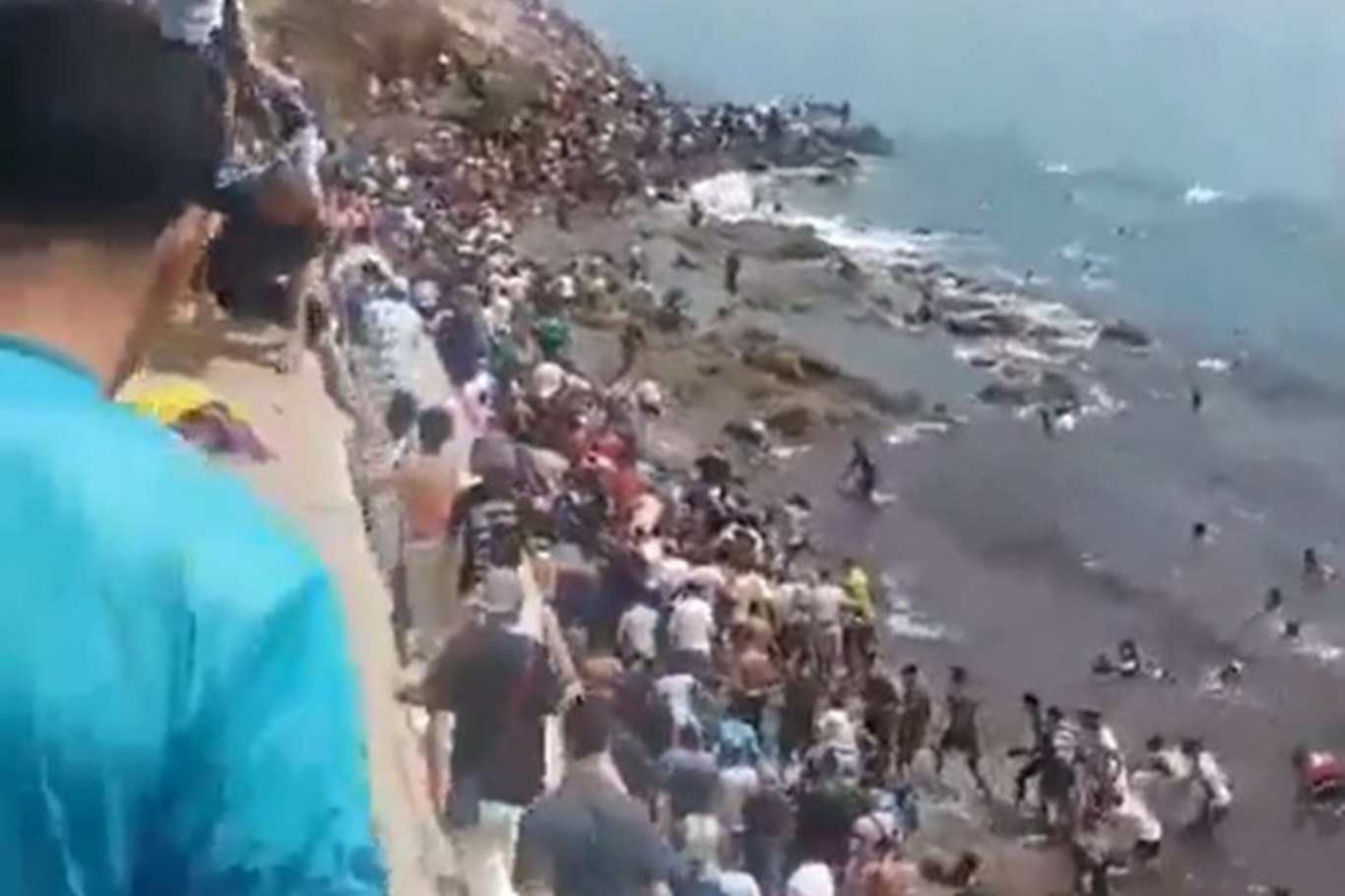
Spain deployed military reinforcements to its North African enclave of Ceuta following an unprecedented border crisis that saw tens of thousands of people cross from neighbouring Morocco. According to reporting by İlke Haber Ajansı, the mass influx overwhelmed local authorities as migrants entered the tiny Spanish territory by sea and land over Thursday and Friday, with many swimming around breakwaters or crossing on foot after border controls collapsed. Reports indicate that at least 57 people lost their lives during the crossings, with emergency services treating hundreds more for exhaustion, dehydration, and injuries.
The sudden arrival placed immense pressure on Ceuta, a territory with a population of approximately 83,600. Local authorities estimated that total arrivals reached nearly 70 percent of the city's population, while Spain's Interior Ministry placed the figure at around 50,000. Juan Jesus Vivas, head of Ceuta's local government, estimated the total number of arrivals at as many as 60,000. Thousands of people, including women, children, and babies, spent the night in parks, beaches, and public squares without shelter or basic supplies, with officials estimating that about 7,000 of those who crossed were unaccompanied minors.
Media additions
Spanish Prime Minister Pedro Sánchez blamed human trafficking networks for encouraging the dangerous journey. Speaking during a visit to Ceuta, Sánchez stated that criminal smuggling organisations deliberately misrepresented a recent ruling by Spain's Supreme Court. That ruling held that migrants intercepted at sea while attempting to reach Ceuta or the neighboring enclave of Melilla cannot be immediately returned to Morocco. Territorial Policy Minister Angel Victor Torres similarly noted that the Supreme Court ruling may have contributed to the surge.
"What has emerged from our discussions with Moroccan authorities is that trafficking mafias spread a self-serving interpretation of the court ruling, encouraging thousands of people to attempt the crossing."
Pedro Sánchez, Spanish Prime Minister, via İlke Haber Ajansı
By Friday evening, the Australian Broadcasting Corporation reported that the massive rush of migrants had been largely reversed, with more than 48,000 people voluntarily returning to Morocco amidst ongoing repatriation efforts coordinated with Moroccan authorities. Moroccan forces had earlier used batons, tear gas, and water cannons at the gates to Ceuta to try and prevent crowds from storming across, while Spanish military vehicles lined sections of the border. Many returning migrants cited a lack of food and shelter as reasons for turning back.
Honestly, I don't even know why I came, and now I'm going back,
a young Moroccan man from Tangier told Reuters, adding that he had not eaten since lunch the previous day.
In response to the breakdown, Spain's Guardia Civil police association AUGC stated via social media that there had been too few police in place to monitor the fence during the initial surge on Thursday, leaving them unable to stop the rush. In addition to deploying military personnel, police units, and Civil Guard officers to reinforce Ceuta and Melilla, the Spanish government announced it would review border protection measures.
The crisis quickly ignited diplomatic tensions across Europe, highlighting deep divisions over migration policy:
- Italy: Prime Minister Giorgia Meloni described the scenes as shocking and announced the temporary suspension of the Schengen free-movement arrangements with Spain, introducing additional checks for air and sea travelers. Foreign Minister Antonio Tajani claimed Spain's recent amnesty policy for unauthorized migrants had encouraged human trafficking. In response, Madrid summoned the Italian ambassador, with Spanish Foreign Minister José Manuel Albares accusing Italian leaders of engaging in
partisan demagoguery
rather than European solidarity. - France: Interior Minister Laurent Nunez issued instructions to immediately step up checks at the Spanish border, while far-right politician Marine Le Pen called for restricting free movement under Schengen to European nationals if she wins an election next year.
- Other EU States: The Czech Republic called for a temporary suspension of Spain's participation in the Schengen area. European Commission President Ursula von der Leyen described the scenes as unacceptable and urged immediate action to secure the external border. German Chancellor Friedrich Merz called on Morocco to cooperate in the swift return of irregular migrants, and Finland's Interior Minister Mari Rantanen echoed calls for stronger border protection.
Prime Minister Sánchez pushed back against internal EU divisions, posting on social media that this is not the time to divide
and urging continued unity in building a strong EU. Meanwhile, Spain's Socialist government maintains that while it remains firm over illegal crossings, immigration ultimately strengthens the country's fast-growing economy.
Authorities are pressing forward with investigations into the human trafficking networks that orchestrated the crossings. Humanitarian operations remain active to address the aftermath of one of the deadliest migration incidents to affect the Spanish enclaves in recent years.
How significant is this development?
Contribute your assessment to the aggregated reader sentiment ledger.
Frequently Asked Questions
Key questions answered in this reportWhat is the key development in: Spain reinforces Ceuta border after 60,000 migrants cross from Morocco?
Spain has deployed military reinforcements to its North African enclave of Ceuta following an unprecedented mass border crossing from Morocco.
Why is this World development significant for the UK?
This report covers critical events in our World beat. Independent reporting monitors related UK statements, regulatory shifts, and public responses as further verified details emerge.
How was this reporting corroborated and verified?
Newsarchy UK compiles and cross-references reporting from primary reporting from ilkha.com and cross-checked wire reports. All coverage adheres to published editorial standards.
When was this report published?
This briefing was published on July 31, 2026 and is permanently cataloged in the Newsarchy UK World archives.