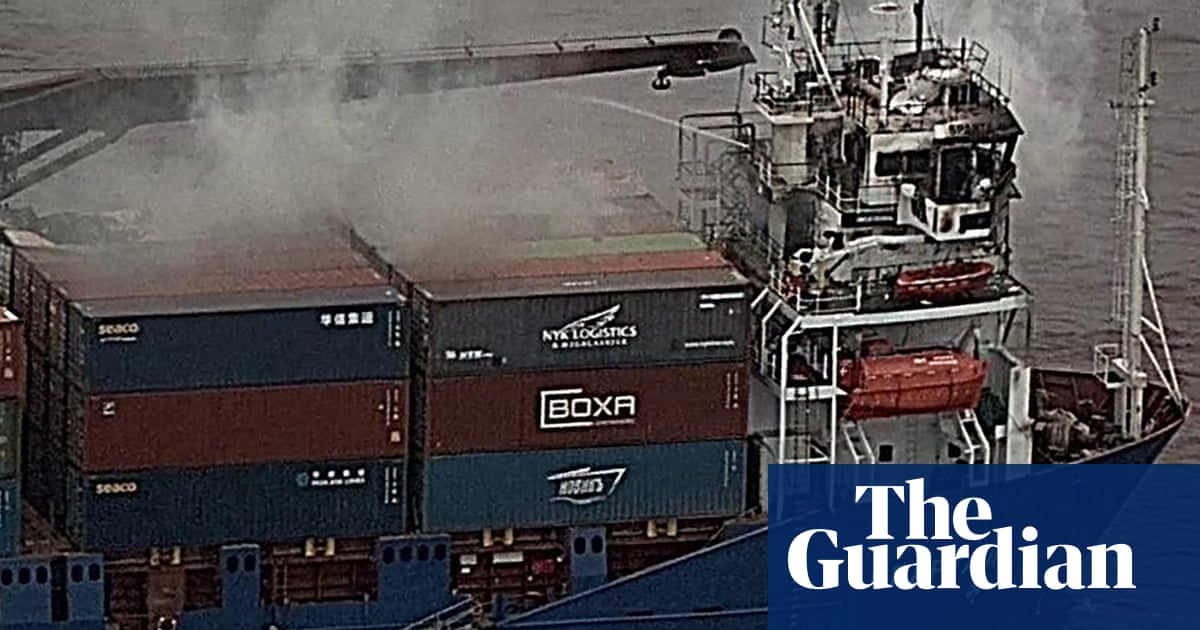
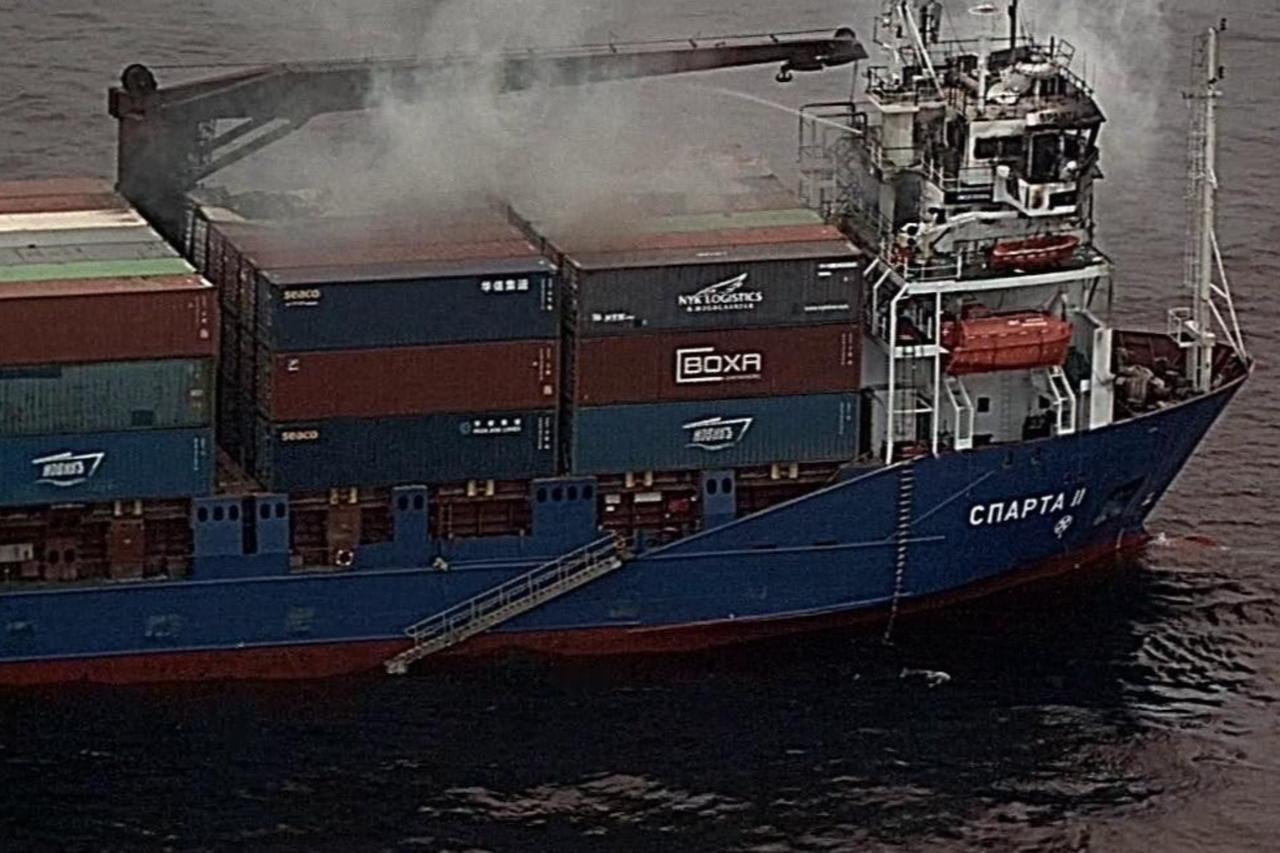
Sparta II burns in Finnish waters after drone strike on Russian supply ship
The Russian cargo vessel Sparta II continues to burn in Finnish waters following a drone strike, triggering a multi-national maritime response and raising concerns over the conflict's expansion.

A drone-struck Russian supply ship continued to burn in Finnish waters, drawing regional leaders to warn that the conflict has expanded directly into the Baltic Sea region. The incident unfolded after explosions ignited the vessel's bridge, prompting its crew to abandon ship as authorities from multiple nations mobilised to contain the blaze and secure the surrounding maritime area.
The vessel involved is the Sparta II, a 121-metre Russian-flagged dry cargo ship owned by Oboronlogistika. According to the company's official website, the firm provides logistics support to the Russian defence ministry. The vessel is subject to United States Treasury sanctions and has been classified by Ukrainian military intelligence as a transporter of weapons and military equipment. Vessel-tracking data showed the ship departed St Petersburg bound for Kaliningrad.
Media additions


The exact location where the vessel was struck remains a subject of dispute among regional authorities. Finland's Defence Forces placed the incident in international waters west of Gogland island. By contrast, Estonia's Police and Border Guard Board stated that the event began in an international shipping lane inside Estonia's economic zone north of Vaindloo island, before the ship drifted into Finnish territorial waters. Meanwhile, Leningrad region Governor Alexander Drozdenko maintained that two drones hit the ship in neutral waters three nautical miles from the Russian border.
| Reporting Authority | Reported Strike Location |
|---|---|
| Finland's Defence Forces | International waters west of Gogland island |
| Estonia's Police and Border Guard Board | Estonian economic zone, north of Vaindloo island |
| Leningrad Region Governor Alexander Drozdenko | Neutral waters three nautical miles from the Russian border |
Explosions ignited the ship's bridge before it drifted across boundaries, according to Andres Tiik of Estonia's Police and Border Guard Board. All 16 crew members abandoned the vessel into lifeboats and rafts, eventually transferring to a nearby Russian merchant ship returning to Russia. Finnish Border Guard commander Ilja Iljin confirmed there were no injuries.
Regional leaders expressed immediate concern over the geographic expansion of hostilities. Finnish Prime Minister Petteri Orpo wrote on X that war was spilling over into the immediate vicinity of Finland, adding that Ukraine possesses the right to defend itself against the aggressor. Estonian Prime Minister Kristen Michal echoed those sentiments, stating that the consequences of Russian aggression had reached the Baltic Sea. Finnish President Alexander Stubb described the events as serious and confirmed he had briefed key allies, while parliamentary defense committees scheduled hearings to review the security implications.
Military officials in Helsinki stated that Ukraine was likely responsible for the drone strike, though Kyiv issued no official claim of responsibility. Finland's armed forces spokesperson Aki-Mauri Huhtinen noted that while the vessel was targeted, the specific rationale remains unconfirmed. Sweden's Defence Minister Pal Jonson announced that Swedish combat aircraft operating under Finnish command participated in safeguarding territorial integrity following the incident. Additionally, Estonian media reported that Turkish F-16 fighter jets based in Estonia were scrambled alongside Belgian F-16s from Lithuania.
Firefighting efforts continued as rescue vessels from multiple nations directed water cannons at the hull and containers stacked on deck. Mikko Simola, commander of the Gulf of Finland Coast Guard District, oversaw operations alongside Finnish patrol vessels, tugs, and Estonia's Kindral Kurvits, with the Russian rescue vessel Murman also joining at Finland's request. Authorities reported no immediate danger to surrounding maritime traffic and detected no marine pollution. Officials have not confirmed the nature of the ship's cargo, with Iljin noting that the presence of explosive material or hazardous gases cannot be ruled out. During the multi-agency response, the Finnish defence ministry reported that a Russian helicopter briefly violated Finnish airspace for approximately five minutes, penetrating over four kilometres, an intrusion Defense Minister Antti Hakkanen suggested may be connected to monitoring or rescue activities.
Russian authorities plan to tow the stricken vessel back into Russian waters once the rescue operations conclude.