Supreme Court rejects Trump mail ballot restrictions for midterms
The Supreme Court has blocked the Trump administration's attempt to enforce new mail-in voting restrictions for the upcoming midterm elections, preserving existing voting procedures.

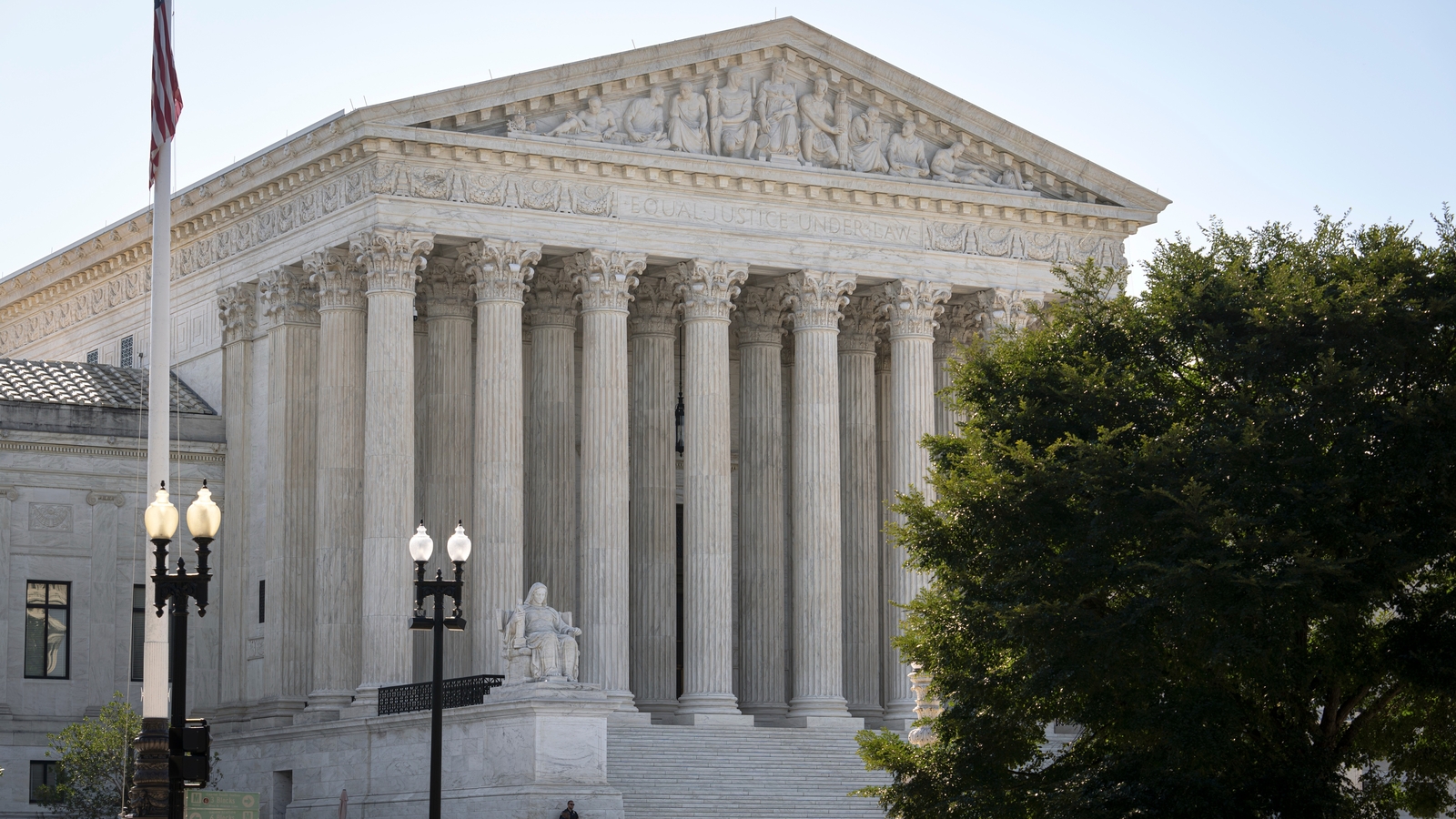
The United States Supreme Court on Monday, September 14, 2026, rejected President Donald Trump’s bid to enforce new mail-in voting restrictions ahead of the upcoming midterm elections, preserving existing voting procedures for the approximately one-third of the country that casts ballots by post according to primary reporting from the Mirror and 6abc Philadelphia. The decision leaves intact a lower court preliminary injunction that blocked the U.S. Postal Service from implementing rules tied to an executive order signed by Trump in March, which mandated unique barcodes on ballot envelopes and required states to submit voter information to an online portal before the agency would deliver ballots MS NOW. The ruling is a significant setback for the administration's attempts to reshape election administration, though legal battles are expected to continue beyond the immediate congressional contests as detailed by the BBC and DW.
The high court issued a brief order stating that the government is unlikely to succeed on the merits of its challenge to the District Court's preliminary injunction
ABC News. The decision directly upholds an order issued by U.S. District Judge Indira Talwani in Boston, who found that implementing the postal mandates just weeks before the November contest threatened the disenfranchisement of millions of citizens CBS News.
Media additions


| Judicial Actor | Stance on Postal Restrictions | Primary Rationale |
|---|---|---|
| Supreme Court Majority | Blocked restrictions for midterms | Government unlikely to succeed on the merits of its challenge against the preliminary injunction. |
| Justice Brett Kavanaugh | Agreed to block for midterms | Final rule may fall within statutory authority, but applying it immediately is arbitrary and capricious under the Administrative Procedure Act due to insufficient implementation time. |
| Justice Samuel Alito (with Justice Clarence Thomas) | Dissented | Postal Service has broad authority to regulate the mail, plaintiffs' claims resemble an unlikely "Hail Mary pass," and state practical concerns do not justify denying relief. |
Administration lawyers, led by Solicitor General John Sauer, urged the justices to lift the injunctions, arguing that the rules impose only modest envelope design and addressee verification requirements to address a pernicious form of vote dilution MS NOW. Sauer maintained that the regulations govern postal operations rather than elections themselves CBS News.
State election officials across the country had warned that a complete overhaul of mailing infrastructure could not be achieved before voters cast ballots Mirror. Several states, including Alabama, North Carolina, and Wisconsin, had already begun sending ballots to voters while the disputed postal requirements remained inactive 6abc Philadelphia. In Washington and Colorado, where elections are conducted almost entirely by mail, secretaries of state praised the ruling for preserving secure processes without forcing disruptive last-minute adjustments PBS.
Political figures and state attorneys general reacted strongly to the Supreme Court's action. California Attorney General Rob Bonta and New York Attorney General Letitia James both hailed the decision on social media as a victory for the rule of law and voting rights New York Post. Connecticut Attorney General William Tong noted that while the state recently expanded its own absentee voting access following constitutional reforms, the federal ruling shields local authorities from federal interference CT Mirror.
The ruling leaves open the possibility of future litigation as the broader legal challenges wind their way through lower courts Mirror. As voters head toward the midterm elections, attention turns back to local administration and broader coverage where parallel political developments continue to unfold.