Supreme Court allows Trump White House ballroom construction to continue
Chief Justice John Roberts issued a temporary order allowing construction on a controversial White House addition to proceed while the high court considers an emergency appeal.

- Core Development: Chief Justice John Roberts issued a temporary order allowing construction on a controversial White House addition to proceed while the high court considers an emergency appeal.
- Beat Context: Categorized under World with independent corroboration.
- Reporting Depth: 3 minute analytical read synthesized from verified newsroom sources.
Construction on a controversial White House addition may proceed for now, according to a brief order issued on Friday, August 21, 2026, by Chief Justice John Roberts. The temporary administrative stay pauses a lower-court ruling that would have forced a halt to above-ground development on the property, giving the nation's highest court additional time to weigh an emergency appeal from the administration.
The legal battle centers on a massive 90,000-square-foot project replacing the historic East Wing, which previously housed the first lady's offices and the White House movie theater. Originally built during Theodore Roosevelt's presidency in 1902 and expanded in 1942 under Franklin Roosevelt, the demolished wing has made way for a structure that is roughly twice the size of the main White House complex. The Trump administration reports that the overall undertaking is already 65% complete, with crews operating around the clock.
Media additions

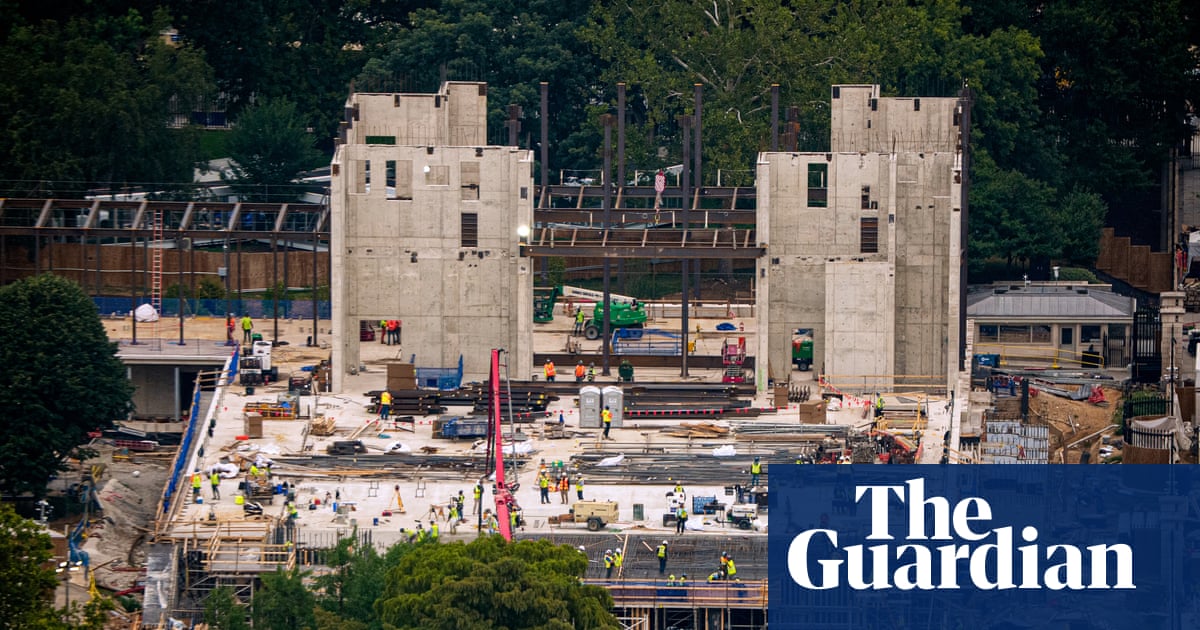
President Donald Trump praised the high court's intervention on social media, writing that his administration is grateful for the decision and describing the project as under budget and ahead of schedule. While initially pitched as a privately funded space to host foreign dignitaries, the administration has increasingly cast the initiative as a national security imperative. In an August 14 filing, Justice Department lawyers argued that the development encompasses an integrated military complex featuring bomb shelters, medical facilities, sniper nests, a drone port, and missile-resistant reinforcements.
The Legal Clash and Lower Court Rulings
The controversy ignited last year when the National Trust for Historic Preservation filed a lawsuit challenging the administration's authority to alter the executive mansion without explicit congressional sign-off. Lower courts offered a series of mixed directives before Friday's Supreme Court action. In March, U.S. District Judge Richard Leon ruled against the administration, restricting work primarily to below-ground security installations. A panel of the U.S. Court of Appeals for the D.C. Circuit subsequently upheld that restriction on August 7, writing that each president is a temporary tenant rather than an owner and that national security arguments are not an automatic get-out-of-law-free card.
Lawyers for the historic preservation nonprofit argued in a brief filed earlier in the week that the administration was attempting to outrun judicial review
by accelerating construction before the judiciary could rule on the merits. They warned that permitting work to continue effectively concludes the case in the administration's favor. Following Roberts' Friday order, a spokesperson for the trust emphasized that the decision is not a final ruling on the merits and that the organization awaits further action from the full bench.
Political Fallout and Capitol Reshaping
Reactions to the Supreme Court's intervention fell sharply along political lines. Senate Minority Leader Chuck Schumer condemned the development, accusing the conservative-majority court of rubber stamping Trump’s vanity-driven, gilded corruption
while the administration spends money on pet projects.
The ballroom dispute unfolds alongside broader efforts by the president to reshape the capital's landscape, which include plans for a large arch and renovations to the Kennedy Center. Public polling indicates widespread skepticism toward the project; an April poll conducted by Washington Post-ABC News-Ipsos showed that 56% of Americans disapproved of tearing down the East Wing to build the ballroom.
Key Project Details
- Square Footage: 90,000 square feet
- Completion Status: Approximately 65% finished
- Estimated Cost: Estimated by reports to be between $300 million and $400 million, with roughly $200 million in private donations spent or committed
- Security Features: Integrated underground military complex, bomb shelters, a hospital, drone-proof roof, and missile-resistant columns
What happens next depends on the full Supreme Court, which is expected to review the administration's emergency stay application and decide whether construction can proceed for the duration of the ongoing lawsuit.
How significant is this development?
Contribute your assessment to the aggregated reader sentiment ledger.
Frequently Asked Questions
Key questions answered in this reportWhat is the key development in: Supreme Court allows Trump White House ballroom construction to continue?
Chief Justice John Roberts issued a temporary order allowing construction on a controversial White House addition to proceed while the high court considers an emergency appeal.
Why is this World development significant for the UK?
This report covers critical events in our World beat. Independent reporting monitors related UK statements, regulatory shifts, and public responses as further verified details emerge.
How was this reporting corroborated and verified?
Newsarchy UK compiles and cross-references reporting from primary reporting from detroitnews.com and cross-checked wire reports. All coverage adheres to published editorial standards.
When was this report published?
This briefing was published on August 21, 2026 and is permanently cataloged in the Newsarchy UK World archives.