Total solar eclipse plunges parts of Europe into darkness
A rare total solar eclipse crossed mainland Europe, Iceland, and Greenland, plunging millions of spectators into darkness and marking the region's first such event in decades.
- Core Development: A rare total solar eclipse crossed mainland Europe, Iceland, and Greenland, plunging millions of spectators into darkness and marking the region's first such event in decades.
- Beat Context: Categorized under World with independent corroboration.
- Reporting Depth: 4 minute analytical read synthesized from verified newsroom sources.
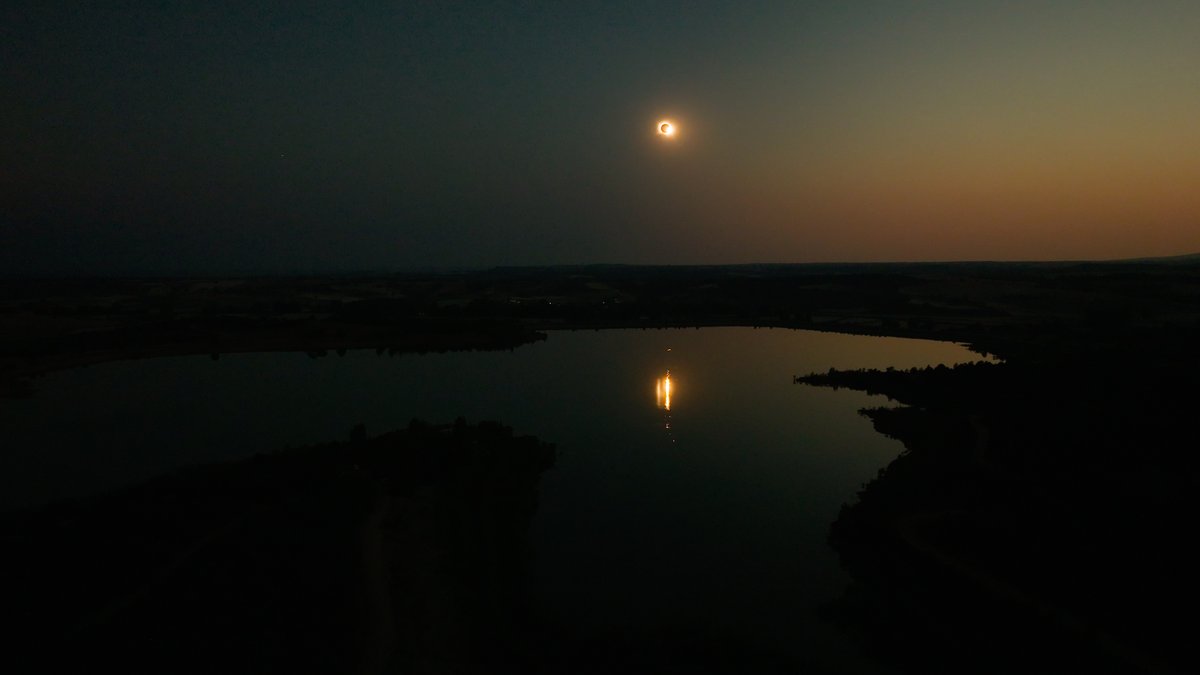
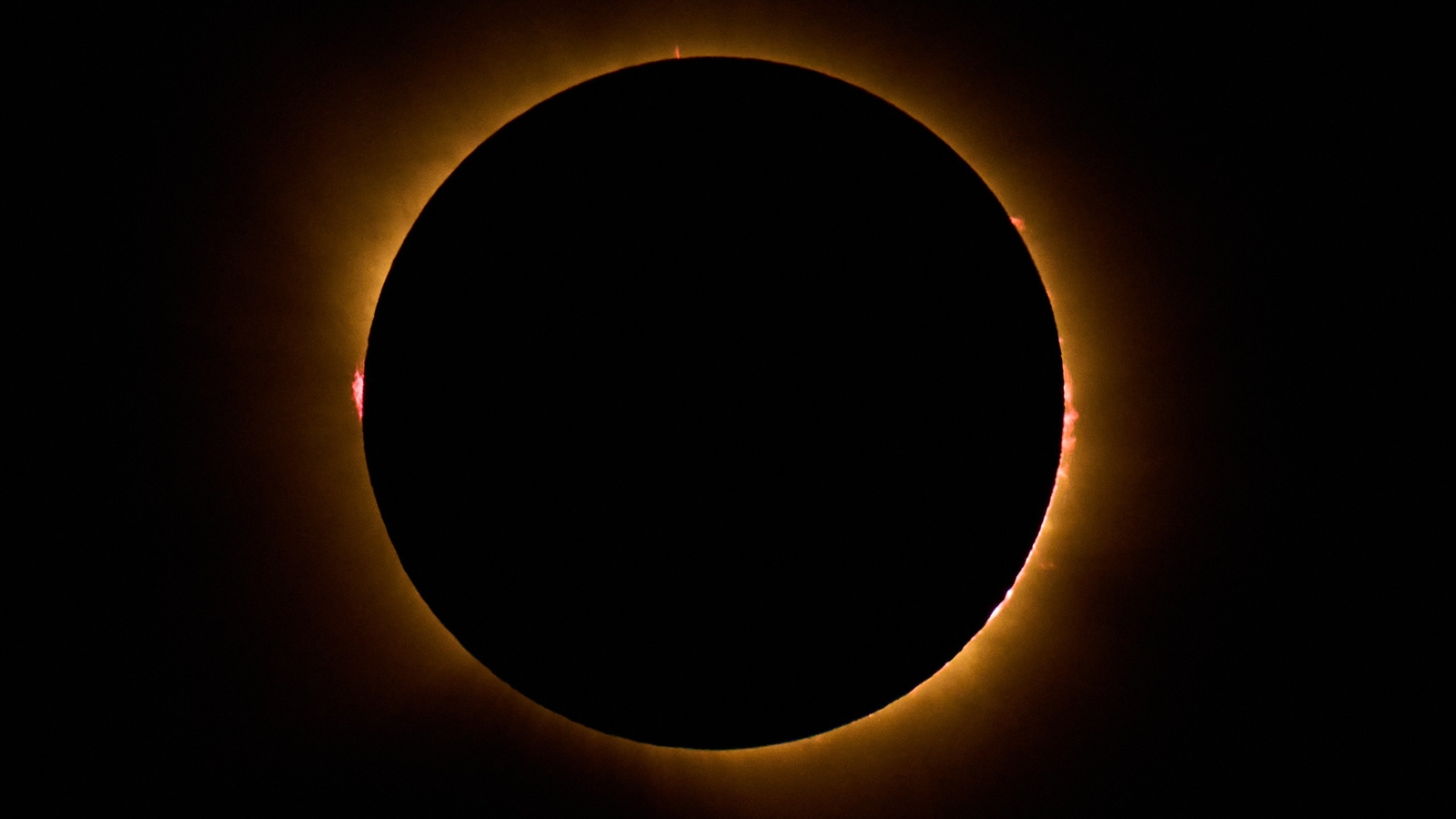
Skies across parts of Europe and beyond darkened on Wednesday, 12 August 2026, as a rare celestial alignment brought a total solar eclipse to mainland Europe for the first time in about three decades, according to Scientific American. The phenomenon occurred as the moon passed directly in front of our star, blocking its light, casting daytime into a false twilight and allowing observers along a narrow path of totality to witness the sun's million-degree-Celsius corona and flashing Baily’s beads.
The path of totality passed over northern Russia, Iceland, Greenland, Spain and parts of Portugal, according to Free Press Journal. Millions of people crowded into cloudless Spanish cities and towns in Spain on Wednesday in search of the best views of a total solar eclipse, as detailed by ABC7. Spectators brought lawn chairs and umbrellas as they eagerly awaited the celestial spectacle, which began early in the evening.
Media additions

Rosa Celiberti, a language teacher who watched from a Roman-era hilltop town in northeast Spain, described the emotional impact of the event, with tears in her eyes, according to Abc7.
The Spanish Interior Ministry deployed more than 33,500 law enforcement officers to observation areas and access points and set up some 350 official viewing sites across the sparsely populated interior, while authorities expected at least a half-million additional visitors. The event unfolded against the backdrop of scorching summer temperatures above 35 degrees Celsius in many areas where the eclipse was observed, alongside ongoing firefighting efforts following recent wildfires.
Farther north, conditions were less cooperative. In Reykjavik, clouds did not prevent hundreds of people from gathering in bright raincoats in front of the landmark Hallgrímskirkja church as the skies darkened. When totality arrived, the disk of the sun was barely perceptible and then, suddenly, the lights went out, leaving only the glow of phones held aloft before the crowds quickly cleared out. Rooms in Reykjavík, Iceland's capital, averaged more than $1,000 for Wednesday night as Icelanders prepared for their first total solar eclipse since 1954 and the first visible from the capital since 1433, according to ABC7.
Steinór Jónsson, the hotel's owner and manager, compared the tourism surge to the historic summit held in the city decades prior, noting via ABC7 that besides the meeting between Reagan and Gorbachev, the eclipse was the biggest event he had experienced since opening the hotel.
At sea, Sverre Rud, captain of the MS Spitsbergen, was circling the waters of Rypefjord in eastern Greenland trying to make sure he was perfectly positioned for his 126 passengers to view the spectacle, who had been experiencing 24 hours of daylight on a 17-day cruise in locations mostly north of the Arctic Circle, as reported by ABC7.
Beyond the path of totality, large portions of Europe experienced partial eclipses. In England, observers witnessed a dramatic partial solar eclipse that obscured roughly 90% to 95% of the Sun, marking the most substantial eclipse visible from the UK since 1999, according to Free Press Journal. London spectators watched as the eclipse was framed by the Great Bell of the Great Clock of Westminster, better known as Big Ben, as noted by Scientific American. Partial phases were also visible over Berlin, Austria's Salzburg, and in Italy, where AC Milan soccer players observed a pinkish crescent during a practice session.
Viewing Highlights and Regional Impact
- Spain: Experienced its first total solar eclipse in over a century, drawing millions of viewers and prompting major public safety deployments amid high temperatures.
- Iceland: Hosted its first total solar eclipse since 1954 amid heavy cloud cover, drawing thousands of international visitors and pushing hotel prices upward.
- United Kingdom: Observed a dramatic partial eclipse covering 90% to 95% of the sun, the largest since 1999.
- Greenland & Arctic: Provided totality views for polar cruise passengers navigating northern waters.
Demand for special eclipse glasses surged across host nations ahead of the event, with supermarkets, department stores, museums and planetariums seeing depleted stocks as officials emphasized the necessity of certified eye protection, according to ABC7. As the shadow lifted and normal daylight returned, international space agencies released livestream footage and imagery capturing solar prominences—huge, bright structures made of plasma that follow a tangled web of magnetic fields looping up from the sun's surface into its corona—before the celestial alignment concluded over the Mediterranean.
How significant is this development?
Contribute your assessment to the aggregated reader sentiment ledger.
Frequently Asked Questions
Key questions answered in this reportWhat is the key development in: Total solar eclipse plunges parts of Europe into darkness?
A rare total solar eclipse crossed mainland Europe, Iceland, and Greenland, plunging millions of spectators into darkness and marking the region's first such event in decades.
Why is this World development significant for the UK?
This report covers critical events in our World beat. Independent reporting monitors related UK statements, regulatory shifts, and public responses as further verified details emerge.
How was this reporting corroborated and verified?
Newsarchy UK compiles and cross-references reporting from primary reporting from abc7.com and cross-checked wire reports. All coverage adheres to published editorial standards.
When was this report published?
This briefing was published on August 13, 2026 and is permanently cataloged in the Newsarchy UK World archives.