Trump Announces $200 Billion South Korean Investment in US
President Donald Trump announced a $200 billion South Korean energy investment package targeting U.S. infrastructure. However, Seoul emphasized that major projects remain subject to commercial viability.
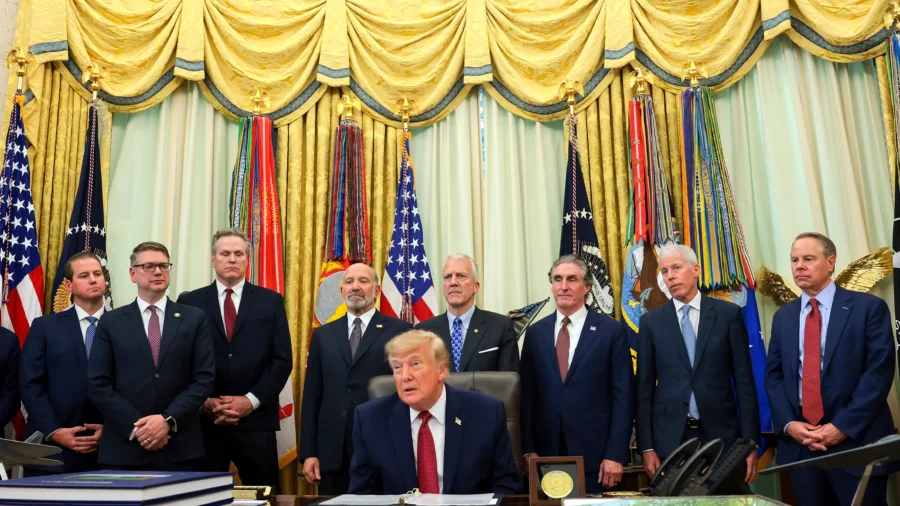
United States President Donald Trump announced a major bilateral energy initiative on Wednesday, unveiling plans for a $200 billion investment package from South Korea targeting domestic infrastructure projects. According to reporting by Ntd, the package includes a massive nuclear power program, a natural gas pipeline in Alaska, and a high-capacity power plant in Texas. The sweeping announcements follow a trade agreement struck between Washington and Seoul, though the official response from South Korea highlights significant commercial conditions and ongoing negotiations regarding specific commitments.
The White House rollout highlights three central energy developments intended to expand American power generation, manufacturing capabilities, and export infrastructure. Reporting detailed by Finance outlines that the centerpiece of the initiative is a $120 billion nuclear power program designed to construct eight large-scale reactors across the United States. Furthermore, the administration highlighted a $50 billion to $54 billion Alaska liquefied natural gas (LNG) venture and a $22.3 billion natural gas-fired power project in Encinal, Texas.
Media additions
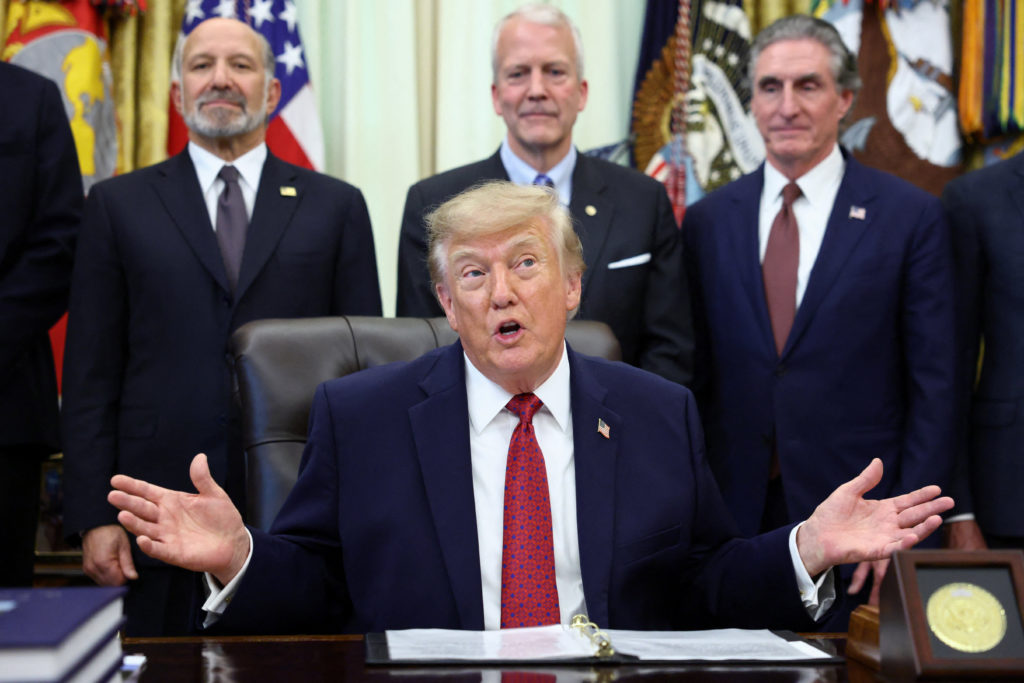

The Alaska venture centers on an 807-mile (1,300-kilometer) pipeline designed to transport natural gas from the North Slope to a southern export terminal, as noted by Pbs. White House officials stated that construction on the pipeline is projected to take three years, with LNG exports commencing two years afterward, contingent upon full financing. The Texas project involves a 6.4-gigawatt natural gas-fired generation facility intended to power emerging data centers and advanced manufacturing hubs in the state, with full operational status anticipated by 2032, according to reports from Euronews.com and Kuwait Times.
| Energy Project | Reported Financial Scope | Primary Objective |
|---|---|---|
| Nuclear Power Program | $120 billion | Construct eight large-scale nuclear reactors in the U.S. |
| Alaska LNG Pipeline | $50 billion to $54 billion | Transport North Slope natural gas to southern export terminal for Asian markets |
| Texas Power Project | $22 billion to $22.3 billion | Provide 6.4 gigawatts of generation capacity for data centers in Encinal |
Disagreements emerged quickly between the White House narrative and statements from Seoul. Shortly after the presidential announcements, South Korean President Lee Jae Myung posted on social media that the Alaska LNG initiative and the nuclear reactor program remain subject to strict commercial verification. According to Al Jazeera, South Korea's Ministry of Trade, Industry and Resources confirmed that while both nations intend to move forward with the Texas gas power facility, no final decision has been finalized regarding financial investment or scale for the Alaska project. Lee noted that negotiations have been complex, describing certain terms as difficult to accept without assured commercial viability on a plant-by-plant basis.
The energy push is closely linked to prior trade negotiations. According to Justthenews, the funding stems from a broader 2025 trade deal wherein South Korea agreed to invest $350 billion in the United States in exchange for reduced U.S. Tariffs on automobiles and auto parts. President Trump credited his administration's tariff strategy for securing the capital commitments, while CBS News noted that the timing coincides with competitive midterm election campaigns in states like Alaska and Texas, where Republican incumbents face tight contests.
Beyond the geopolitical maneuvering, industry analysts point to practical hurdles facing the ambitious infrastructure rollout. As reported by Euronews.com and Kuwait Times, a comprehensive report released by the Alliance for America's Skilled Trades indicates that the U.S. Faces a severe labor shortage, requiring millions of skilled trade workers through 2035 while current training pipelines lag behind demand. These labor constraints, combined with environmental reviews and developer logistics managed by firms such as the Glenfarne Group, will dictate the pace of construction.
Further developments in bilateral energy cooperation and trade talks are expected as working-level officials from Washington and Seoul convene to hammer out project feasibility studies, compliance procedures, and final financial agreements in the coming weeks.


