Trump says oil and gas prices won't fall until 'right after' midterm elections
President Donald Trump predicted that high oil and gas prices driven by the ongoing conflict with Iran will not ease until after the November mid-term elections.

- Core Development: President Donald Trump predicted that high oil and gas prices driven by the ongoing conflict with Iran will not ease until after the November mid-term elections.
- Beat Context: Categorized under World with independent corroboration.
- Reporting Depth: 5 minute analytical read synthesized from verified newsroom sources.
On Wednesday, President Donald Trump told reporters at Joint Base Andrews that the high oil and gas prices spurred by the ongoing Iran war would not ease until after the U.S. Mid‑term elections in November. He said the conflict would end “right after” the vote and that the market would start to recover once Washington secured victory. The comments, repeated in Dublin and Texas, mark the first public admission that the war and its economic fallout may persist for several more weeks.
Trump’s remarks came as he prepared to head to Texas for the Republican Party’s first mid‑term convention. The president’s statements were echoed in Dublin, where he met Irish Prime Minister Micheal Martin, and were later repeated on a television interview with Senator Lindsey Graham. Across the eight sources, the president’s narrative is consistent: the Iran war will not be over until after the elections, and only then will the price of oil, and consequently gasoline, begin to fall.
Media additions

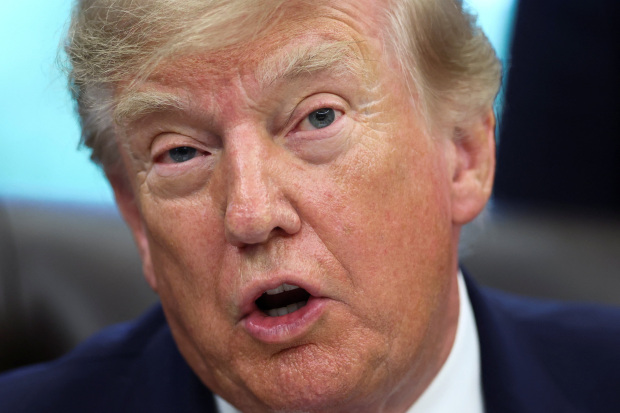

According to CNBC, the president said, “Right after the election, oil prices are going to be tumbling downward.” He added that the war would end “immediately after the election because they can’t hold out any longer.” The same sentiment is found in the BBC report, which notes that Trump told reporters he “does not think the Iran war will end until after November’s midterm elections.” The Gulf Daily News in Bahrain also reported that Trump told reporters the U.S. Would win the war “very soon” and that fuel prices would come tumbling down once the conflict concludes. Anadolu Ajansı added that Trump said the United States would declare “total victory” within two weeks, again linking the end of hostilities to falling energy prices.
Oil market reactions to the president’s comments have been muted. The global benchmark Brent crude futures were trading above $101 per barrel for the first time since July, while U.S. West Texas Intermediate futures surpassed $96 per barrel at session highs. The price surge reflects the broader impact of Iranian attacks, the blockade of the Strait of Hormuz, and the U.S. Naval blockade of Iranian ports. The price of U.S. Diesel hit an all‑time high earlier in the week, a development that could ripple into consumer gasoline costs.
| Commodity | Current Level | Trump’s Prediction |
|---|---|---|
| Brent Crude (USD/barrel) | Above $101 | Falls after midterms |
| West Texas Intermediate (USD/barrel) | Above $96 | Falls after midterms |
| U.S. Gasoline (USD/gallon) | Record‑high, above $2 | Below $2 after midterms |
While Trump’s optimism is clear, analysts caution that the link between the war’s duration and energy prices is not guaranteed. Patrick De Haan, a fuel analyst at GasBuddy, told X that he remains skeptical of the president’s prediction that oil and gas prices will fall after the midterms. “I don’t see any guarantees at all of that happening,” De Haan said.
The president’s comments come amid a complex geopolitical landscape. The Iran war began on February 28, after U.S. And Israeli strikes killed Iran’s former supreme leader. Tehran retaliated with missile and drone attacks on Israel and Arab states hosting U.S. Military facilities, and it imposed a blockade on the Strait of Hormuz. The blockade has been in place for more than six months, forcing oil exports from Gulf states to be rerouted and driving up global prices. Iran has also been accused of attacking Saudi oil facilities, further tightening the market.
Iranian President Masoud Pezeshkian, speaking on the sidelines of the BRICS Summit in New Delhi, said the region does not need the United States as a “regional policeman.” He added that Iran “does not want a war or a continued conflict” and that peace remains its priority. Pezeshkian’s remarks contrast with Trump’s view that the U.S. Must win the war to prevent Iran from developing nuclear weapons.
In addition to the war, the U.S. Has been conducting military strikes against Iranian-linked vessels. In turn, the IRGC claimed it had attacked U.S. Navy destroyers and eight oil tankers in the Strait of Hormuz. The conflict has also drawn the attention of other regional actors, including the Houthi movement in Yemen, which has launched missile and drone attacks on Saudi Arabia.
Trump’s insistence on a post‑election resolution has political implications. The mid‑term elections are scheduled for November 3, and Republicans face the risk of losing control of Congress. The president’s comments are meant to reassure voters that the war will end soon, potentially bolstering support for the Republican Party. However, the timing also raises questions about whether the U.S. Is willing to negotiate or if it will press on with military action until the political cycle closes.
What to watch next
- November 3 mid‑term elections: the outcome could influence U.S. Policy towards Iran.
- U.S.‑Iran talks: mediators from Qatar and other countries are reportedly planning separate meetings with Iranian officials.
- Oil market volatility: Brent and WTI prices may remain elevated if the conflict escalates.
- U.S. Naval operations: continued strikes on Iranian vessels could shift the balance.
As the president’s comments circulate, the global energy market remains in a state of uncertainty. Analysts will be watching the mid‑term election results closely, as they could signal the end of the war and trigger a drop in oil prices. Until then, consumers may continue to face high gasoline costs and a volatile market that reflects the broader geopolitical tensions in the Middle East.
How significant is this development?
Contribute your assessment to the aggregated reader sentiment ledger.
Frequently Asked Questions
Key questions answered in this reportWhat is the key development in: Trump says oil and gas prices won't fall until 'right after' midterm elections?
President Donald Trump predicted that high oil and gas prices driven by the ongoing conflict with Iran will not ease until after the November mid-term elections.
Why is this World development significant for the UK?
This report covers critical events in our World beat. Independent reporting monitors related UK statements, regulatory shifts, and public responses as further verified details emerge.
How was this reporting corroborated and verified?
Newsarchy UK compiles and cross-references reporting from primary reporting from BBC and cross-checked wire reports. All coverage adheres to published editorial standards.
When was this report published?
This briefing was published on October 3, 2026 and is permanently cataloged in the Newsarchy UK World archives.