Typhoon Dolphin makes landfall in eastern China forcing mass evacuations
Typhoon Dolphin made landfall on China's eastern coast as the year's most powerful tropical cyclone, triggering mass evacuations and widespread transport disruptions.
- Core Development: Typhoon Dolphin made landfall on China's eastern coast as the year's most powerful tropical cyclone, triggering mass evacuations and widespread transport disruptions.
- Beat Context: Categorized under World with independent corroboration.
- Reporting Depth: 4 minute analytical read synthesized from verified newsroom sources.
Typhoon Dolphin made landfall on China's eastern coast on Sunday, arriving as the most powerful tropical cyclone to hit the country this year. The storm triggered widespread transport shutdowns, mass relocations, and top-level emergency warnings across multiple provinces, according to The Guardian. Identified as the 13th typhoon of the year by Global Times, the cyclone crossed the coastline near Yuhuan City in Zhejiang Province at approximately 5:30 pm, packing maximum sustained winds near its centre of 151 kilometres per hour, equivalent to a Category 1 hurricane on the Saffir-Simpson scale.
National meteorological authorities issued a red typhoon alert — the most severe warning level — as the storm struck densely populated eastern regions, bringing torrential downpours and severe risks of flooding and landslides. Provinces including Zhejiang, Fujian, and Guangdong activated emergency responses, with Zhejiang, Shanghai, and Jiangsu activating Level III emergency responses. Zhejiang provincial party secretary Wang Hao urged strict precautions against mountain torrents and mudslides, demanding the complete evacuation of anyone in harm's way and the suspension of non-essential activities, according to the South China Morning Post. Wang also called for strengthened emergency drainage and rescue operations to minimise urban waterlogging, while Weather China noted that Zhejiang and Shanghai sat within the typhoon's dangerous semicircle.
Media additions
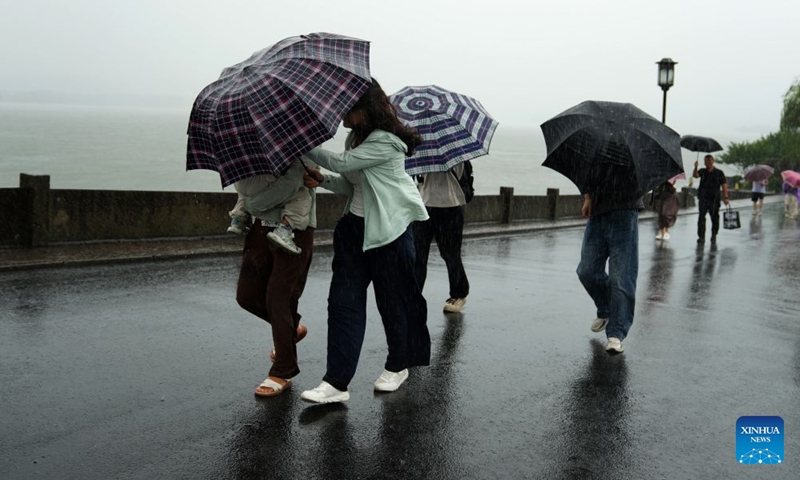

Millions of residents across the affected zones felt immediate disruptions. In Zhejiang, the city of Taizhou evacuated 390,000 people on Saturday evening, and Wenzhou relocated over 900,000 residents while opening more than 1,000 emergency shelters. Authorities in Fujian Province evacuated 98,900 people from high-risk areas. Shanghai evacuated more than 30,300 people from vulnerable areas as transport networks ground to a halt.
Flight operations faced massive cancellations. Shanghai's two main passenger airports saw nearly 1,400 to 1,500 flights grounded, with flight-tracking data providers such as VariFlight reporting widespread cancellations that left travellers stranded. Hangzhou's airport in nearby Zhejiang province saw 270 inbound and outbound flights cancelled. Among those stranded was Chen, a 42-year-old tourist from Guangdong. He told The Guardian that his family's Sunday flight was cancelled and rebooked for Monday night, though they remained uncertain about takeoff.
Chen remarked, adding that the storm did not appear particularly strong by the standards of China's southern coast."To us Guangdong people, this typhoon is as ordinary as having a meal and feeling the wind. It's just part of everyday life,"
Chen, tourist, via The Guardian and Nz
Maritime and industrial operations faced swift shutdowns ahead of the impact. Shanghai's Yangshan port cleared ships from its berths and moved more than 500 small and medium-sized vessels to shelter. Fujian maritime authorities halted 55 coastal passenger ferry routes, suspended all 115 offshore construction projects, and moved 290 construction vessels to sheltered waters. Across Zhejiang and Fujian, services on more than 200 ferry routes were suspended, and 474 construction vessels had been called to port by Friday morning. The water resources ministry warned that the Qiantang, Yong, Jiao, and Shuiyang rivers could experience major flooding, with smaller rivers rising above warning levels.
Before threatening China, Typhoon Dolphin carved a destructive path through Japan's southern Okinawa prefecture. The storm injured six to seven people, including an elderly resident over the age of 100 who was blown over by gusts, fell, and hit his head, and left more than 50,000 buildings without power, with regional utility Okinawa Electric Power reporting 5,290 households still without electricity by Sunday afternoon. In Taiwan, dozens of ferry services were suspended and more than 180 flights were cancelled as the storm brought downpours to the island's north on Sunday. In the Philippines, five people were rescued and seven remained missing after a landslide hit three houses in Baguio on Sunday. The outer subsiding air of the typhoon also pushed record-high temperatures as far south as Hong Kong, where the weather observatory posted a record high temperature of 36.9 Celsius.
Regional Impacts and Preparations
- Zhejiang Province: Landfall near Yuhuan City; Taizhou evacuated 390,000 residents; Wenzhou relocated over 900,000 residents and opened over 1,000 shelters; red mountain-torrent warnings issued.
- Shanghai: Evacuated over 30,300 people, grounded approximately 1,500 flights, and cleared Yangshan port vessels.
- Fujian Province: Evacuated 98,900 people from high-risk zones, suspended 55 coastal ferry routes, and halted 115 offshore construction projects.
- Okinawa, Japan: Struck prior to mainland China, causing injuries, power outages affecting over 50,000 buildings, and thousands of flight cancellations.
Chief forecaster Wang Haiping of the National Meteorological Centre warned state broadcaster CCTV, in reporting covered by The Guardian, that the storm is expected to track westward and slowly lose strength over central and south-western China. Forecasters predict between 200 and 400 millimetres of rainfall, with parts of central and eastern Zhejiang expected to receive 250 to 500 millimetres, through Monday afternoon. Meteorologists caution that this slower movement could prolong heavy rainfall, further elevating the threat of inundations along smaller rivers and mountainous terrain. Scientists note that human-driven climate change continues to make extreme weather events, including powerful tropical cyclones, more frequent and intense worldwide.
How significant is this development?
Contribute your assessment to the aggregated reader sentiment ledger.
Frequently Asked Questions
Key questions answered in this reportWhat is the key development in: Typhoon Dolphin makes landfall in eastern China forcing mass evacuations?
Typhoon Dolphin made landfall on China's eastern coast as the year's most powerful tropical cyclone, triggering mass evacuations and widespread transport disruptions.
Why is this World development significant for the UK?
This report covers critical events in our World beat. Independent reporting monitors related UK statements, regulatory shifts, and public responses as further verified details emerge.
How was this reporting corroborated and verified?
Newsarchy UK compiles and cross-references reporting from primary reporting from abc.net.au and cross-checked wire reports. All coverage adheres to published editorial standards.
When was this report published?
This briefing was published on August 10, 2026 and is permanently cataloged in the Newsarchy UK World archives.