Ukraine and Russia exchange deadly strikes as summer attacks intensify
Deadly strikes by Ukraine and Russia killed at least 16 people as Kyiv expanded its deep-penetration drone campaign into Russian territory amid intensifying summer attacks.
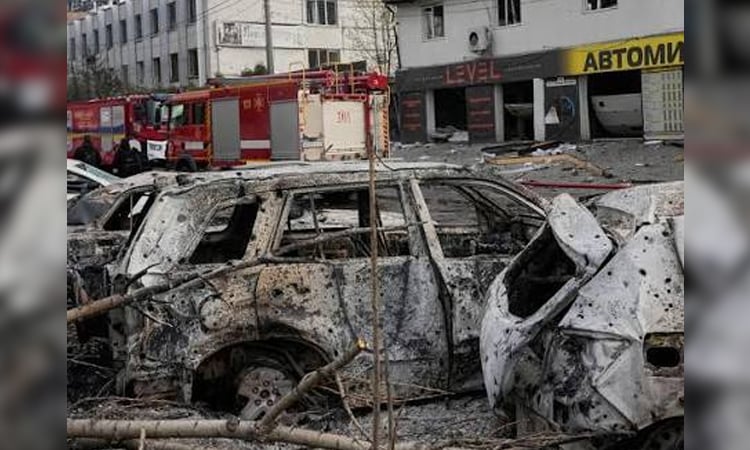
- Core Development: Deadly strikes by Ukraine and Russia killed at least 16 people as Kyiv expanded its deep-penetration drone campaign into Russian territory amid intensifying summer attacks.
- Beat Context: Categorized under World with independent corroboration.
- Reporting Depth: 4 minute analytical read synthesized from verified newsroom sources.
At least 16 people died on Saturday, 25 July 2026, in a series of Ukrainian and Russian strikes. According to Bssnews, the casualties mark a deadly continuation of the conflict as attacks intensify during the summer months with diplomacy at a standstill. United States-led talks on ending the fighting remain deadlocked, with Washington focused on the Middle East and Moscow intent on seizing the whole of eastern Ukraine. The United Nations has warned of civilians dying in larger numbers recently in the almost 4.5-year war.
Russian occupational authorities in southern Ukraine stated that a Ukrainian strike on an Azov Sea village killed eight people, including two children. Yevgeny Balitsky, the Moscow-installed head of the Russian-occupied part of Ukraine's Zaporizhzhia region, reported that Kyiv targeted tourist camps in Kyrylivka and wounded 14 people. Kyiv has intensified attacks in the Azov Sea in recent weeks, targeting Russian ships there.
Media additions

In north-eastern Ukraine, a Russian drone strike on a private courier service in Sumy killed three drivers. Ukrainian President Volodymyr Zelensky described the incident as a double-tap drone strike, according to Bssnews. Additional fatalities included two people in southern Ukraine reported by Kyiv, alongside two border villagers and one person in occupied Kherson reported by Moscow.
Ukraine also expanded its deep-penetration drone campaign inside Russia, launching more than 300 drones into Russian territory including regions far from the border. Drones struck an oil refinery in Siberia's Tyumen region, more than 1,000 miles east of Moscow, causing a fire according to regional governor Alexander Moor. Kyiv says its retaliatory strikes are fair retribution for Russia's daily barrages on Ukrainian cities for more than four years, and that the deep strikes aim to weaken Russia's war effort and force the Kremlin to negotiate. The strikes have caused fuel shortages and disrupted ordinary life in Russia more than at any point during the war.
Kyiv additionally targeted a factory in Kirov for the second consecutive day. Zelensky stated that the plant supplies components for the weapons Russia uses to attack Ukrainian people. Kirov Governor Alexander Sokolov declared three days of mourning in the region and revised the death toll from Friday's strike to five after a man presumed dead was found alive. Sokolov called the dead heroes of the labour front and asserted that Russia is fighting the collective West.
In the Urals city of Yekaterinburg, online retail giant Wildberries evacuated staff and suspended work at a logistics facility after drone activity. Wildberries stated its facility was not damaged. Sverdlovsk regional head Denis Pasler confirmed the city had been attacked and that no casualties resulted from the parking lot fire. Ukrainian drones have hit Wildberries warehouses around Moscow, Saint Petersburg, Crimea, and southern Russia this week. Russian President Vladimir Putin did not comment on Saturday's attacks.
Western Europe Faces Massive Evacuations Amid Wildfires
Far from the eastern European conflict zones, Western Europe grappled with massive natural disasters. Wwaytv3 reported that 267,000 people fled out-of-control wildfires across Spain and France on Saturday. Thick black ash blanketed parts of Madrid, where 70,000 residents were evacuated. Spanish Prime Minister Pedro Sanchez declared a national emergency during a visit to the fire zone near Madrid, stating that the priority was to save lives while warning of a complex fight ahead. Sanchez noted that fires have burned 130,000 hectares of forest this year in Spain, up from an annual average of 100,000 hectares over the past decade. More favorable weather on Saturday offered a window of opportunity for fire crews, though uncertain wind development posed ongoing challenges.
In France, Prime Minister Sébastien Lecornu described the blazes as unprecedented and noted that the Gironde fire generated its own winds. French President Emmanuel Macron deployed 1,000 soldiers to help firefighters near Bordeaux and ordered a modified A400M military transport aircraft—an experimental fit-out capable of releasing 20 tons of fire retardant—to join the firefighting fleet. The head of the Paris fire brigade deployed around 100 firefighters from the capital to the southwest, adding to earlier deployments.
International assistance arrived from multiple European nations. Italy deployed two Canadair water-dumping firefighting planes to Spain, joining aircraft from the Netherlands and Portugal. Spain's Civil Protection Service awaited two additional planes from Greece. France expected two water-bombers from Croatia, two planes from Portugal, and two heavy-lift Black Hawk helicopters from the Czech Republic and Slovakia. Satellite data from the European Forest Fire Information System indicates that the total area of land burned so far this year across European Union countries is the second largest on record. In Italy, thousands of emergency workers battled fires in Sicily and Calabria, where a local official reported that arsonists spread flames using rags soaked in flammable liquid tied to the tails of stray cats.
Tour de France organizers announced they would adapt the route and shorten the final stage of the race from Thoiry to Paris in a spirit of national solidarity with affected areas and communities.
What to Watch Next
- Developments in the diplomatic deadlock surrounding US-led talks on the Russia-Ukraine war.
- Weather pattern changes, temperatures, and wind developments impacting firefighting efforts in Spain and France.
- Further deployment of international aircraft, heavy-lift helicopters, and military equipment to combat Western European wildfires.
How significant is this development?
Contribute your assessment to the aggregated reader sentiment ledger.
Frequently Asked Questions
Key questions answered in this reportWhat is the key development in: Ukraine and Russia exchange deadly strikes as summer attacks intensify?
Deadly strikes by Ukraine and Russia killed at least 16 people as Kyiv expanded its deep-penetration drone campaign into Russian territory amid intensifying summer attacks.
Why is this World development significant for the UK?
This report covers critical events in our World beat. Independent reporting monitors related UK statements, regulatory shifts, and public responses as further verified details emerge.
How was this reporting corroborated and verified?
Newsarchy UK compiles and cross-references reporting from primary reporting from wwaytv3.com and cross-checked wire reports. All coverage adheres to published editorial standards.
When was this report published?
This briefing was published on July 26, 2026 and is permanently cataloged in the Newsarchy UK World archives.


