US strikes three Iranian oil tankers in response to missile attack on warships
American forces launched retaliatory airstrikes against three Iranian oil tankers following ballistic missile attacks targeting Navy warships.
- Core Development: American forces launched retaliatory airstrikes against three Iranian oil tankers following ballistic missile attacks targeting Navy warships.
- Beat Context: Categorized under World with independent corroboration.
- Reporting Depth: 4 minute analytical read synthesized from verified newsroom sources.
American forces launched retaliatory airstrikes against three Iranian oil tankers on Saturday, following what the United States military described as unprovoked ballistic missile attacks targeting Navy warships patrolling the region. The escalation shatters a brief period of relative calm in the six-month conflict, thrusting the critical shipping lanes of the Middle East back into active warfare and complicating global energy markets.
According to CNBC, the latest hostilities began when the Islamic Revolutionary Guard Corps fired ballistic missiles toward two U.S. Navy vessels. Yahoo News noted that patrolling American forces managed to evade the incoming projectiles without sustaining any personnel injuries or ship damage. In a blunt warning following the engagement, Admiral Brad Cooper, commander for U.S. Central Command, declared via Huffpost: If you shoot at two of our ships, we will impose an even higher economic cost —taking out three of yours.
Media additions


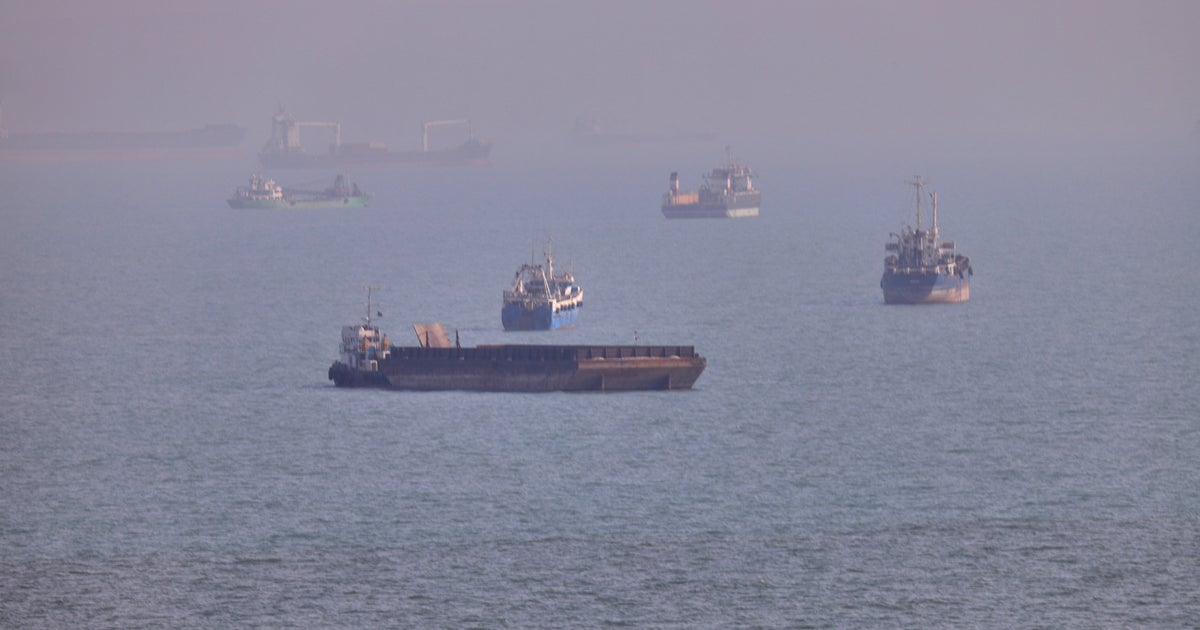
Defense Secretary Pete Hegseth echoed that sentiment on social media, writing that the rules of engagement remain straightforward for Tehran. U.S. Authorities released video footage showing large fireballs and heavy smoke erupting after precision munitions struck the tankers. The targeted vessels were identified as part of an extensive shadow network funneling money to the Revolutionary Guard and regional armed proxies. The M/T Downy was struck off the coast of Kharg Island, a vital terminal responsible for handling the vast majority of the nation's crude exports before the outbreak of hostilities in late February. A second vessel, the M/T Stark 1, was hit near Jask, while the unladen M/T Kylo was targeted in the Gulf of Oman after its crew was ordered to abandon the ship.
Tehran offered a sharply divergent account of the day's events. Iranian state broadcasters claimed that the nation's military successfully targeted three oil tankers along with three American vessels. A spokesperson for Iran's joint military command warned that future strikes against U.S. Military assets would be significantly more severe if Washington continues interfering with Iranian shipping. Furthermore, the Iranian Foreign Ministry condemned the American operation as a war crime and an illegal act of aggression, stating that the responsibility for ongoing economic warfare and regional instability rests squarely with Washington and its allies.
| Vessel / Target | Location | Action Taken |
|---|---|---|
| M/T Downy | Off Kharg Island | Permanently disabled by U.S. Central Command |
| M/T Stark 1 | Near Jask | Permanently disabled by U.S. Central Command |
| M/T Kylo | Gulf of Oman | Destroyed after crew abandoned ship |
The military exchange comes amid conflicting political signals from the White House regarding the scope of the ongoing confrontation. President Donald Trump publicly minimized the conflict, describing it as small potatoes
for Washington. Vice President JD Vance similarly sought to downplay the classification of the hostilities while maintaining that major military operations had concluded earlier in the summer. Nevertheless, the administration has maintained a rigorous dual-track strategy combining targeted kinetic strikes with aggressive financial isolation, pointing to broader world tensions.
Financial pressure on Tehran intensified prior to the naval skirmish. The U.S. Treasury Department announced sweeping sanctions against a Turkish investment bank and several subsidiaries accused of laundering oil revenues originating from China through networks managed by Iranian financial intermediaries. Treasury Secretary Scott Bessent has spearheaded what officials term an effort toward the complete economic asphyxiation of the Iranian state. Meanwhile, European diplomats from Britain, France, Germany, and the United States are reportedly pushing to refer Tehran to the United Nations Security Council over alleged non-compliance with international nuclear non-proliferation obligations, threatening to unravel what remains of regional stability.
Civilians near coastal Iranian infrastructure continue to bear the human cost of the renewed military campaigns. Earlier bombardments in southern Iran killed multiple people and severely damaged local communications infrastructure, leaving families hospitalized with severe injuries. With the Strait of Hormuz effectively choked by naval blockades and retaliatory operations, global energy markets remain highly sensitive to further escalation. Observers are watching closely to see whether Tehran’s hardline leadership will follow through on threats to expand reprisal operations against international maritime traffic or if diplomatic intermediaries can re-establish channels to prevent a broader regional conflagration.
How significant is this development?
Contribute your assessment to the aggregated reader sentiment ledger.
Frequently Asked Questions
Key questions answered in this reportWhat is the key development in: US strikes three Iranian oil tankers in response to missile attack on warships?
American forces launched retaliatory airstrikes against three Iranian oil tankers following ballistic missile attacks targeting Navy warships.
Why is this World development significant for the UK?
This report covers critical events in our World beat. Independent reporting monitors related UK statements, regulatory shifts, and public responses as further verified details emerge.
How was this reporting corroborated and verified?
Newsarchy UK compiles and cross-references reporting from primary reporting from huffpost.com and cross-checked wire reports. All coverage adheres to published editorial standards.
When was this report published?
This briefing was published on September 6, 2026 and is permanently cataloged in the Newsarchy UK World archives.