Boeing engineers and technical workers reject contract offer
Thousands of Boeing engineers and technical workers have rejected a four-year labor agreement and authorized a strike, threatening a major white-collar work stoppage.
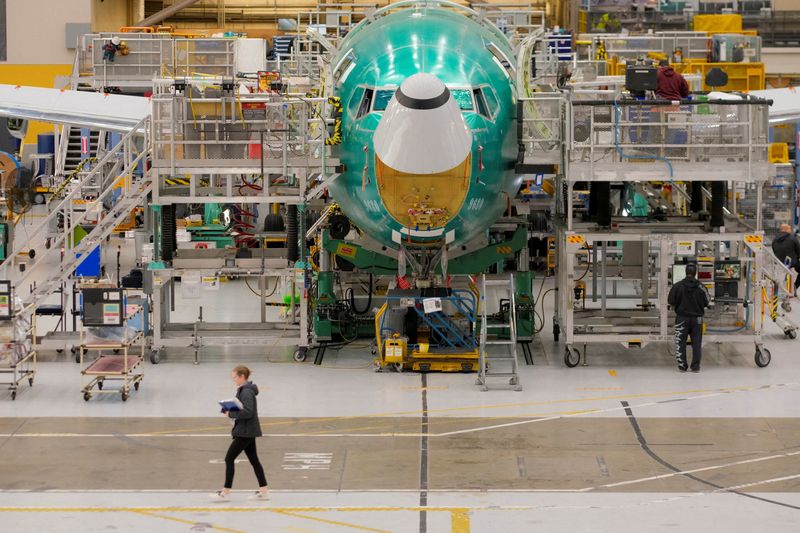
- Core Development: Thousands of Boeing engineers and technical workers have rejected a four-year labor agreement and authorized a strike, threatening a major white-collar work stoppage.
- Beat Context: Categorized under Business with independent corroboration.
- Reporting Depth: 4 minute analytical read synthesized from verified newsroom sources.
Boeing faces the prospect of a major white-collar work stoppage in the Pacific Northwest after thousands of professional and technical employees rejected a proposed four-year labor agreement. The decisive ballots show deep divisions between union leadership and the rank-and-file workforce over compensation and corporate trust.
The votes were tallied on Friday, involving members of the Society of Professional Engineering Employees in Aerospace. Engineers voted against the tentative deal by sixty-four percent, while technical workers rejected it by roughly seventy-two percent. Alongside the contract rejection, members authorized their negotiating team to call a strike if an agreement is not reached before the current pact expires on Oct. 6.
The rejection comes as a sharp pivot because the union’s own negotiating team had endorsed the proposal. Bryan Corliss, a spokesperson for SPEEA, told Kuow that leadership believed the offer featured the largest wage pool increases in forty years and secured significant movement on union priorities without requiring concessions. Yet the membership rejected those assessments.
Union members who voted against the contract argued that the proposed wage increases were inadequate to match the high cost of living in the Seattle area and failed to match what competing companies have paid their employees. The rejected deal tied wage increases to inflation—capped at 3%—alongside individual performance and other unspecified metrics determined by the company. Employees noted that a 3% cap would nearly guarantee their salaries fall behind inflation. Data from the U.S. Bureau of Labor Statistics reported in July that the Consumer Price Index for the Seattle area rose 4.5% over the past year.
Beyond immediate financial grievances, the vote exposes a deeper undercurrent of friction. Corliss explained to KUOW that mistrust has festered for decades, dating back nearly thirty years to the corporate merger with McDonnell Douglas. Members reportedly feel uneasy about the erosion of union-held jobs, alongside long-term declines in quality and safety. Reinforcing this sentiment, negotiating team member Katheryn Durkee noted that SPEEA members really want to have careers and not jobs at Boeing. Another negotiator, Kevin Boyd, stated that the strike authorization vote gives a lot of transparency, adding that the membership has a strong need here, and they're willing to do what it takes to get it.
Boeing expressed frustration with the outcome of the ballot. Ben Nimmergut, Boeing’s vice president and functional chief engineer for production engineering, addressed the decision in an official statement:
"We’re disappointed our engineers and technical workforce voted no on our offer. As a result, we are now implementing our strike contingency plan and diverting the dollars we had wanted to invest in our SPEEA-represented team to prepare for a potential strike."
Ben Nimmergut, Vice President and Functional Chief Engineer for Production Engineering, via Aol
Nimmergut added that the company had no choice given its operational obligations:
"We have no choice but to implement our contingency plan. We have a responsibility to the rest of our workforce and our customers to build on our progress over the last two years and maintain our momentum."
Ben Nimmergut, Vice President and Functional Chief Engineer for Production Engineering, via Aol
The company stated that its offer would have been the largest wage increase for SPEEA in 40 years. Furthermore, SPEEA has not negotiated a new contract for its Northwest members with the company since 2012, with members having previously approved contract extensions in 2016 and 2020. The engineers and technicians units negotiate together with Boeing, but they vote separately. With the rejection, Boeing is redirecting funds earmarked for the workforce toward strike preparation measures.
A potential strike by SPEEA members would further delay Boeing's certification campaigns for its 737 Max 10 and 777-9 planes, both of which are several years behind schedule. In 2024, Boeing commercial airplane production in the Seattle area ground to a halt when the roughly 33,000 members of the International Association of Machinists and Aerospace Workers went on strike for seven weeks.
Key Details of the Contract Standoff
- Total Members Affected: 17,000 white-collar workers
- Engineer Vote: 64% against the tentative agreement
- Technical Worker Vote: ~72% against the agreement
- Current Contract Expiration: October 6, 2026
- Regional Inflation Benchmark: 4.5% rise in the Seattle area Consumer Price Index
- Proposed Cap: 3% cap on inflation-based wage increases
As the standoff continues, the union plans to survey members to see what it will take to approve a four-year contract with Boeing, bringing that feedback into future discussions. No new talks are scheduled between Boeing and SPEEA, leaving both sides at an impasse as the October deadline approaches. Additional updates on commercial manufacturing and labor negotiations can be followed through our Business coverage.
How significant is this development?
Contribute your assessment to the aggregated reader sentiment ledger.
Frequently Asked Questions
Key questions answered in this reportWhat is the key development in: Boeing engineers and technical workers reject contract offer?
Thousands of Boeing engineers and technical workers have rejected a four-year labor agreement and authorized a strike, threatening a major white-collar work stoppage.
Why is this Business development significant for the UK?
This report covers critical events in our Business beat. Independent reporting monitors related UK statements, regulatory shifts, and public responses as further verified details emerge.
How was this reporting corroborated and verified?
Newsarchy UK compiles and cross-references reporting from primary reporting from aol.com and cross-checked wire reports. All coverage adheres to published editorial standards.
When was this report published?
This briefing was published on August 22, 2026 and is permanently cataloged in the Newsarchy UK Business archives.


