China AI Bubble Bursts, $480B Lost, Bitcoin Remains Stable
China's speculative artificial intelligence market has collapsed, erasing $480 billion in value across the STAR50 index while cryptocurrencies like Bitcoin remained stable.
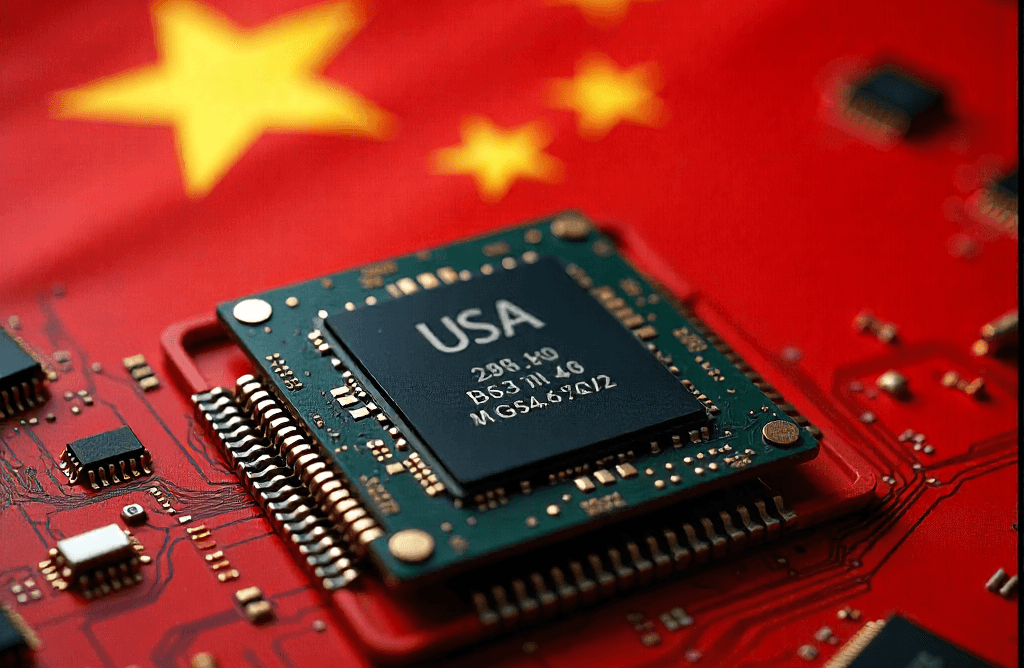
- Core Development: China's speculative artificial intelligence market has collapsed, erasing $480 billion in value across the STAR50 index while cryptocurrencies like Bitcoin remained stable.
- Beat Context: Categorized under Business with independent corroboration.
- Reporting Depth: 4 minute analytical read synthesized from verified newsroom sources.
The speculative frenzy surrounding artificial intelligence has suffered a severe reality check as the artificial intelligence sector in China undergoes a dramatic collapse, wiping out billions of dollars in market value and casting a long shadow over global technology valuations. Over a span of less than four months, the STAR50 index on the Shanghai board — which tracks the nation's premier artificial intelligence and semiconductor firms — plummeted by 40%, erasing roughly $480 billion in market value according to Cryptoticker reporting. This abrupt downturn brings an end to a two-year equity rally that had been heavily encouraged by official state stimulus measures, leaving everyday retail participants to absorb the losses as broader indexes slip into bear market territory.
The contraction reflects a market environment where speculative enthusiasm vastly outpaced underlying financial returns. According to Yahoo Finance, artificial intelligence stocks had ballooned to account for 42% of China's total market capitalisation and 57% of daily trading turnover. Beijing-based fund manager Dong Baozhen described the trajectory to Futurism by stating that the stock market later evolved into a speculative crazy bull, adding that observers are now witnessing the inevitable bursting of that bubble.
Media additions



Individual company valuations bore the brunt of the correction. Shares in robotics developer Unitree saw their initial public offerings cut in half following their market debuts, while semiconductor manufacturer CXMT shed more than a quarter of its valuation within a single month. Similar severe declines struck MetaX Integrated Circuits and Moore Threads Technology, both of which had experienced explosive initial gains following their public offerings last year, according to The Business Standard. Small business owner Chen Wensheng told reporters that he bought into the rally due to perceived official backing for state-linked tech firms, only to find himself and his peers nursing heavy portfolio losses.
| Index / Market | Peak Valuation / Multiple | Recent Decline |
|---|---|---|
| China STAR50 Index | Near 250 trailing earnings multiple | Down 40% (Wiping $480B) |
| China CSI 300 Index | Began dropping from June highs | Down 20% (Entered bear market) |
| US Nasdaq Index | Record highs set three weeks prior | Down roughly 6% |
Observers note that the downturn was driven by a confluence of pressures rather than a single corporate scandal. Trade restrictions and potential Western prohibitions on supplying advanced data-center equipment, such as optical transceivers produced by Zhongji Innolight, heavily restricted overseas market access for Chinese firms. At the same time, state-backed investors actively sold into market rallies to dampen volatility, inadvertently accelerating the downward slide. Shanghai fund manager Wang Zhuo remarked to Startup Fortune that chipmakers and artificial intelligence suppliers will ultimately end up in a price war, noting that all bubbles inevitably burst.
As the Asian market reevaluates its technology sector, attention has shifted to Western exchanges, where American frontier labs face parallel questions regarding capital expenditures and profitability. In the United States, upcoming earnings reports from major hyperscalers are viewed as a critical referendum on the sustainability of the global artificial intelligence trade. Concurrently, TechRadar highlights that artificial intelligence firm Anthropic filed prospectus documents for a landmark public offering while disclosing staggering operating losses of $80 billion in just the first six months of the year, alongside warnings regarding potential catastrophic risks and the immense cost of maintaining adequate computing infrastructure.
Amid the broader equity turbulence, digital asset markets demonstrated a surprising decoupling from traditional risk-off contagion. While Asian indices deepened their losses, Bitcoin held firm near the $80,000 threshold, experiencing a 24-hour fluctuation of well under one percent. Market commentators emphasize that strict capital controls in Asia prevent retail money from rotating easily between domestic equities and crypto assets, shielding the token economy from regional equity shocks.
Market participants will closely monitor upcoming corporate earnings announcements from technology giants including Microsoft, Alphabet, and Amazon to determine whether Western infrastructure spending translates into sustainable cloud revenue. Additional clarity is expected following forthcoming macroeconomic policy announcements and central bank interest rate decisions, which will dictate liquidity conditions across global financial markets in the weeks ahead.
How significant is this development?
Contribute your assessment to the aggregated reader sentiment ledger.
Frequently Asked Questions
Key questions answered in this reportWhat is the key development in: China AI Bubble Bursts, $480B Lost, Bitcoin Remains Stable?
China's speculative artificial intelligence market has collapsed, erasing $480 billion in value across the STAR50 index while cryptocurrencies like Bitcoin remained stable.
Why is this Business development significant for the UK?
This report covers critical events in our Business beat. Independent reporting monitors related UK statements, regulatory shifts, and public responses as further verified details emerge.
How was this reporting corroborated and verified?
Newsarchy UK compiles and cross-references reporting from primary reporting from Startup Fortune and cross-checked wire reports. All coverage adheres to published editorial standards.
When was this report published?
This briefing was published on October 28, 2026 and is permanently cataloged in the Newsarchy UK Business archives.